Want to be in the loop?
subscribe to
our notification
Business News
COVID-19 RELATED TRAVEL UPDATES
Starting from 6am (Hong Kong time) on Sept 26, 2022, inbound travellers of Hong Kong no longer need to serve hotel quarantine, but are subject to a “0+3” model. From Nov 21, 2022 onwards, testing arrangements for inbound persons (aged three years old or above on the date of arrival at Hong Kong) arriving at Hong Kong from overseas places or Taiwan have been adjusted. Main features as follows:
Vaccination requirement for Hong Kong residents will be lifted. Non-Hong Kong residents aged 12 or above still need to be fully vaccinated or have obtained a medical exemption certificate before boarding a flight. (See Note 1)
Pre-departure nucleic acid test is no longer required. Instead, declare your negative result of rapid antigen test (RAT) (self-administered or by professional swab sampling) which is conducted within 24 hours before scheduled departure time (Note 2), together with your vaccination status, via Department of Health’s portal (https://www.chp.gov.hk/hdf/) in order to generate a health declaration QR code for verification by airlines for boarding at check-in.
This QR code has a validity of 96 hours, counting from your expected arrival time in Hong Kong (not scheduled departure time). That means you can submit online declaration as early as 96 hours before scheduled arrival time, and then ‘update’ the declaration after obtaining the RAT result within 24 hours before departure.
"Test-and-go", instead of “test-and-hold”, at Hong Kong airport, i.e. once given specimen for the nucleic acid test, you can take public transport or self-arranged transport to return to your home or hotel.
Quarantine arrangement changed to "0+3", i.e. no compulsory quarantine + 3-day medical surveillance (need to comply with Amber Code restrictions under the Vaccine Pass - see Note 3) + 4-day self-monitoring period
* For those intending to go to Mainland China/Macao, please read the section “Persons travelling from Hong Kong to the Mainland China or Macao” of this page. Free-of-charge nucleic acid test at community testing centres (https://booking.communitytest.gov.hk) or mobile testing stations (https://www.communitytest.gov.hk/en/station), which can be conveniently booked online, or self-paid test at other recognised institutions (https://www.coronavirus.gov.hk/pdf/List_of_recognised_laboratories_RTPCR.pdf) on Day 2 (arrival day counted as Day 0), plus daily RATs from Day 1 to Day 7. You should only leave your place of stay daily after obtaining a negative RAT result. If your nucleic test conducted on Day 2 is negative, your Amber Code will end at 9 am on Day 3 and turn to Blue Code (see Note 4). From Nov 21 onwards, those arriving at Hong Kong before that date will not be required to undergo the compulsory nucleic acid tests on Day 4 and Day 6 if they have already undergone the compulsory nucleic acid test on Day 2 as required. For details, please read the following press release: https://www.info.gov.hk/gia/general/202211/17/P2022111700682.htm
If you test positive, your Vaccine Pass will switch to Red Code and you cannot enter certain places (see Note 5). You should also report via the online platform: https://www.coronavirus.gov.hk/eng/tested-positive.html
Please download the latest version of LeaveHomeSafe app before departure (https://www.leavehomesafe.gov.hk/en/)
You should also check the number of visa-free days your are entitled to, or if you have applied the required visa, before flying to Hong Kong (see Note 6)
Please click here for more information.
Related News

CHARITY / EXHIBITION / OTHER EVENTS
INVESTMENT OPPORTUNITIES IN CA MAU PROVINCE: 96 PROJECTS AND 20 STRATEGIC PROJECTS
We are pleased to share with you information on investment projects currently seeking investors in Ca Mau Province. Should your esteemed company or association be interested, we kindly invite you to review the project information and complete the registration form via the links provided. The Ho Chi Minh City Investment and Trade Promotion Centre (ITPC) will consolidate the expressions of interest and facilitate connections with the leadership of Ca Mau Province at a meeting tentatively scheduled for 13 November 2026 in Ho Chi Minh City.

MEMBER CORNER / PROMOTIONS
BẰNG KIỀU LIVESHOW - A SYMPHONY OF LOVE UNDER THE GOLDEN GLOW
A masterclass in live music that takes the audience on a soulful journey through immortal love songs, guided by the peerless artistry and emotive storytelling of renowned singer Bằng Kiều. The highlight of the night is his seamless musical chemistry with special guest Triệu Hồng Ngọc, promising passionate and deeply resonant duets inside the magnificent Grand Ballroom.
INFRASTRUCTURE / CONSTRUCTION / LOGISTIC / PORT
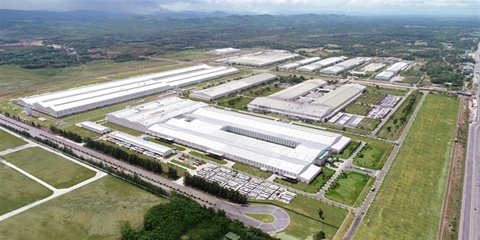
ĐÀ NẴNG GREEN-LIGHTS US$105 MILLION THAI DEVELOPMENT DEAL
The central city has approved an investment proposal by Thailand’s WHA Group to develop infrastructure for the 400ha WHA Đà Nẵng Industrial Park project on two communes of Thăng Bình and Đồng Dương, with an investment of more than VNĐ2.7 trillion (US$105 million). The city said it approved WHA Industrial Development International's status as an investor in the project, which is expected to take place between 2027 and 2034.
VIETNAM ECONOMY INVESTMENT
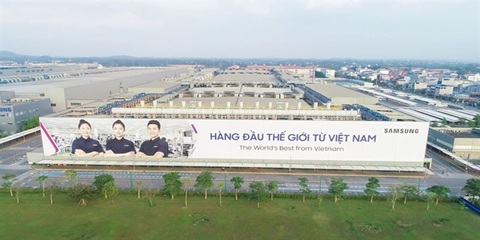
MOBILE PHONE EXPORTS RISE 20% TO $51.8 BILLION IN FIRST NINE MONTHS
Exports of mobile phones and components rose 20 per cent year-on-year to nearly US$51.8 billion in the first nine months of 2026, with China, the US and Republic of Korea accounting for more than half of the total. Shipments to the three markets reached a combined $26.18 billion, or 50.6 per cent of total exports of the product group during the period, according to data from the Vietnam Department of Customs under the Ministry of Finance.
INFRASTRUCTURE / CONSTRUCTION / LOGISTIC / PORT
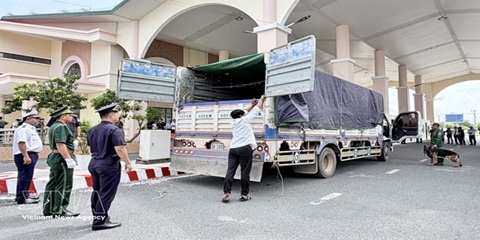
VIỆT NAM-CAMBODIA TRADE GATHERS PACE TOWARDS $20 BILLION TARGET
Trade between Việt Nam and Cambodia continues to grow, remaining a bright spot and a key pillar of bilateral cooperation as the two countries aim to raise two-way trade to US$20 billion in the coming years. After setting a record of more than $11.3 billion last year, bilateral trade reached about $8.7 billion in the first eight months of this year, up 8.3 per cent year on year.
VIETNAM ECONOMY INVESTMENT
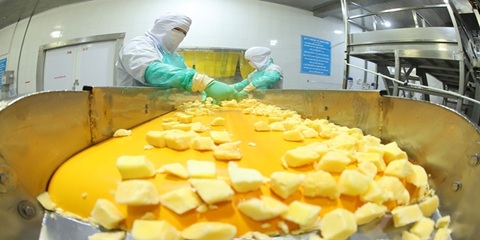
FRUIT AND VEGETABLE EXPORTS POISED TO HIT $10 BILLION IN 2026
Fruit and vegetable exports are on track to reach nearly US$10 billion in 2026, after rising 19.9 per cent year on year to nearly US$7.4 billion in the first nine months, driven by strong seasonal demand and abundant tropical fruit supplies. The Ministry of Agriculture and Environment said the growth reflected stronger international demand for fresh produce and processed agricultural products.
Events Sponsors






















