Want to be in the loop?
subscribe to
our notification
Business News
CHALLENGES TO REFORMS REMAIN TOUGHER IN THE COMING TIME
The Vietnam Chamber of Commerce and Industry (VCCI), together with social organizations, actively collected public and business opinions on the quality of public service practices and administrative reforms provided by ministries and sectors.
Slowing reforms
According to the Report on "Vietnam Business Environment Improvement Program: Assessment by Businesses”, measures to improve the business environment and to support enterprises continue to be implemented notwithstanding the COVID-19 pandemic which coincided with the transitional term of administrations. Business establishment and access to electricity were still rated top (72.5% and 65.9%, respectively), and corporate bankruptcy ranked last (44.4% was rated good or very good).
However, the pace of improvement seemingly slowed down as compared to the performance in previous years and sectoral changes seemed to move oppositely: Lowly scored sectors (bankruptcy, investor protection and import-export) picked up while highly scored sectors (business establishment and access to electricity) declined. Notably, with regard to corporate finance, while credit access in 2020 was perceived to be more difficult than in 2019, tax procedures became much easier. By locality, indicators outperformed 2019 but the pace decelerated.
Tax and social insurance payment procedures made remarkable progress in 2020 but up to 22% of businesses still faced difficulty in carrying out tax administrative procedures such as requests for tax exemption, reduction, refund and payment.
In the real estate sector, property registration and land management had almost no change in scores over the years. Land procedures were still difficult, resulting in no major progress in 2020. The share of enterprises that did not face difficulty in land procedures in the past two years decreased from 39% in 2019 to 29% in 2020. Typical difficulties included insufficient guidance and details provided by public officials (18% of businesses), the long time required for land rights determination (16%) and processes and procedures on contrary to regulations (12%).
Dau Anh Tuan, Director of the VCCI Legal Department, said, 18% of enterprises surveyed carried out land administrative procedures in the last two years. 70% of them said to have difficulty with this formality. This was a very high rate as compared to other indicators such as starting a business, taxation and social insurance. The biggest nuisance to them is the longer-than-regulated time for handling procedures, with 38% having this problem.
“The survey showed that up to 68% of respondents had to cancel or delay their business plans when confronting difficulties in land processes and procedures," he emphasized.
Better performances
VCCI President Vu Tien Loc said that the business and investment environment in Vietnam has made significant headway to be safer and more equal among all economic sectors in recent years. However, he also pointed out that challenges to reforms for a better business environment in the next five years will be much more difficult than what has been done.
“Before making institutions transparent, overlaps and conflicts in business laws must be eliminated. What needs to be done is reviewing and dealing with shortcomings where land law is proven to be a major drag to the overall progress,” said Dr. Loc.
Ms. Tran Thi Hong Minh, President of the Central Institute for Economic Management (CIEM), said, present business conditions are inadequate at the law level. Many business conditions are overlapping, unnecessary, non-transparent or deeply interfering with corporate self-determination. Specialized inspection has made slow progress. The single-window mechanism is not really effective when businesses still have to submit paper documents and agency interconnectivity is weak.
To accelerate the reform of the business environment, two key issues need to be focused on: Business condition reforms and specialized inspection management, she added.
Dau Anh Tuan also noted that it is necessary to reform processes, enhance lawmaking quality, reduce overlapping and bolster professionalism. Licensing agencies should not directly lead draft lawmaking because it may give rise to enforcement costs, including for the society and the business in an enormous apparatus.
Source: VCCI
Related News

BANKING / FINANCE / INSURANCE / TAX
REMITTANCES TO HCM CITY RISE NEARLY 40% IN Q3
Remittances to HCM City reached more than US$2.83 billion in the third quarter of this year, up 39.5 per cent from the previous quarter and 3.6 per cent year-on-year. This was the first quarter showing positive annual growth this year, helping narrow the decline in remittance inflows over the first nine months. According to the State Bank of Vietnam (SBV)’s Regional Branch 2, remittances transferred to HCM City through credit institutions and economic organisations totalled $2.835 billion in Q3, an increase of more than $802 million from the previous quarter.

TECHNOLOGY
TECH SECTOR GROWTH OPENS UP OPPORTUNITIES FOR VIỆT NAM TO GO GLOBAL
The growth of the electronics, semiconductor and high-tech sectors worldwide is opening up a variety of opportunities for Vietnamese enterprises to integrate more deeply into the global supply chain. However, to become suppliers for these corporations, domestic enterprises must meet rigorous standards regarding quality, technology, productivity and order fulfilment capabilities.
VIETNAM ECONOMY INVESTMENT
FOREIGN INVESTORS SEEKING A SYNCHRONISED MANUFACTURING ECOSYSTEM
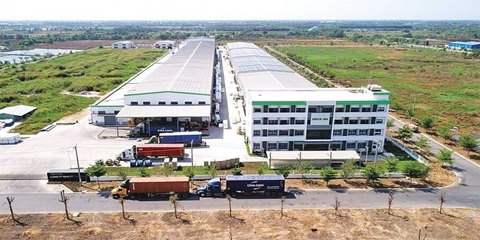
Instead of focusing only on land costs and incentives as usual, foreign investors are seeking a synchronised manufacturing ecosystem, from stable power supply and logistics to shared infrastructure and the convenience of completing residence procedures for experts to serve their long-term investment in the country.
MEMBER CORNER / PROMOTIONS
SENTRYSAFE FHW40200 – PROTECT YOUR VALUABLES, ENJOY PEACE OF MIND!
Looking for a reliable solution to protect your important documents, cash, and valuables from fire and water damage? Genuine SENTRYSAFE - Reliable protection for your valuables and peace of mind! Contact Sen Wai Vietnam for more information and personalized product recommendations.
PROPERTY / INDUSTRIAL ZONE
HCM CITY ATTRACTS US$5.7 BILLION INTO EXPORT PROCESSING AND INDUSTRIAL ZONES
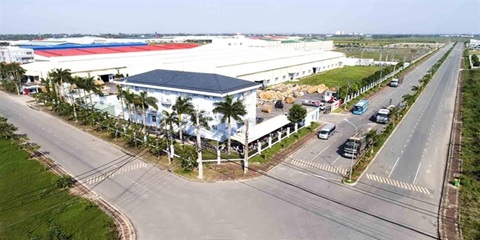
HCM City attracted US$5.7 billion in domestic and foreign investment into its export processing and industrial zones during the first nine months of 2026. The figure exceeded the city's full-year target by 31 per cent, highlighting strong momentum in high-quality industrial investment under Resolution No.10-NQ/TW. Total investment reached 131 per cent of the 2026 target of $4.25 billion and represented a 29 per cent increase compared with the same period in 2025, according to the city's Export Processing and Industrial Zones Authority (HEPZA).
INFRASTRUCTURE / CONSTRUCTION / LOGISTIC / PORT
DONG THAP PROVINCE STEPS UP INDUSTRIAL EXPANSION AND INFRASTRUCTURE CONNECTIVITY
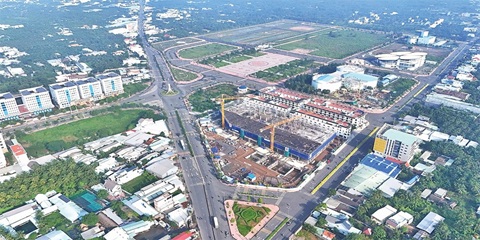
Accelerating public investment, strengthening inter-regional connectivity, and expanding industrial land are helping Dong Thap efficiently bolster competitiveness and drive economic growth. Following the 2025 merger of the former Dong Thap and Tien Giang provinces, the expanded Dong Thap province in the Mekong Delta faces mounting pressure to accelerate infrastructure development and strengthen connectivity among local economic zones, urban areas, industrial parks (IPs), and production centres.
Events Sponsors






















