Want to be in the loop?
subscribe to
our notification
Business News
CASHEW EXPORTS SURPASS $5 BILLION FOR THE FIRST TIME
With a record export value of over US$5.2 billion in 2025, cashews surpassed the $5 billion mark for the first time, becoming Việt Nam’s third-largest agricultural export after coffee and fruits & vegetables, according to the Vietnam Customs.
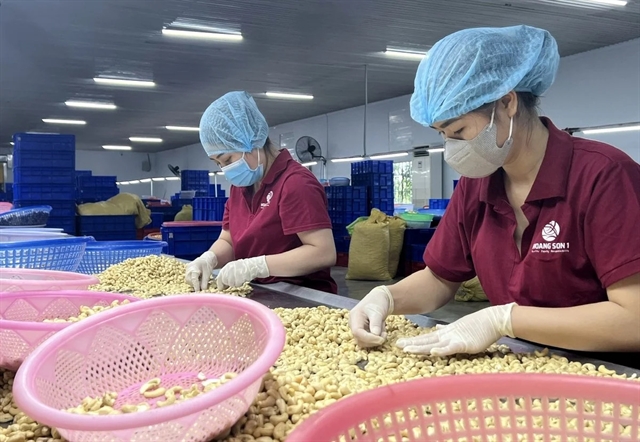
Việt Nam’s cashew exports reach record highs in both volume and revenue in 2025. — Photo courtesy of nongnghiepmoitruong.vn
HCM CITY — With a record export value of over US$5.2 billion in 2025, cashews surpassed the $5 billion mark for the first time, becoming Việt Nam’s third-largest agricultural export after coffee and fruits & vegetables, according to the Vietnam Customs.
In addition to setting a new value record, cashew exports in 2025 also reached a new volume high of 766,585 tonnes, up 5.7 per cent from 2024.
According to the latest data from Vietnam Customs, cashew exports in December 2025 alone reached $466 million, a sharp year-on-year increase of 29 per cent. This strong year-end surge lifted total export turnover for the year to more than $5.2 billion, a year-on-year increase of 5.7 per cent, officially placing cashews in the “$5 billion club” alongside fruits and vegetables, coffee and rice.
This marked the second consecutive year in which the cashew industry broke export value records, with the sector’s export revenue surpassing $4 billion for the first time in 2024.
Against the backdrop of declining rice export earnings, cashews rose to third place among Việt Nam’s key agricultural exports, trailing only coffee ($8.9 billion) and fruits & vegetables ($8.56 billion).
In 2025, China overtook the US for the first time to become the largest market for Vietnamese cashews, with export value reaching $1.1 billion. The US slipped to second place with $975 million, followed by the Netherlands at $495 million.
Bạch Khánh Nhựt, vice chairman of the Việt Nam Cashew Association (VINACAS), said exports to China surged thanks to the recovery of the Chinese economy, rising demand for health-oriented agricultural products, and Vietnamese enterprises’ improved ability to meet market requirements.
In contrast, cashew exports to the US declined significantly. Nhựt explained that from April 2025, after the US announced plans to impose reciprocal tariffs on trading partners, many US importers temporarily halted purchases amid uncertainty over potential tariff liabilities when shipments arrived. This uncertainty affected heavily on Việt Nam’s cashew exports to the US.
For more than a decade, the US had been Việt Nam’s largest cashew market, typically accounting for more than 20 per cent of export volume, including nearly 27 per cent in 2024.
Raw material concerns
However, despite leading the world in processing capacity, Việt Nam’s cashew industry still faces its “Achilles’ heel”: heavy dependence on imported raw materials, according to industry insiders.
Domestic supply currently meets only about 10 per cent of production demand, with the remainder sourced mainly from Africa and Cambodia.
In 2025, Việt Nam spent $4.5 billion importing more than 2.9 million tonnes of raw cashews, resulting in a trade surplus of just over $700 million, they said.
To address this, in 2026, VINACAS and relevant ministries will step up efforts to restore raw material zones in the Central Highlands and Southeastern regions.
In addition, measures such as imposing stricter technical barriers on imported cashew kernels and implementing programmes to replant cashew trees with high-yield varieties are expected to create breakthroughs for the industry, the association said.
Looking ahead, the industry aims not only to sustain export revenue above $5 billion but also to enhance value addition, build a national brand, and move further into high-value processed segments, rather than continuing to export mainly semi-processed products. — VNS
Source: VNS
Related News

BANKING / FINANCE / INSURANCE / TAX
REMITTANCES TO HCM CITY RISE NEARLY 40% IN Q3
Remittances to HCM City reached more than US$2.83 billion in the third quarter of this year, up 39.5 per cent from the previous quarter and 3.6 per cent year-on-year. This was the first quarter showing positive annual growth this year, helping narrow the decline in remittance inflows over the first nine months. According to the State Bank of Vietnam (SBV)’s Regional Branch 2, remittances transferred to HCM City through credit institutions and economic organisations totalled $2.835 billion in Q3, an increase of more than $802 million from the previous quarter.

TECHNOLOGY
TECH SECTOR GROWTH OPENS UP OPPORTUNITIES FOR VIỆT NAM TO GO GLOBAL
The growth of the electronics, semiconductor and high-tech sectors worldwide is opening up a variety of opportunities for Vietnamese enterprises to integrate more deeply into the global supply chain. However, to become suppliers for these corporations, domestic enterprises must meet rigorous standards regarding quality, technology, productivity and order fulfilment capabilities.
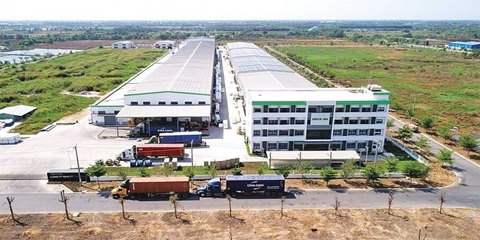
VIETNAM ECONOMY INVESTMENT
FOREIGN INVESTORS SEEKING A SYNCHRONISED MANUFACTURING ECOSYSTEM
Instead of focusing only on land costs and incentives as usual, foreign investors are seeking a synchronised manufacturing ecosystem, from stable power supply and logistics to shared infrastructure and the convenience of completing residence procedures for experts to serve their long-term investment in the country.
MEMBER CORNER / PROMOTIONS
SENTRYSAFE FHW40200 – PROTECT YOUR VALUABLES, ENJOY PEACE OF MIND!
Looking for a reliable solution to protect your important documents, cash, and valuables from fire and water damage? Genuine SENTRYSAFE - Reliable protection for your valuables and peace of mind! Contact Sen Wai Vietnam for more information and personalized product recommendations.
PROPERTY / INDUSTRIAL ZONE
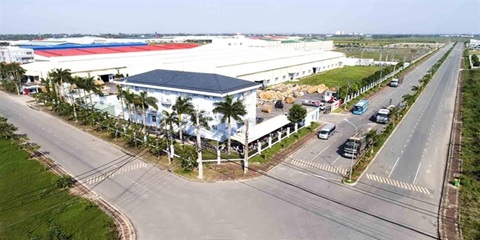
HCM CITY ATTRACTS US$5.7 BILLION INTO EXPORT PROCESSING AND INDUSTRIAL ZONES
HCM City attracted US$5.7 billion in domestic and foreign investment into its export processing and industrial zones during the first nine months of 2026. The figure exceeded the city's full-year target by 31 per cent, highlighting strong momentum in high-quality industrial investment under Resolution No.10-NQ/TW. Total investment reached 131 per cent of the 2026 target of $4.25 billion and represented a 29 per cent increase compared with the same period in 2025, according to the city's Export Processing and Industrial Zones Authority (HEPZA).
INFRASTRUCTURE / CONSTRUCTION / LOGISTIC / PORT
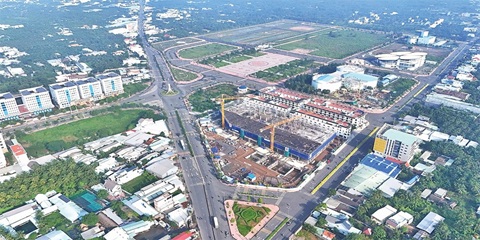
DONG THAP PROVINCE STEPS UP INDUSTRIAL EXPANSION AND INFRASTRUCTURE CONNECTIVITY
Accelerating public investment, strengthening inter-regional connectivity, and expanding industrial land are helping Dong Thap efficiently bolster competitiveness and drive economic growth. Following the 2025 merger of the former Dong Thap and Tien Giang provinces, the expanded Dong Thap province in the Mekong Delta faces mounting pressure to accelerate infrastructure development and strengthen connectivity among local economic zones, urban areas, industrial parks (IPs), and production centres.
Events Sponsors






















