Want to be in the loop?
subscribe to
our notification
Business News
BUSINESSES ADOPTS ESG AS PART OF LONG-TERM STRATEGY
As global markets demand greater sustainability, companies are facing pressure and opportunity to integrate environmental, social and governance (ESG) standards into long-term strategies, with stronger regulatory backing and sector-wide support.
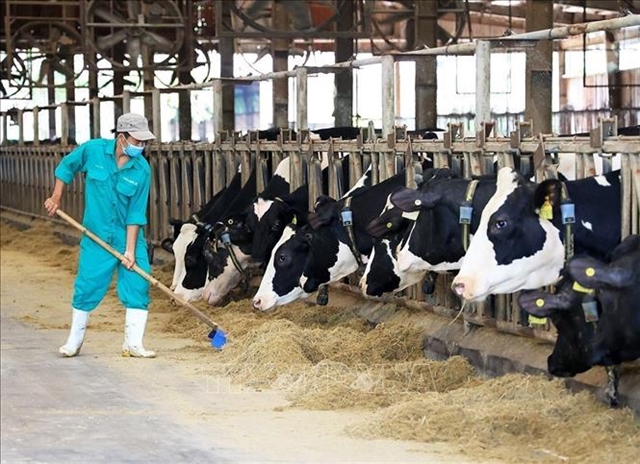
A worker cares for livestock at a farm operated by Vinamilk in Bình Dương Province. — VNA/VNS Photo
HÀ NỘI — Climate change poses challenges and opportunities for Vietnamese businesses as global markets increasingly prioritise sustainable products and services, said economists and industry experts.
The Director of Sustainability & Climate Change Advisory Services at Deloitte Việt Nam, Phạm Minh Hương, noted that enterprises can tap into new potential by developing environmentally-friendly products and improving energy efficiency.
According to the Ministry of Industry and Trade, if Việt Nam raises its energy efficiency rate from the current 1.8 per cent to 2 per cent, it would have an impact equivalent to halving the electricity output from coal, currently the country’s largest source of carbon emissions.
Companies like Hòa Phát have already begun investing in green steel technologies, adopting renewable energy to reduce emissions. These efforts meet regulatory requirements and help expand market share in developed economies.
Despite promising examples, ESG adoption in Việt Nam remains limited.
Lê Hoàng Hải, Deputy Head of the Public Company Supervision Department at the State Securities Commission of Việt Nam (SSC), revealed that only 14 per cent of more than 700 companies listed on the Hochiminh Stock Exchange (HOSE) publish standalone sustainability reports. This figure drops below five per cent when limited to those who are audited.
The primary barrier is the lack of a comprehensive legal framework and specific guidance for ESG standards. To address this, the SSC is collaborating with the International Finance Corporation (IFC) to develop a national set of ESG standards, expected by 2026. The aim is to assist small and medium-sized enterprises (SMEs), which make up 97 per cent of Việt Nam’s total businesses, in aligning with international regulations.
The Vice Chairman and Secretary-General of the Vietnam Association of Certified Public Accountants (VACPA), Trần Khánh Lâm, views ESG assurance as a business opportunity for auditors and a driver for improved corporate governance.
In 2023, over 500 auditors participated in IFRS S1 and S2 training programmes co-organised by VACPA and the Association of Chartered Certified Accountants (ACCA). However, Lâm acknowledged that a shortage of experts in environmental and technological fields poses a challenge to high-quality ESG auditing.
A recent report by PwC Vietnam found that only 20 per cent of auditors currently possess basic ESG knowledge, underlining the need for long-term workforce training and resource development.
International governance expert Simon C.Y. Wong warned that climate-related economic losses could reach US$38 trillion globally by 2049 without urgent action. This highlights the need for decisive corporate governance that integrates environmental and social risks.
Leading Vietnamese corporations such as Vinamilk and PAN Group offer successful examples. Vinamilk has developed Global GAP-certified dairy farms and integrated ESG practices across its supply chain to reduce emissions. Meanwhile, PAN Group has applied international governance standards to improve sustainable operations.
Phạm Minh Hương stressed that governance is not just about compliance, but a foundation for achieving environmental and social goals. Implementing international standards like IFRS S1 and S2 enables transparency and boosts credibility in global markets.
For instance, Vietnamese seafood exporters have used these frameworks to meet rigorous ESG requirements in the EU and US markets, where sustainability has become a crucial evaluation criterion.
Lê Hoàng Hải reaffirmed that Việt Nam’s regulatory framework is evolving. Corporate governance obligations are already set out in the 2019 Securities Law and Decree No 155/2020/NĐ-CP. The SSC has intensified its monitoring of ESG disclosures and imposed strict penalties on non-compliant firms.
In 2023, 15 listed companies were fined for delayed or opaque sustainability reporting – a sign of growing enforcement. These regulatory efforts help enterprises adapt to climate risks and prepare them to capture opportunities in a greener global economy. — VNS
Source: VNS
Related News

BANKING / FINANCE / INSURANCE / TAX
REMITTANCES TO HCM CITY RISE NEARLY 40% IN Q3
Remittances to HCM City reached more than US$2.83 billion in the third quarter of this year, up 39.5 per cent from the previous quarter and 3.6 per cent year-on-year. This was the first quarter showing positive annual growth this year, helping narrow the decline in remittance inflows over the first nine months. According to the State Bank of Vietnam (SBV)’s Regional Branch 2, remittances transferred to HCM City through credit institutions and economic organisations totalled $2.835 billion in Q3, an increase of more than $802 million from the previous quarter.

TECHNOLOGY
TECH SECTOR GROWTH OPENS UP OPPORTUNITIES FOR VIỆT NAM TO GO GLOBAL
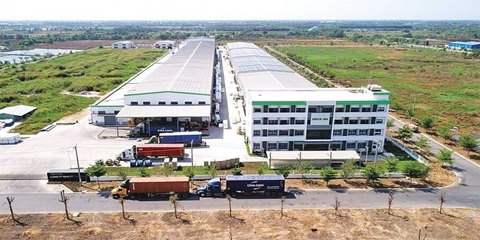
The growth of the electronics, semiconductor and high-tech sectors worldwide is opening up a variety of opportunities for Vietnamese enterprises to integrate more deeply into the global supply chain. However, to become suppliers for these corporations, domestic enterprises must meet rigorous standards regarding quality, technology, productivity and order fulfilment capabilities.
VIETNAM ECONOMY INVESTMENT
FOREIGN INVESTORS SEEKING A SYNCHRONISED MANUFACTURING ECOSYSTEM
Instead of focusing only on land costs and incentives as usual, foreign investors are seeking a synchronised manufacturing ecosystem, from stable power supply and logistics to shared infrastructure and the convenience of completing residence procedures for experts to serve their long-term investment in the country.
MEMBER CORNER / PROMOTIONS
SENTRYSAFE FHW40200 – PROTECT YOUR VALUABLES, ENJOY PEACE OF MIND!
Looking for a reliable solution to protect your important documents, cash, and valuables from fire and water damage? Genuine SENTRYSAFE - Reliable protection for your valuables and peace of mind! Contact Sen Wai Vietnam for more information and personalized product recommendations.
PROPERTY / INDUSTRIAL ZONE
HCM CITY ATTRACTS US$5.7 BILLION INTO EXPORT PROCESSING AND INDUSTRIAL ZONES
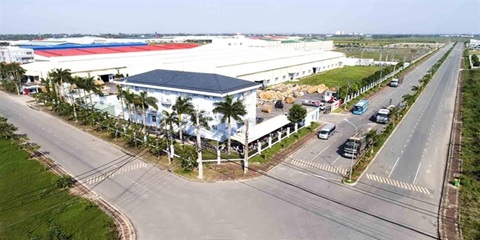
HCM City attracted US$5.7 billion in domestic and foreign investment into its export processing and industrial zones during the first nine months of 2026. The figure exceeded the city's full-year target by 31 per cent, highlighting strong momentum in high-quality industrial investment under Resolution No.10-NQ/TW. Total investment reached 131 per cent of the 2026 target of $4.25 billion and represented a 29 per cent increase compared with the same period in 2025, according to the city's Export Processing and Industrial Zones Authority (HEPZA).
INFRASTRUCTURE / CONSTRUCTION / LOGISTIC / PORT
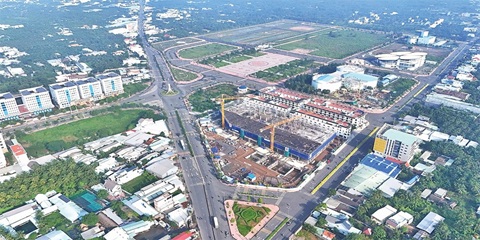
DONG THAP PROVINCE STEPS UP INDUSTRIAL EXPANSION AND INFRASTRUCTURE CONNECTIVITY
Accelerating public investment, strengthening inter-regional connectivity, and expanding industrial land are helping Dong Thap efficiently bolster competitiveness and drive economic growth. Following the 2025 merger of the former Dong Thap and Tien Giang provinces, the expanded Dong Thap province in the Mekong Delta faces mounting pressure to accelerate infrastructure development and strengthen connectivity among local economic zones, urban areas, industrial parks (IPs), and production centres.
Events Sponsors






















