Want to be in the loop?
subscribe to
our notification
Business News
BORDERS REOPEN TO WELCOME ESSENTIAL OVERSEAS EXPERTS
Thousands of foreign workers will be allowed to enter the country as the Vietnamese government is moving to ease entry restrictions following the containment of the coronavirus.
Vietnam sent 270 LG Electronics engineers into quarantine for 14 days on July 2 after they arrived from South Korea at Cat Bi Airport in the northern city of Haiphong.
The experts entered on a special Vietnam Airlines flight from Incheon International Airport with certificates issued by South Korean authorities, accepted by the Vietnamese government, saying they are coronavirus-negative, Haiphong authorities said. They have since been housed in hotels. The flight was the fifth bringing LG engineers to the company’s plant in Haiphong since the pandemic struck.
On June 25, Japan and Vietnam hailed the first commercial flight in what was seen as a step towards resuming travel in the region. The plane, mostly carrying businessmen, headed to Vietnam and involved a COVID-19 test on arrival and 14 days’ quarantine for the passengers.
Masataka Sam Yoshida, CEO of Vietnam RECOF Corporation said, “I cannot stop applauding the great job achieved with the first trip for Japanese people to an outside country since the pandemic broke out. I believe this could not have happened without the longstanding friendship between the two countries’ governments and the sleepless efforts of the people sending and welcoming the passengers on each side.”
Vietnam has been engaged in discussions to ease the entry of citizens from China, South Korea, and Japan into the country, but the government is resolute that resumption of travel must be based on strict disease prevention measures.
At the moment, the Vietnam Immigration Department under the Ministry of Public Security is considering allowing 437 foreign labourers including 16 investors, 304 engineering technicians, 37 highly-skilled labourers, 51 managers, and their families to enter the country. They are working for 100 companies, organisations, and agencies in Ho Chi Minh City.
Since June 8, the Ministry of Labour, Invalids and Social Affairs (MoLISA) has permitted some foreign labourers to enter the country, with most coming from China, South Korea, the United States, the UK, France, and Germany.
At the moment, there are 7,258 foreign workers who are allowed to enter Vietnam, according to MoLISA. In late June 2020, the MoLISA cited reports of 63 departments of labour, invalids and social affairs saying that as of early this month, the number of foreign workers stuck outside of Vietnam reaches 21,641, out of 93,425 foreign workers in Vietnam in total. They are mainly experts, skilled workers, and managers.
The number of foreign labourers has decreased by 23.16 per cent in the first six months of the year compared to last year’s period. Meanwhile, other nations such as China, Japan, and South Korea have asked Vietnam to allow over 7,000 labourers, who chiefly serve international institutions’ high-tech projects or national key plans, to enter the country.
Le Bich Loan, deputy head of the management department at Saigon Hi-tech Park, told VIR that the park is lacking about 30 highly skilled labourers to extend its manufacturing activities. “We have had about 500 operational experts in so far. In the whole high-tech park, the number of those who are stuck outside the country is not remarkable. Therefore, the manufacturing operation of the whole park appears to be back to normality.”
She added that businesses with experts coming into Vietnam need to provide their names and other information to the MoLISA. Every Wednesday, the ministry approves those entering the city.
Nguyen Van Lam, deputy director of Ho Chi Minh City Department of Labour, Invalids and Social Affairs, said that the ministry is reviewing the list of foreign labourers on its website, which recently became overloaded due to spikes in site traffic.
“People who are accredited will receive their visa at the Embassy of Vietnam in their own country. Countermeasures for preventing COVID-19 and 14 days of quarantine will be mandatory,” he added.
In the context of a potential second wave of pandemic infections, domestic airlines Vietnam Airlines, Vietjet, and Bamboo Airways are adding more flights to shuttle Vietnamese people from abroad. It is estimated that about 14,000 Vietnamese citizens living abroad will return to the country in due course.
According to a representative of Vietnam Airlines, passengers will be able to buy tickets at the Embassy of Vietnam in their countries, and the price will not be higher than usual.
The move to ease entry restrictions on foreign workers can soon help foreign businesses resume operation and recover from the coronavirus crisis. Yoshida from RECOF pointed out the next hurdle to overcome to create activation and vitalisation of the economy for both Japan and Vietnam would be further increasing traffic between both countries by altering the 14-day quarantine rules.
A total of 28 days of quarantine on both sides of the border remains by far the highest obstacle for short-time business trip travellers who usually spend two or three nights to attend crucial meetings or site visits.
Yoshida explained that comprehensive activation and promotion of Japanese business activities will be increased if regulations can be loosened soon. “One day in the near future, if new arrangements were to come up, I will have no doubt that there will be a rush of negotiations for investments which will finally contribute to the growth of the economy,” he stated.
Source: VIR
Related News

CHARITY / EXHIBITION / OTHER EVENTS
INVESTMENT OPPORTUNITIES IN CA MAU PROVINCE: 96 PROJECTS AND 20 STRATEGIC PROJECTS
We are pleased to share with you information on investment projects currently seeking investors in Ca Mau Province. Should your esteemed company or association be interested, we kindly invite you to review the project information and complete the registration form via the links provided. The Ho Chi Minh City Investment and Trade Promotion Centre (ITPC) will consolidate the expressions of interest and facilitate connections with the leadership of Ca Mau Province at a meeting tentatively scheduled for 13 November 2026 in Ho Chi Minh City.

MEMBER CORNER / PROMOTIONS
BẰNG KIỀU LIVESHOW - A SYMPHONY OF LOVE UNDER THE GOLDEN GLOW
A masterclass in live music that takes the audience on a soulful journey through immortal love songs, guided by the peerless artistry and emotive storytelling of renowned singer Bằng Kiều. The highlight of the night is his seamless musical chemistry with special guest Triệu Hồng Ngọc, promising passionate and deeply resonant duets inside the magnificent Grand Ballroom.
INFRASTRUCTURE / CONSTRUCTION / LOGISTIC / PORT
ĐÀ NẴNG GREEN-LIGHTS US$105 MILLION THAI DEVELOPMENT DEAL
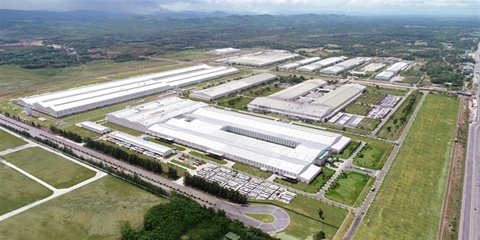
The central city has approved an investment proposal by Thailand’s WHA Group to develop infrastructure for the 400ha WHA Đà Nẵng Industrial Park project on two communes of Thăng Bình and Đồng Dương, with an investment of more than VNĐ2.7 trillion (US$105 million). The city said it approved WHA Industrial Development International's status as an investor in the project, which is expected to take place between 2027 and 2034.
VIETNAM ECONOMY INVESTMENT
MOBILE PHONE EXPORTS RISE 20% TO $51.8 BILLION IN FIRST NINE MONTHS
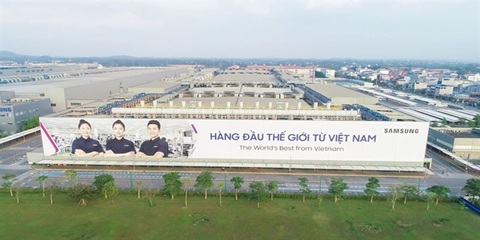
Exports of mobile phones and components rose 20 per cent year-on-year to nearly US$51.8 billion in the first nine months of 2026, with China, the US and Republic of Korea accounting for more than half of the total. Shipments to the three markets reached a combined $26.18 billion, or 50.6 per cent of total exports of the product group during the period, according to data from the Vietnam Department of Customs under the Ministry of Finance.
INFRASTRUCTURE / CONSTRUCTION / LOGISTIC / PORT
VIỆT NAM-CAMBODIA TRADE GATHERS PACE TOWARDS $20 BILLION TARGET
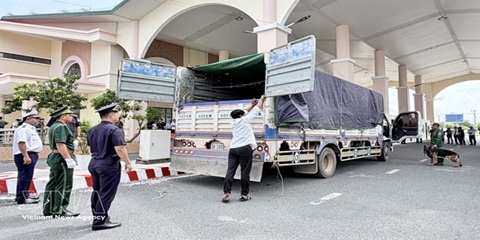
Trade between Việt Nam and Cambodia continues to grow, remaining a bright spot and a key pillar of bilateral cooperation as the two countries aim to raise two-way trade to US$20 billion in the coming years. After setting a record of more than $11.3 billion last year, bilateral trade reached about $8.7 billion in the first eight months of this year, up 8.3 per cent year on year.
VIETNAM ECONOMY INVESTMENT
FRUIT AND VEGETABLE EXPORTS POISED TO HIT $10 BILLION IN 2026
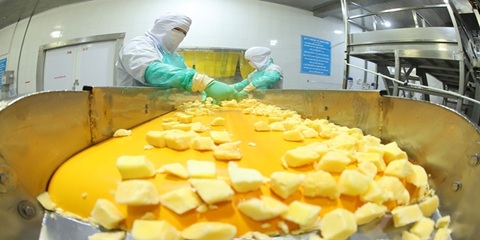
Fruit and vegetable exports are on track to reach nearly US$10 billion in 2026, after rising 19.9 per cent year on year to nearly US$7.4 billion in the first nine months, driven by strong seasonal demand and abundant tropical fruit supplies. The Ministry of Agriculture and Environment said the growth reflected stronger international demand for fresh produce and processed agricultural products.
Events Sponsors






















