Want to be in the loop?
subscribe to
our notification
Business News
BOOSTING INVESTMENT INTO SPECIALISED INDUSTRIAL PARKS
More investment has been channelled into building specialised industrial parks to meet the burgeoning business demand in the southern region.
There are two reasons behind a potential investment expansion of Vietnam Japan Technology Park (Vie-Pan Techno Park), according to Ho Xuan Loc, representing the project developer Vietnam Japan Technology Park Co., Ltd. based in Ho Chi Minh City. The project is located in Hiep Phuoc Industrial Park.
First, Vie-Pan Techno Park covers 13ha of total space and 18 Japanese firms have already registered to lease ready-built factory space of over 3ha. Of the remaining area, two other Japanese firms have leased more than 8ha to build factories.
The remaining vacant space is tight while it is impossible to expand the park to surrounding areas as no more land bank is left.
Second, the second phase of Hiep Phuoc IP of over 597ha has now basically fulfilled infrastructure investment.
As this IP specifically caters to high-tech and environment-friendly industries, it appears as the top choice for Vie-Pan Techno Park's expansion plan.
Vie-Pan Techno Park was licensed in 2013 with more than $31 million of total investment capital.
This is the first IP and industrial cluster (IC) model in Ho Chi Minh City set to attract Japanese small- and medium-sized enterprises (SMEs) operating in the supporting industry. In fact, the model has made important contributions to courting leading global high-tech players to Ho Chi Minh City.
This also serves as a model to create similar projects in the future, helping to lure Japanese and other foreign investors to the city and Vietnam as a whole.
In Dong Nai province, according to Masahiko Makata, CEO of Long Duc Investment Co., Ltd., Long Duc IP has just been approved by the relevant management agency to expand its area by an additional 299ha in the second phase.
The IP’s first phase was put in operation in 2013 on more than 282ha space and until present its, almost all of this space has been leased out.
As planned by Dong Nai management authorities, Long Hau IP aims to woo Japanese investors operating in mechanical, electric, electronic, high-grade materials, pharmaceuticals, school equipment, stationery, packaging, and interior decoration fittings, among others.
Also in Dong Nai province, local leaders recently decided to pilot two IC models catering mostly to agricultural processing projects.
Accordingly, the more than 77ha Long Giao IC in Cam My district will dedicate 50 per cent of its space to food and agricultural item processing, and Phu Tuc IC in Dinh Quan district envisages setting aside 60 per cent space for such projects.
Industry experts believe that the trend of building specialised IPs and ICs to meet businesses’ specific needs and to hail the anticipated rising wave of foreign investment into Vietnam will gain momentum in the time ahead.
For instance, in Binh Duong province Becamex IDC – one of Vietnam’s largest real estate and infrastructure developers – has just proposed expediting a project on establishing a science and technology industrial park to attract both leading players, SMEs, and startups in key industries of high added value.
Nguyen Viet Long, deputy general director of Becamex IDC, unveiled that they are pushing up plans for the project for submission to authorised management agencies.
Simultaneously, they have also taken the initiative to work with investors in high-tech manufacturing and infrastructure developers from the Netherlands, Japan, and South Korea.
In Ho Chi Minh City, Ly Kim Chi – chairwoman of the Food and Foodstuff Association of Ho Chi Minh City (FFA) – said that the FFA has proposed the city leaders to invest in an IP tailored for businesses in food and foodstuff processing.
This IP project would cover 100ha and be located in District 12 or Binh Chanh district.
“This will help firms scale up production to supplement supply to domestic and export markets, and also helping to reduce the number of firms relocating to neighbouring provinces,” said an FFA representative.
Source: VIR
Related News

CHARITY / EXHIBITION / OTHER EVENTS
INVESTMENT OPPORTUNITIES IN CA MAU PROVINCE: 96 PROJECTS AND 20 STRATEGIC PROJECTS
We are pleased to share with you information on investment projects currently seeking investors in Ca Mau Province. Should your esteemed company or association be interested, we kindly invite you to review the project information and complete the registration form via the links provided. The Ho Chi Minh City Investment and Trade Promotion Centre (ITPC) will consolidate the expressions of interest and facilitate connections with the leadership of Ca Mau Province at a meeting tentatively scheduled for 13 November 2026 in Ho Chi Minh City.

MEMBER CORNER / PROMOTIONS
BẰNG KIỀU LIVESHOW - A SYMPHONY OF LOVE UNDER THE GOLDEN GLOW
A masterclass in live music that takes the audience on a soulful journey through immortal love songs, guided by the peerless artistry and emotive storytelling of renowned singer Bằng Kiều. The highlight of the night is his seamless musical chemistry with special guest Triệu Hồng Ngọc, promising passionate and deeply resonant duets inside the magnificent Grand Ballroom.
INFRASTRUCTURE / CONSTRUCTION / LOGISTIC / PORT
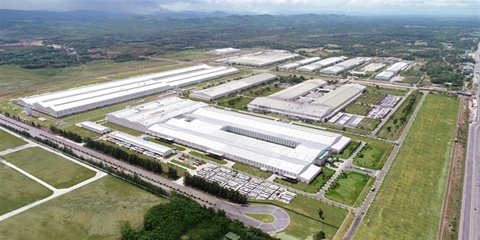
ĐÀ NẴNG GREEN-LIGHTS US$105 MILLION THAI DEVELOPMENT DEAL
The central city has approved an investment proposal by Thailand’s WHA Group to develop infrastructure for the 400ha WHA Đà Nẵng Industrial Park project on two communes of Thăng Bình and Đồng Dương, with an investment of more than VNĐ2.7 trillion (US$105 million). The city said it approved WHA Industrial Development International's status as an investor in the project, which is expected to take place between 2027 and 2034.
VIETNAM ECONOMY INVESTMENT
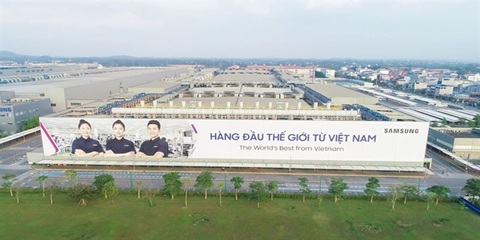
MOBILE PHONE EXPORTS RISE 20% TO $51.8 BILLION IN FIRST NINE MONTHS
Exports of mobile phones and components rose 20 per cent year-on-year to nearly US$51.8 billion in the first nine months of 2026, with China, the US and Republic of Korea accounting for more than half of the total. Shipments to the three markets reached a combined $26.18 billion, or 50.6 per cent of total exports of the product group during the period, according to data from the Vietnam Department of Customs under the Ministry of Finance.
INFRASTRUCTURE / CONSTRUCTION / LOGISTIC / PORT
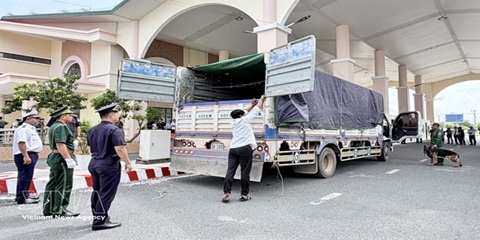
VIỆT NAM-CAMBODIA TRADE GATHERS PACE TOWARDS $20 BILLION TARGET
Trade between Việt Nam and Cambodia continues to grow, remaining a bright spot and a key pillar of bilateral cooperation as the two countries aim to raise two-way trade to US$20 billion in the coming years. After setting a record of more than $11.3 billion last year, bilateral trade reached about $8.7 billion in the first eight months of this year, up 8.3 per cent year on year.
VIETNAM ECONOMY INVESTMENT
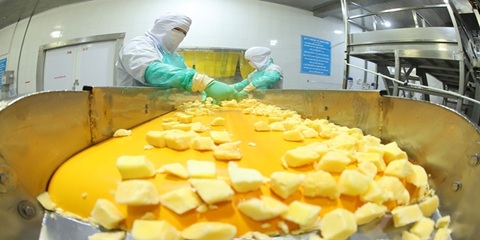
FRUIT AND VEGETABLE EXPORTS POISED TO HIT $10 BILLION IN 2026
Fruit and vegetable exports are on track to reach nearly US$10 billion in 2026, after rising 19.9 per cent year on year to nearly US$7.4 billion in the first nine months, driven by strong seasonal demand and abundant tropical fruit supplies. The Ministry of Agriculture and Environment said the growth reflected stronger international demand for fresh produce and processed agricultural products.
Events Sponsors






















