Want to be in the loop?
subscribe to
our notification
Business News
BANK CREDIT FOR REAL ESTATE BUSINESS RISES TO NEARLY $94.7 BILLION
Outstanding loans for urban area investment and housing development projects remained the largest category, reaching VNĐ833.6 trillion by the end of June, up 6.33 per cent from the end of March.
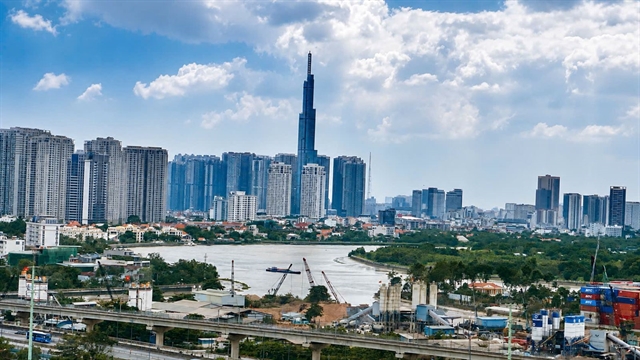
Real estate credit in the second quarter was managed in a cautious and selective manner. — VNA/VNS Photo
HÀ NỘI — Outstanding loans for real estate business activities rose to more than VNĐ2.5 quadrillion (nearly US$95 billion) as of June 30.
The Ministry of Construction's report on housing and the real estate market for the second quarter of 2026 showed that compared to the end of March 2026, the loans rose by more than VNĐ284 trillion. They were up more than VNĐ518 trillion compared to the end of 2025.
According to the report, outstanding loans for urban area investment and housing development projects remained the largest category, reaching VNĐ833.6 trillion by the end of June, up 6.33 per cent from the end of March.
Loans for land-use right acquisitions surged by more than 23 per cent to VNĐ314.5 trillion, while loans for industrial zone and export processing zone construction projects hit VNĐ184.2 trillion, an increase of over 32 per cent.
Conversely, loans for eco-tourism and resort projects declined by more than 4 per cent to VNĐ80.6 trillion.
According to the Ministry of Construction, real estate credit in the second quarter continued to be managed in a cautious and selective manner, prioritising capital for projects with full legal compliance and the capacity for implementation and completion, thus generating actual market supply.
Access to capital varies among real estate enterprises. Developers with strong financial standing, viable business plans and stable cash flows enjoy more favourable conditions for securing credit, whereas projects facing legal hurdles or low liquidity continue to struggle.
From an investment perspective, Tạ Mỹ Bách, head of property consulting firm Jones Lang Lasalle Vietnam’s capital markets division, noted a shift in investor appetite from strategies driven primarily by expectations of price hikes toward an emphasis on asset quality and actual operational performance. This indicates that an asset's cash-generating potential and operational efficiency are playing an increasingly critical role in investment decisions.
The developments in the first half of the year showed that bank capital continued to play a vital role in the real estate market, but access to such capital is becoming increasingly differentiated.
A developer's financial strength, a project's legal status, performance and ability to generate cash flow are emerging as key factors determining its appeal to both credit institutions and investors. — BIZHUB/VNS
Source: VNS
Related News

CHARITY / EXHIBITION / OTHER EVENTS
INVESTMENT OPPORTUNITIES IN CA MAU PROVINCE: 96 PROJECTS AND 20 STRATEGIC PROJECTS
We are pleased to share with you information on investment projects currently seeking investors in Ca Mau Province. Should your esteemed company or association be interested, we kindly invite you to review the project information and complete the registration form via the links provided. The Ho Chi Minh City Investment and Trade Promotion Centre (ITPC) will consolidate the expressions of interest and facilitate connections with the leadership of Ca Mau Province at a meeting tentatively scheduled for 13 November 2026 in Ho Chi Minh City.

MEMBER CORNER / PROMOTIONS
BẰNG KIỀU LIVESHOW - A SYMPHONY OF LOVE UNDER THE GOLDEN GLOW
A masterclass in live music that takes the audience on a soulful journey through immortal love songs, guided by the peerless artistry and emotive storytelling of renowned singer Bằng Kiều. The highlight of the night is his seamless musical chemistry with special guest Triệu Hồng Ngọc, promising passionate and deeply resonant duets inside the magnificent Grand Ballroom.
INFRASTRUCTURE / CONSTRUCTION / LOGISTIC / PORT
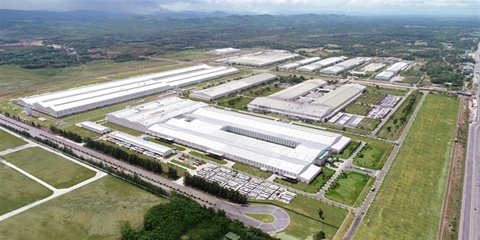
ĐÀ NẴNG GREEN-LIGHTS US$105 MILLION THAI DEVELOPMENT DEAL
The central city has approved an investment proposal by Thailand’s WHA Group to develop infrastructure for the 400ha WHA Đà Nẵng Industrial Park project on two communes of Thăng Bình and Đồng Dương, with an investment of more than VNĐ2.7 trillion (US$105 million). The city said it approved WHA Industrial Development International's status as an investor in the project, which is expected to take place between 2027 and 2034.
VIETNAM ECONOMY INVESTMENT
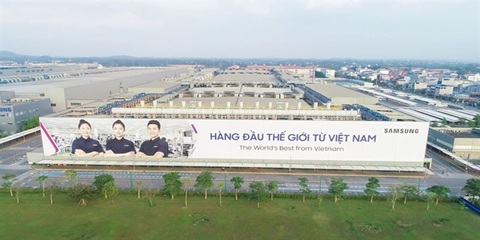
MOBILE PHONE EXPORTS RISE 20% TO $51.8 BILLION IN FIRST NINE MONTHS
Exports of mobile phones and components rose 20 per cent year-on-year to nearly US$51.8 billion in the first nine months of 2026, with China, the US and Republic of Korea accounting for more than half of the total. Shipments to the three markets reached a combined $26.18 billion, or 50.6 per cent of total exports of the product group during the period, according to data from the Vietnam Department of Customs under the Ministry of Finance.

INFRASTRUCTURE / CONSTRUCTION / LOGISTIC / PORT
VIỆT NAM-CAMBODIA TRADE GATHERS PACE TOWARDS $20 BILLION TARGET
Trade between Việt Nam and Cambodia continues to grow, remaining a bright spot and a key pillar of bilateral cooperation as the two countries aim to raise two-way trade to US$20 billion in the coming years. After setting a record of more than $11.3 billion last year, bilateral trade reached about $8.7 billion in the first eight months of this year, up 8.3 per cent year on year.
VIETNAM ECONOMY INVESTMENT
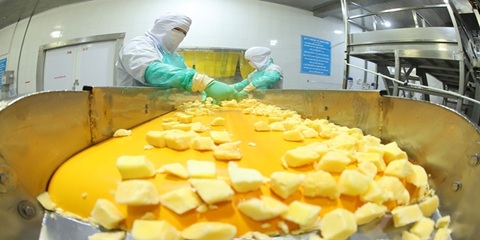
FRUIT AND VEGETABLE EXPORTS POISED TO HIT $10 BILLION IN 2026
Fruit and vegetable exports are on track to reach nearly US$10 billion in 2026, after rising 19.9 per cent year on year to nearly US$7.4 billion in the first nine months, driven by strong seasonal demand and abundant tropical fruit supplies. The Ministry of Agriculture and Environment said the growth reflected stronger international demand for fresh produce and processed agricultural products.
Events Sponsors






















