Want to be in the loop?
subscribe to
our notification
Business News
BALANCING GROWTH IN IPS AMID SURGING FDI
As Vietnam continues its path toward integration and modernization, industrial parks (IPs) and economic zones (EZs) are playing a pivotal role in driving economic growth, attracting foreign direct investment (FDI), and generating large-scale employment.
Formed through a cooperation model between Vietnam and Singapore, VSIP now operates 20 IPs in Vietnam, covering more than 14,000 ha. It has attracted over 900 FDI projects from 30 countries and territories, generating around 300,000 jobs.
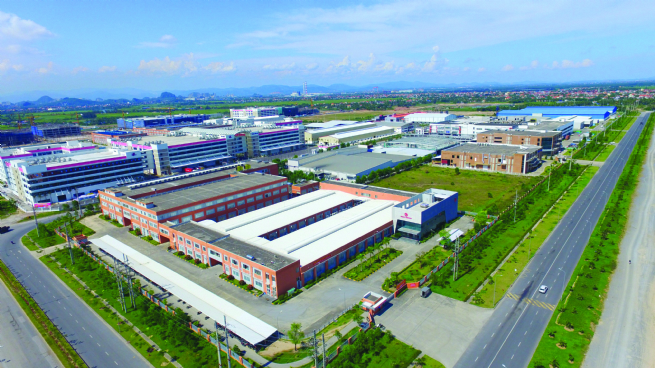
After over 30 years in Vietnam, Amata has established a strong reputation. With 3,000 ha of industrial, commercial, and service land, it has drawn over 220 multinational corporations with total investment exceeding US$6.7 billion, creating more than 60,000 jobs.
Competitive edge of Vietnam’s IPs
One of the most significant advantages propelling Vietnam’s IPs and EZs in the race to attract global investment is their strategic geographical location. Deep C sits adjacent to the Lach Huyen deep-water port and connects directly to the Hanoi–Hai Phong Expressway. VSIP projects in Binh Duong, now integrated into the administrative boundaries of Ho Chi Minh City, have become a key transit hub in the Southern supply chain. Meanwhile, Amata in Dong Nai enjoys seamless access to the Cai Mep–Thi Vai International Port, one of the region’s most critical export gateways.
In the North, Texhong Hai Ha leverages its proximity to the Mong Cai International Border Gate, while Nam Son – Hap Linh and Yen Phong benefit from their close distance to Noi Bai International Airport. Quang Yen EZ is strategically located along the Quang Ninh–Hai Phong–Hanoi economic corridor, and Van Don EZ stands out with a comprehensive infrastructure complex including an international airport and the Van Don–Mong Cai expressway, opening up multidimensional logistics connectivity.
Beyond location, Vietnam’s IPs and EZs are also advancing through increasingly modern and synchronized technical infrastructure. Deep C features a rare liquid cargo jetty in Northern Vietnam capable of handling 20,000 DWT vessels. VSIP incorporates an integrated model of industry, urban living, and services, creating a livable and efficient environment for professionals and high-skilled workers. Amata Dong Nai has invested in state-of-the-art wastewater treatment systems that meet stringent environmental standards.
Infrastructure aside, investment incentives and institutional reforms are key drivers enhancing the appeal of Vietnam’s IPs and EZs. Those located in key economic regions, such as Deep C and Van Don, offer corporate income tax exemptions for the first two years and a 50% reduction over the following four years. Notably, effective from January 15, 2025, the revised Law amending four major laws (Planning, Investment, PPP, and Bidding) introduces a "special investment mechanism" that can shorten procedures by up to 260 days, a major leap in improving the investment climate.
Another notable strength of Vietnam’s IPs and EZs is their capacity to foster diverse and self-sustaining industrial ecosystems. VSIP Trang Due has attracted over 50 supporting firms for LG, while Yen Phong has become a leading electronics manufacturing hub anchored by Samsung. Amata and Texhong Hai Ha are positioning themselves as high-tech centers, catering to streamlined, high-standard production needs.
Strategic shift needed to sustain momentum
One of the most pressing bottlenecks lies in the quality of human resources. FDI enterprises, especially in high-tech sectors such as semiconductors and artificial intelligence, frequently report a mismatch between recruitment needs and the training quality provided by educational institutions. The connection between academia and industry remains weak, resulting in an oversupply of low-skilled labor and a shortage of technically trained workers.
Rapid expansion has placed significant strain on infrastructure in many IPs, particularly in the Mekong Delta and North Central regions. Frequent power shortages, traffic congestion on key transport routes, and delays in planning approvals have all impacted project timelines and investor confidence.
Environmental infrastructure remains another critical shortfall. Statistics indicate that approximately 15% of IPs in Vietnam still lack centralized wastewater treatment systems, a concerning figure given the global shift toward sustainable development standards.
In the increasingly competitive race for global investment, Vietnam is under mounting pressure from countries like Indonesia and India, both of which are rapidly improving their incentive policies and ramping up infrastructure and workforce investments in high-tech sectors. Meanwhile, domestic linkages between Vietnamese firms and FDI enterprises remain weak.
To maintain investor appeal and elevate the stature of its IPs and EZs, Vietnam must implement a broad array of strategic solutions. First and foremost, a new model of collaboration should be built among IPs, businesses, and educational institutions to align training with market demands, especially in digital and core technology fields. Infrastructure investment must be holistic, encompassing power supply, transportation, and waste treatment, while also prioritizing renewable energy and circular economy practices.
Source: VCCI
Related News

MEMBER CORNER / PROMOTIONS
AN ELECTRIFYING NIGHT WITH THE "QUEEN OF DANCE" THU MINH AT THE GRAND HO TRAM!
The stage at The Grand Ballroom is set to catch fire as Vietnam’s undisputed "Queen of Dance," Thu Minh, takes the spotlight. Renowned for her powerhouse vocals, magnetic stage presence, and sultry, high-energy performances, Thu Minh promises an evening of pure musical euphoria. The energy escalates with an exclusive appearance by special guest and The Voice champion, Vu Thao My.
HR / LABOUR/ EMPLOYMENT
HIGH-QUALITY HUMAN RESOURCES NEEDED TO ATTRACT NEW TECH INVESTMENT CAPITAL
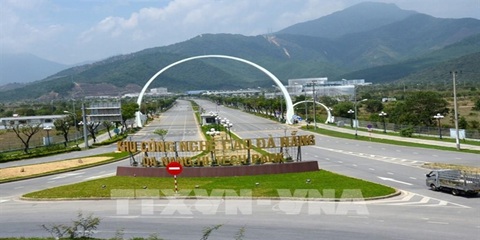
Besides infrastructure, Việt Nam must also rapidly develop a highly skilled workforce to attract investment in AI, semiconductors and advanced manufacturing, experts have said. Don Lam, CEO and co-founder of investment management company VinaCapital, said that global technology investors were increasingly looking at the readiness of the entire ecosystem, with high-quality human resources a decisive factor.

HR / LABOUR/ EMPLOYMENT
HIRING OUTLOOK STRENGTHENS IN Q4 AS SKILLS SHORTAGES PERSIST
Hiring intentions among employers in Việt Nam strengthened in the fourth quarter, with 52 per cent of surveyed companies planning to increase headcount between October and December, according to a ManpowerGroup survey released this week. Việt Nam's hiring outlook was stronger than the Asia Pacific and Middle East (APME) regional average of 33 per cent and the global average of 29 per cent, ranking third in the region and 11th globally among 42 markets surveyed.

BANKING / FINANCE / INSURANCE / TAX
LARGE BANKS FORECAST TO GAIN HIGHER PROFITABILITY IN H2 2026
The return on average assets (ROAA) of the banking sector will likely remain stable at around 1.5 per cent in the second half of 2026, but profitability divergence among banks will increase, with large banks outperforming peers on stronger margins and diversified earnings, analysts forecast. In a recent report on the banking sector, analysts from the Vietnam Investors Service Rating said the sector’s ROAA rose by 10 basis points quarter-on-quarter to 1.51 per cent in the first half of this year, driven by net interest margin (NIM) improvements at some State-owned banks and large private banks.
GARMENT / TEXTILE
VIỆT NAM'S FOOTWEAR, BAG EXPORTS TO US TOP $8 BILLION IN EIGHT MONTHS
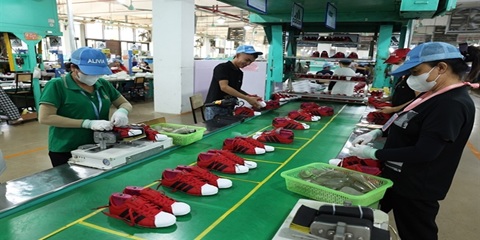
Việt Nam's exports of footwear and handbags to the US exceeded US$8 billion in the first eight months of 2026, as the US and EU remained the country's biggest markets despite sluggish growth in footwear shipments. Exports from Việt Nam's leather and footwear sector reached more than $2.45 billion in August, down 9 per cent from July but up 3 per cent from a year earlier, according to preliminary statistics.
VIETNAM ECONOMY INVESTMENT
LÂM ĐỒNG TARGETS DIGITAL ECONOMY TO ACCOUNT FOR 30 PER CENT OF GRDP BY 2030
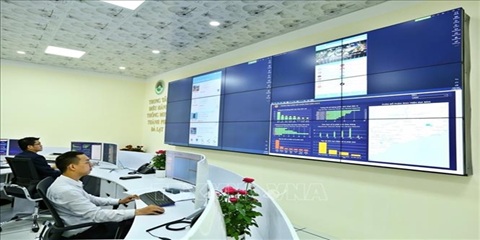
Lâm Đồng Province aims to raise the digital economy’s contribution to around 30 per cent of its gross regional domestic product (GRDP) by 2030, as part of a five-year plan to develop digital economy and society issued recently. Under Plan No. 15358/KH-UBND, the province targets more than 60 per cent of small- and medium-sized enterprises (SMEs) to adopt digital technologies by 2030 while increasing the value of cashless payments to 30 times its GRDP.
Events Sponsors






















