Want to be in the loop?
subscribe to
our notification
Business News
ACTIVELY INITIATING, EFFECTIVELY MANAGING VIETNAM'S SECOND ECONOMIC REFORM
The Document of the 13th Party Congress sets out key tasks and solutions to create a premise for the next terms to successfully achieve the country's strategic development goals to 2030, with a vision to 2045. The Congress marked a new era and a turning point for Vietnam to actively initiate the second economic reform.
The first economic renovation of Vietnam, launched in the late 1980s at the back of Directive 100 of the Secretariat of the Party Central Committee dated January 13, 1981 on contractual output assigned to workers in agricultural cooperatives, created great development in agricultural production and laid the groundwork for the formation of market economy in Vietnam. Breakthroughs and successes in agricultural production stimulated and inspired the industrial sector to move towards a market economy. Boosted by the Fourth Industrial Revolution and global economic integration, remarkable achievements of the 40-year renovation have highlighted two positions of Vietnam in the new context. Firstly, Vietnam is becoming one of the most dynamic market economies in the Indo-Pacific region from the formation of five capital resources of the country's economy: Finance, nature, production, human and society. Secondly, the country has become one of the very few countries holding an extremely important position in the East Sea - the lifeline of maritime traffic connecting the Pacific Ocean with the Indian Ocean, Europe with Asia, the Middle East with Asia. This is considered the second busiest international shipping route in the world.
The question for now is what economic sectors will be groundbreaking and influential in this second reform? According to economic strategists and resource managers, maintaining and developing five capital resources with international opportunities will play a decisive role in the country's second economic reform in the market economy. In administration, natural capital development combined with productive capital will be a breakthrough with a widespread effect in the economy. Natural capital is a natural asset (mainly land) that provides inputs of natural resources and environmental services for economic production. Productive capital is the gathering of physical facilities, technical infrastructure and technology available for delivering services and for economic purposes. Natural capital (land) is a precious resource playing a decisive role in the socio-economic development of each country. Being aware of the importance of this resource, the Party and the State of Vietnam always pay special attention to land management, regularly develop and improve the regulatory system on land, propose and carry out basic tasks and solutions to utilize land resources and meet development requirements of the country in each period. The Document of the 13th Party Congress also underlines the tasks: "strict management, rational and efficient use of land and resources". This is a completely new and unprecedented content in such a document.
However, effective management and use of land is not passive but must be active in technical infrastructure investment, as the Chinese often say: "If you want to get rich, you must build the road first". In other words, to get rich, develop natural capital and make land more valuable, we must invest in infrastructure, especially traffic, because it is an inseparable and costly part of logistics. In the digital economy and integration, logistics plays a decisive role not only for people's livelihoods but also in the success or failure of the national, regional and global supply chains.
Infrastructure investment for land such as traffic will certainly require a huge sum of money. The Organization for Economic Cooperation and Development (OECD) estimates that globally US$71 trillion is needed for investment in infrastructure by 2030. This represents about 3.5% of the world’s annual GDP from 2007 to 2030. However, this investment will increase natural capital (land) in the medium and long term and enhance the magnet of corporate bonds and government bonds of Vietnam. This value will increase many times as the East Sea plays an increasingly central role in the global logistics chain. Moreover, natural capital development will increase the value of productive capital as these two organic resources work together to bolster labor productivity and solve employment matters for a populous country like Vietnam.
With a new national position and regional vision, the Government of Vietnam also needs to strengthen policies on borrowing money for road construction, collecting traffic tolls for investment repayment, collecting surcharges for vehicle purchases, and setting up a separate traffic construction fund. The government needs to conduct institutional reform to attract investment funds for transport and open up closed markets like railways. Perhaps, investment funds should be balanced by collected traffic tolls and developed strongly to apply methods such as borrowing capital from banks, issuing bonds, issuing shares, collecting money from transfer of traffic toll rights (in fact, selling business rights to enterprises) and using foreign capital.
The National Assembly needs to work with the Government to study, supplement and complete the Land Law and strictly enforce land policies and laws for infrastructure development. Especially, there is a need for amending the Land Law, fueled by the master plan for transport network, national highway and high-speed railway. At the same time, it is necessary to review land use tax policies on price support and land compensation for site clearance, based on market prices, to ensure fairness and flexibility.
Private sector participation in infrastructure can help reduce pressure on public finance and increase the portfolio of public sector investment projects. Governments can also benefit from private sector skills and gain income and efficiency by delegating construction and, sometimes, management of infrastructure projects to private investors. From an economic growth perspective, infrastructure not only drives development and facilitates private investment and competitiveness across all sectors of national and regional economies, but also generates attractive investment opportunities. However, while infrastructure investment opportunities are abundant, investors are not fully grasping them right now - often due to gaps in the investment climate. That exposes certain risks to private investors. A well-targeted government policy reform could increase quality and quantity of private infrastructure investment, a substantial complement to public investment.
In summary, the second economic reform marked by the 13th National Party Congress, driven by the strong speed and scale of five basic resources in the economy will require much more courage, determination and intelligence than the first reform of national leaders and administrators. Specifically, active management and combined development of two resources - land and transport infrastructure - in the market economy will play a decisive role in the course of reform. When these two resources combine to grow positively, it will motivate the development of the remaining three resources - finance, human and society - to move towards a sustainable and prosperous country. This process requires the utmost effort and initiative of all economic actors for the country’s long-term benefits, especially in a time of high risks caused by pandemics, major conflicts, and economic competition among superpowers. In particular, the leadership of the Government and the National Assembly, featuring amendments to the Land Law and visionary traffic planning to make good use of regional geopolitical changes, will make the biggest differences in successful economic development.
Source: VCCI
Related News

BANKING / FINANCE / INSURANCE / TAX
REMITTANCES TO HCM CITY RISE NEARLY 40% IN Q3
Remittances to HCM City reached more than US$2.83 billion in the third quarter of this year, up 39.5 per cent from the previous quarter and 3.6 per cent year-on-year. This was the first quarter showing positive annual growth this year, helping narrow the decline in remittance inflows over the first nine months. According to the State Bank of Vietnam (SBV)’s Regional Branch 2, remittances transferred to HCM City through credit institutions and economic organisations totalled $2.835 billion in Q3, an increase of more than $802 million from the previous quarter.
TECHNOLOGY
TECH SECTOR GROWTH OPENS UP OPPORTUNITIES FOR VIỆT NAM TO GO GLOBAL
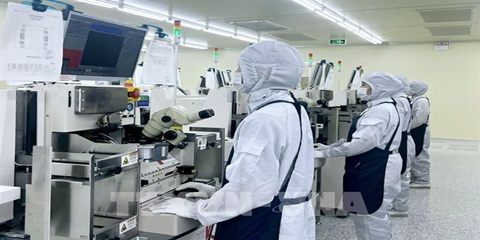
The growth of the electronics, semiconductor and high-tech sectors worldwide is opening up a variety of opportunities for Vietnamese enterprises to integrate more deeply into the global supply chain. However, to become suppliers for these corporations, domestic enterprises must meet rigorous standards regarding quality, technology, productivity and order fulfilment capabilities.
VIETNAM ECONOMY INVESTMENT
FOREIGN INVESTORS SEEKING A SYNCHRONISED MANUFACTURING ECOSYSTEM
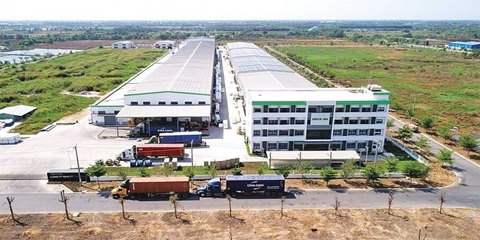
Instead of focusing only on land costs and incentives as usual, foreign investors are seeking a synchronised manufacturing ecosystem, from stable power supply and logistics to shared infrastructure and the convenience of completing residence procedures for experts to serve their long-term investment in the country.
MEMBER CORNER / PROMOTIONS
SENTRYSAFE FHW40200 – PROTECT YOUR VALUABLES, ENJOY PEACE OF MIND!
Looking for a reliable solution to protect your important documents, cash, and valuables from fire and water damage? Genuine SENTRYSAFE - Reliable protection for your valuables and peace of mind! Contact Sen Wai Vietnam for more information and personalized product recommendations.
PROPERTY / INDUSTRIAL ZONE
HCM CITY ATTRACTS US$5.7 BILLION INTO EXPORT PROCESSING AND INDUSTRIAL ZONES
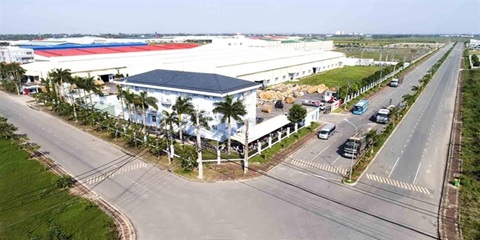
HCM City attracted US$5.7 billion in domestic and foreign investment into its export processing and industrial zones during the first nine months of 2026. The figure exceeded the city's full-year target by 31 per cent, highlighting strong momentum in high-quality industrial investment under Resolution No.10-NQ/TW. Total investment reached 131 per cent of the 2026 target of $4.25 billion and represented a 29 per cent increase compared with the same period in 2025, according to the city's Export Processing and Industrial Zones Authority (HEPZA).
INFRASTRUCTURE / CONSTRUCTION / LOGISTIC / PORT
DONG THAP PROVINCE STEPS UP INDUSTRIAL EXPANSION AND INFRASTRUCTURE CONNECTIVITY
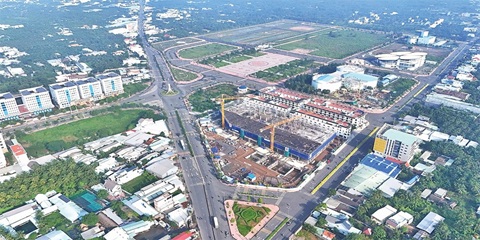
Accelerating public investment, strengthening inter-regional connectivity, and expanding industrial land are helping Dong Thap efficiently bolster competitiveness and drive economic growth. Following the 2025 merger of the former Dong Thap and Tien Giang provinces, the expanded Dong Thap province in the Mekong Delta faces mounting pressure to accelerate infrastructure development and strengthen connectivity among local economic zones, urban areas, industrial parks (IPs), and production centres.
Events Sponsors






















