Want to be in the loop?
subscribe to
our notification
Business News
60 REAL ESTATE PROJECTS UNDER INVESTIGATION
60 real estate projects on the list (see below) which has been submitted to the prime minister (PM) are going to be investigated for signs of violations.
The Ministry of Finance (MoF) has just submitted to the PM the Official Letter about investigating the land uses of equitised firms. The letter attached a list of 60 real estate projects in ten cities and provincess. MoF proposed the Government Inspectorate to investigate them.
According to Article 31(3) of Decree No.59/2011/ND-CP on equitising SOEs, issued on July 18, 2011 by the government, if the enterprise leases land and pays rent annually, rent payment sums shall not be included in the value of the enterprise.
However, Article 1(6) of Decree No.189/2013/ND-CP issued on November 20, 2013 by the government to amend and supplement some articles of Decree 59 indicates that in case equitised enterprises have been allocated land and have paid rent accordingly or received land lawfully in order to transfer to another entity or to rent it out, land use rights should be included in the value of the enterprise.
Article 39 of Law No.69/2014/QH13 on the management and utilisation of state capital invested in enterprises’ manufacturing and business activities indicates that capital transfer related to land use rights must comply with the Law on Land. Besides, transferring state investments in joint-stock companies whose stocks have yet to be listed on the stock exchange market shall be carried out through open auction. In case the open auction is not successful, competitive bidding shall be in order. In case the competitive bidding fails, the method agreed by the interested parties shall follow.
Also, MoF quoted Article 38(1) of Decree No.91/2015/ND-CP issued on October 13, 2015 by the government, “Determination of the starting price of state capital before an open auction is held or before an arranged sale is made through an organisation competent to conduct price evaluation in accordance with legal regulations on price evaluation and must ensure that the land use right at the time of state capital transfer is valued correctly.”
MoF also said that open auctions of land use rights are applied to the cases of building houses for sale, renting, and leasing the land acquired by the government due to rearrangements of the headquarters, non-business units, production and business establishments whose assets are attached to the state-owned land in question.
The cases when the open auctions are not applicable are decided by the PM on their individual merits.
Nevertheless, currently, in Hanoi and Ho Chi Minh City, as well as in many other localities, when transferring or leasing land plots which were acquired by the state due to rearrangements of headquarters, non-business units, production and business establishments whose assets are attached to the state-owned land, local authorities do not implement open auctions of land use rights, and they do not have the PM’s approval, either.
MoF also said that Circular No.36 of the Ministry of Natural Resources and Environment (MoNRE) did not issue detailed guidance on the methods to determine land price to ensure transparency and that the price of land is close to the market price. This leads to wrong calculation of land use fees or land lease fees when the land is transferred to be used for other purposes, which causes losses for the state budget.
Determining the land price to collect land use fees, land tax, and land lease fees is mainly based on the consulting companies’ calculation, which can be significantly lower than the market price.
The determination of land price in some localities is not implemented in accordance with all prescribed procedures. For example, provincial people’s committees approve the determined land price without consulting the standing committees of provincial and municipal people’s councils or reporting to the provincial and municipal people’s councils in a timely manner.
MoF requested the Government Inspectorate to compile an investigation plan on the projects with signs of violations. These violations include not sticking to the approved investment purposes, violations of the Law on Land, and wrongly determining land use or lease fees to be far from the market value.
Meanwhile, MoF proposed the government to request the chairmen of the people’s committees in provinces and cities to temporarily suspend high-rise building projects the downtown of big cities which are being constructed on land that was acquired without open auctions. Chairmen should collect information on all the cases and report to the PM.
In response, the Government Office has sent an Official Letter to request the list of projects with signs of violations to be sent to the Government Inspectorate so that it can investigate according to the inspection plan of land administration in 2017, earlier approved by the PM.
Source: VIR
Related News

CHARITY / EXHIBITION / OTHER EVENTS
INVESTMENT OPPORTUNITIES IN CA MAU PROVINCE: 96 PROJECTS AND 20 STRATEGIC PROJECTS
We are pleased to share with you information on investment projects currently seeking investors in Ca Mau Province. Should your esteemed company or association be interested, we kindly invite you to review the project information and complete the registration form via the links provided. The Ho Chi Minh City Investment and Trade Promotion Centre (ITPC) will consolidate the expressions of interest and facilitate connections with the leadership of Ca Mau Province at a meeting tentatively scheduled for 13 November 2026 in Ho Chi Minh City.

MEMBER CORNER / PROMOTIONS
BẰNG KIỀU LIVESHOW - A SYMPHONY OF LOVE UNDER THE GOLDEN GLOW
A masterclass in live music that takes the audience on a soulful journey through immortal love songs, guided by the peerless artistry and emotive storytelling of renowned singer Bằng Kiều. The highlight of the night is his seamless musical chemistry with special guest Triệu Hồng Ngọc, promising passionate and deeply resonant duets inside the magnificent Grand Ballroom.
INFRASTRUCTURE / CONSTRUCTION / LOGISTIC / PORT
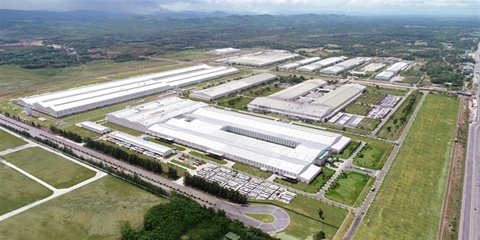
ĐÀ NẴNG GREEN-LIGHTS US$105 MILLION THAI DEVELOPMENT DEAL
The central city has approved an investment proposal by Thailand’s WHA Group to develop infrastructure for the 400ha WHA Đà Nẵng Industrial Park project on two communes of Thăng Bình and Đồng Dương, with an investment of more than VNĐ2.7 trillion (US$105 million). The city said it approved WHA Industrial Development International's status as an investor in the project, which is expected to take place between 2027 and 2034.
VIETNAM ECONOMY INVESTMENT
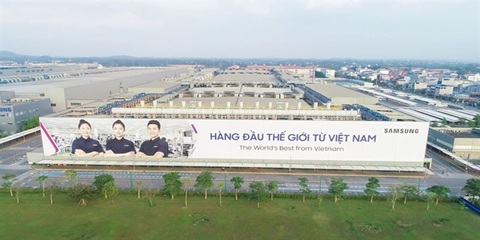
MOBILE PHONE EXPORTS RISE 20% TO $51.8 BILLION IN FIRST NINE MONTHS
Exports of mobile phones and components rose 20 per cent year-on-year to nearly US$51.8 billion in the first nine months of 2026, with China, the US and Republic of Korea accounting for more than half of the total. Shipments to the three markets reached a combined $26.18 billion, or 50.6 per cent of total exports of the product group during the period, according to data from the Vietnam Department of Customs under the Ministry of Finance.
INFRASTRUCTURE / CONSTRUCTION / LOGISTIC / PORT
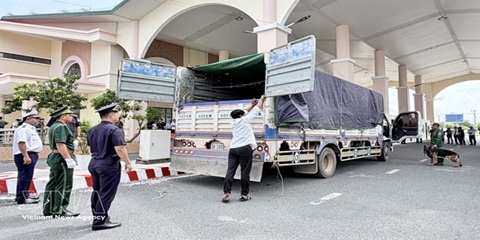
VIỆT NAM-CAMBODIA TRADE GATHERS PACE TOWARDS $20 BILLION TARGET
Trade between Việt Nam and Cambodia continues to grow, remaining a bright spot and a key pillar of bilateral cooperation as the two countries aim to raise two-way trade to US$20 billion in the coming years. After setting a record of more than $11.3 billion last year, bilateral trade reached about $8.7 billion in the first eight months of this year, up 8.3 per cent year on year.
VIETNAM ECONOMY INVESTMENT
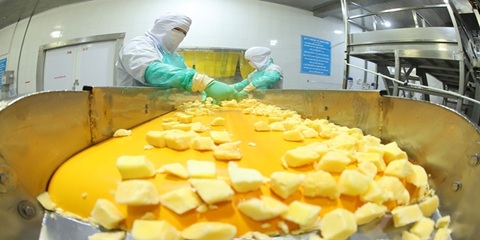
FRUIT AND VEGETABLE EXPORTS POISED TO HIT $10 BILLION IN 2026
Fruit and vegetable exports are on track to reach nearly US$10 billion in 2026, after rising 19.9 per cent year on year to nearly US$7.4 billion in the first nine months, driven by strong seasonal demand and abundant tropical fruit supplies. The Ministry of Agriculture and Environment said the growth reflected stronger international demand for fresh produce and processed agricultural products.
Events Sponsors






















