Want to be in the loop?
subscribe to
our notification
Business News
2021 REMAINS GAP YEAR FOR SOLAR DEVELOPERS
After a boom in solar development thanks to incentives given in 2020, Vietnam held back due to a policy gap that has pushed investors into an awkward situation this year.
In 2020, Tien Thinh Trading and Construction Services Co., Ltd. implemented dozens of solar projects in many southern provinces and cities, with total revenues of the company reaching around $430,000. However, this year the firm only implemented a few small-scale projects with total revenues shrinking to one-tenth lower.
“Many businesses are waiting for the new solar pricing policy,” said Trinh Ngoc Quyet Tien, director of the company.
Tien explained that the incentives for solar projects have expired, whereas state-run Electricity of Vietnam (EVN) stopped receiving requests for connection and signings of power purchase agreements from residents and businesses after the end of last year.
Under the prime minister’s Decision No.13/2020/QD-TTg on mechanisms to promote the development of solar power projects in Vietnam, the prices of each kilowatt-hour generated from ground-mounted, floating, and rooftop solar initiatives are 7.09, 7.69, and 8.38 US cents, respectively, but this policy also expired last year.
Up to now, the government has not yet issued further instructions on procedures for electricity purchases and sale contracts, as well as payments for purchased electricity from rooftop solar power systems.
The south-central province of Ninh Thuan People’s Committee said in a recent document that investors have worked day and night to complete projects, but some of them missed the deadline to enjoy the feed-in tariffs (FiT). Even now, some electricity has been generated and delivered to the grid, but EVN and investors could not calculate selling prices.
There have been many meetings between investors, EVN, and provinces during this year, but no positive movement has been made.
The FiT has had a great impact on equipment manufacturers and trading units, as well as developers and investors using solar power. Rooftop solar installations skyrocketed in Vietnam last year before the FiT deadline, with more than 9GWp of rooftop solar installed in the country. However, the hot development of solar projects caused an overload of supply.
Bui Van Tien, CEO at VATEC Consulting Co., Ltd., said during the Zoom meeting termed “Paving the way for green growth through buildings in Vietnam” hosted by Energy Box Vietnam last week, “After the boom, the solar market was almost frozen due to both the lack of a pricing policy and the pandemic situation. Electricity consumption in 2021 is also lower as factories reduced their capacities.”
However, Tien predicted that this situation would only last “for the short-term as Vietnam made a strong commitment at COP26 to net-zero emissions and policy development for the solar sector in the coming time.”
Hoang Tien Dung, director of the Department of Electricity and Renewable Energy under the Ministry of Industry and Trade admitted that an FiT for solar power was previously considered suitable to attract investment. “Technological progress also helps projects to be more efficient and calculate solar power price reductions while ensuring benefits for investors as well as electricity buyers,” Dung said.
In March, he stated that rooftop solar power could be traded at only 5.2-5.8 US cents per kWh, with these rates based on an assessment by foreign consultants on the changes to and development of renewable energy, as well as the price of equipment in Vietnam and around the world.
Meanwhile, foreign investors have used mergers and acquisitions to expand their renewable energy investment in Vietnam because of a lack of policy for solar power projects at the moment. All acquired projects are completed and received the FiT prices.
For instance, Banpu Power Plc this month announced that it has acquired Ha Tinh Solar Power JSC in a deal worth $23.9 million as part of its strategy for renewable power businesses across Asia-Pacific.
Source: VIR
Related News

BANKING / FINANCE / INSURANCE / TAX
REMITTANCES TO HCM CITY RISE NEARLY 40% IN Q3
Remittances to HCM City reached more than US$2.83 billion in the third quarter of this year, up 39.5 per cent from the previous quarter and 3.6 per cent year-on-year. This was the first quarter showing positive annual growth this year, helping narrow the decline in remittance inflows over the first nine months. According to the State Bank of Vietnam (SBV)’s Regional Branch 2, remittances transferred to HCM City through credit institutions and economic organisations totalled $2.835 billion in Q3, an increase of more than $802 million from the previous quarter.

TECHNOLOGY
TECH SECTOR GROWTH OPENS UP OPPORTUNITIES FOR VIỆT NAM TO GO GLOBAL
The growth of the electronics, semiconductor and high-tech sectors worldwide is opening up a variety of opportunities for Vietnamese enterprises to integrate more deeply into the global supply chain. However, to become suppliers for these corporations, domestic enterprises must meet rigorous standards regarding quality, technology, productivity and order fulfilment capabilities.
VIETNAM ECONOMY INVESTMENT
FOREIGN INVESTORS SEEKING A SYNCHRONISED MANUFACTURING ECOSYSTEM
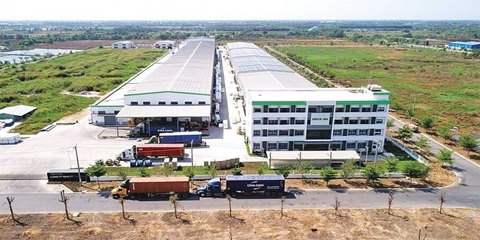
Instead of focusing only on land costs and incentives as usual, foreign investors are seeking a synchronised manufacturing ecosystem, from stable power supply and logistics to shared infrastructure and the convenience of completing residence procedures for experts to serve their long-term investment in the country.
MEMBER CORNER / PROMOTIONS
SENTRYSAFE FHW40200 – PROTECT YOUR VALUABLES, ENJOY PEACE OF MIND!
Looking for a reliable solution to protect your important documents, cash, and valuables from fire and water damage? Genuine SENTRYSAFE - Reliable protection for your valuables and peace of mind! Contact Sen Wai Vietnam for more information and personalized product recommendations.
PROPERTY / INDUSTRIAL ZONE
HCM CITY ATTRACTS US$5.7 BILLION INTO EXPORT PROCESSING AND INDUSTRIAL ZONES
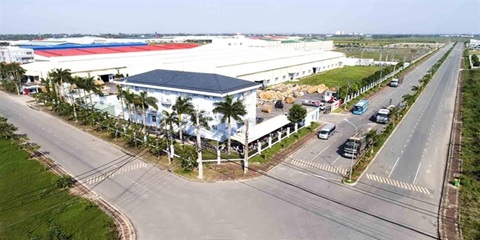
HCM City attracted US$5.7 billion in domestic and foreign investment into its export processing and industrial zones during the first nine months of 2026. The figure exceeded the city's full-year target by 31 per cent, highlighting strong momentum in high-quality industrial investment under Resolution No.10-NQ/TW. Total investment reached 131 per cent of the 2026 target of $4.25 billion and represented a 29 per cent increase compared with the same period in 2025, according to the city's Export Processing and Industrial Zones Authority (HEPZA).
INFRASTRUCTURE / CONSTRUCTION / LOGISTIC / PORT
DONG THAP PROVINCE STEPS UP INDUSTRIAL EXPANSION AND INFRASTRUCTURE CONNECTIVITY
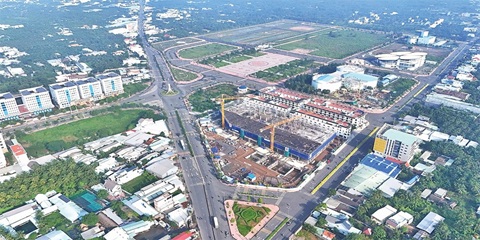
Accelerating public investment, strengthening inter-regional connectivity, and expanding industrial land are helping Dong Thap efficiently bolster competitiveness and drive economic growth. Following the 2025 merger of the former Dong Thap and Tien Giang provinces, the expanded Dong Thap province in the Mekong Delta faces mounting pressure to accelerate infrastructure development and strengthen connectivity among local economic zones, urban areas, industrial parks (IPs), and production centres.
Events Sponsors






















