Want to be in the loop?
subscribe to
our notification
Business News
‘BOOST’ NEEDED IN LAND POLICIES
“Agricultural and rural development is always the most important task in Vietnam,” said Minister of Agriculture and Rural Development Nguyen Xuan Cuong at the Workshop on “Theory and Practice in New Countryside Construction in Vietnam” recently held in northern Nam Dinh province.
Early finish
Vietnam has a golden population structure; the agricultural GDP expanded by 2.95% a year in 2011-2018; and agricultural production has strongly shifted to products of international competitiveness, higher quality and higher productivity. Per capita income in rural areas increased by 3.5 times and the income gap between urban and rural areas narrowed from 2.1 times in 2008 to 1.8 times in 2017. In three years, agribusiness companies tripled.
According to Deputy Minister of Agriculture and Rural Development Tran Thanh Nam, survey results by some research institutions showed that about 84.78% of rural households are satisfied with the new countryside construction process. This result reflected the consensus and support of rural people for the cause of new countryside construction in the past nearly 10 years. New countryside construction has clearly changed the face of rural areas, far better than the expected outcome in the context of domestic hardships and limited agricultural and rural investment resources. In this first phase, investment has been channeled for rural infrastructure development and it must balance sustainable, environmental and cultural factors in new countryside construction in the next period, he said.
Land policy revamp needed
The drive for one-year earlier completion of the pilot program for new countryside construction in the 2010-2020 period is Resolution 26-NQ/TW, a milestone of great significance that timely addresses comprehensive, clear, specific approaches to agricultural, farmer and rural development. After 10 years of piloting new countryside construction with a lot of achievements based on 19 criteria, many limitations have also been revealed and will need to be addressed in the upcoming period. This workshop was an opportunity for policymakers to listen to enthusiastic scientists, agriculturalists and business community about rural development.
According to Dr. Tran Dinh Thien, in order for rural development to succeed, land policies must encourage investment in agriculture and apply scientific and technological strategies. Concurrent with Mr. Thien, Vice Chairman of Hanoi City People’s Committee Nguyen Van Suu said, although Hanoi has a rapid urbanization pace, agriculture is still a key economic sector through two programs launched by the Municipal Party Committee for the 2016-2020 period. Having a clear land mechanism with a strong decentralization of responsibility and applying electronic trading floors for agricultural products will make agriculture play a bigger role in the city’s economy.
Mr. Le Huy Ngo, Former Minister of Ministry of Agriculture and Rural Development, said, new countryside construction must help narrow the gap between rural and urban life, maintain the new countryside construction program in deltas and mountainous areas, deliver sustainable development, and apply science and technology into mainstream thinking about land policies to leverage Vietnamese agriculture to take off, to get big orders and win on the international market.
Source: VCCI
Related News

CHARITY / EXHIBITION / OTHER EVENTS
INVESTMENT OPPORTUNITIES IN CA MAU PROVINCE: 96 PROJECTS AND 20 STRATEGIC PROJECTS
We are pleased to share with you information on investment projects currently seeking investors in Ca Mau Province. Should your esteemed company or association be interested, we kindly invite you to review the project information and complete the registration form via the links provided. The Ho Chi Minh City Investment and Trade Promotion Centre (ITPC) will consolidate the expressions of interest and facilitate connections with the leadership of Ca Mau Province at a meeting tentatively scheduled for 13 November 2026 in Ho Chi Minh City.

MEMBER CORNER / PROMOTIONS
BẰNG KIỀU LIVESHOW - A SYMPHONY OF LOVE UNDER THE GOLDEN GLOW
A masterclass in live music that takes the audience on a soulful journey through immortal love songs, guided by the peerless artistry and emotive storytelling of renowned singer Bằng Kiều. The highlight of the night is his seamless musical chemistry with special guest Triệu Hồng Ngọc, promising passionate and deeply resonant duets inside the magnificent Grand Ballroom.
INFRASTRUCTURE / CONSTRUCTION / LOGISTIC / PORT
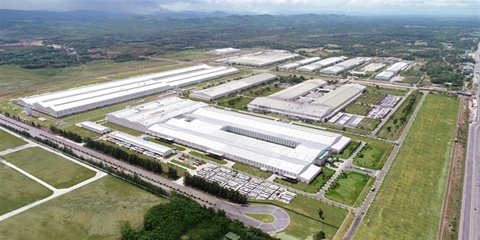
ĐÀ NẴNG GREEN-LIGHTS US$105 MILLION THAI DEVELOPMENT DEAL
The central city has approved an investment proposal by Thailand’s WHA Group to develop infrastructure for the 400ha WHA Đà Nẵng Industrial Park project on two communes of Thăng Bình and Đồng Dương, with an investment of more than VNĐ2.7 trillion (US$105 million). The city said it approved WHA Industrial Development International's status as an investor in the project, which is expected to take place between 2027 and 2034.
VIETNAM ECONOMY INVESTMENT
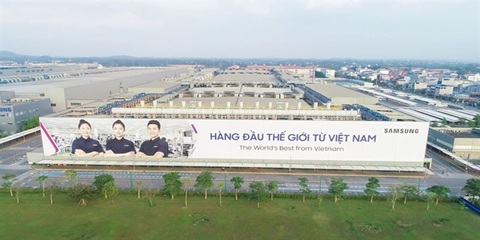
MOBILE PHONE EXPORTS RISE 20% TO $51.8 BILLION IN FIRST NINE MONTHS
Exports of mobile phones and components rose 20 per cent year-on-year to nearly US$51.8 billion in the first nine months of 2026, with China, the US and Republic of Korea accounting for more than half of the total. Shipments to the three markets reached a combined $26.18 billion, or 50.6 per cent of total exports of the product group during the period, according to data from the Vietnam Department of Customs under the Ministry of Finance.
INFRASTRUCTURE / CONSTRUCTION / LOGISTIC / PORT
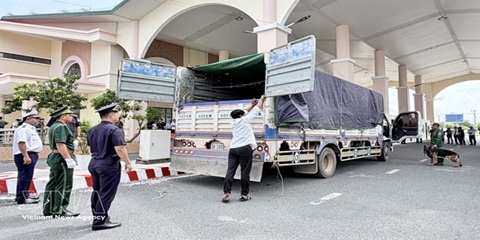
VIỆT NAM-CAMBODIA TRADE GATHERS PACE TOWARDS $20 BILLION TARGET
Trade between Việt Nam and Cambodia continues to grow, remaining a bright spot and a key pillar of bilateral cooperation as the two countries aim to raise two-way trade to US$20 billion in the coming years. After setting a record of more than $11.3 billion last year, bilateral trade reached about $8.7 billion in the first eight months of this year, up 8.3 per cent year on year.
VIETNAM ECONOMY INVESTMENT
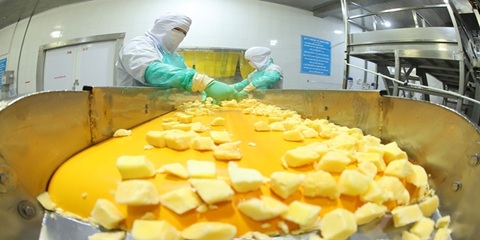
FRUIT AND VEGETABLE EXPORTS POISED TO HIT $10 BILLION IN 2026
Fruit and vegetable exports are on track to reach nearly US$10 billion in 2026, after rising 19.9 per cent year on year to nearly US$7.4 billion in the first nine months, driven by strong seasonal demand and abundant tropical fruit supplies. The Ministry of Agriculture and Environment said the growth reflected stronger international demand for fresh produce and processed agricultural products.
Events Sponsors






















