Want to be in the loop?
subscribe to
our notification
Business News
VN POISED TO BECOME MANUFACTURER OF ESTABLISHED GLOBAL BRANDS
Việt Nam’s garment and textile sector is set to expand its market share globally, taking advantage of free trade agreements (FTAs) to become “a manufacturer of the world's established brands”, a trade and investment official has said.
Phạm Thiết Hòa, director of the HCM City Investment and Trade Promotion Centre (ITPC), told Việt Nam News that an increasing number of international buyers were sourcing products from Việt Nam because supply chains for locally made products had improved and the country had joined more FTAs.
Competitive labour costs and preferential policies will continue to help Việt Nam become an ideal destination for investors in this sector, he said.
Participation in the Comprehensive and Progressive Agreement for Trans-Pacific Partnership (CPTPP) will benefit the country in the long term, helping the garment and textile sector expand market share in Canada, Mexico, New Zealand and Australia and many other countries.
In addition, the EU-Việt Nam Free Trade Agreement (EVFTA) is expected to have a positive impact in the medium to long term.
The legal review for EVFTA has been completed and it is undergoing its members’ approval process. It is likely to be approved by Việt Nam’s National Assembly in June.
The EU is the second largest export market for Việt Nam’s garment and textile sector, with more than 40 per cent of tariffs applied to garment and textile products expected to be reduced to zero per cent when the EVFTA agreement takes effect.
“FTAs play an important role in helping Việt Nam move up the value chain in the garment and textile industry,” he said. “FDI companies have so far invested about US$17.5 billion in the industry,” he said.
Trade fair
More than 30 leading Vietnamese manufacturers of garments, textiles, handicrafts and fashion accessories displayed their goods at the Global Sources Fashion show held last week in Hong Kong.
Many of the exhibitors are members of the Việt Nam Textile and Apparel Association (VITAS), Việt Nam National Textile and Garment Group, and Handicraft and Wood Industry Association of HCM City.
Vietnamese exporters are expected to increase export orders from major buyers at the fair such as Auchan, Best Buy, Carrefour, Fossil, Hong Kong Disneyland, K-Swiss, Li & Fung, Marks & Spencer, Quiksilver, Swarovski, Target and Tesco, among others.
Livia Yip, president of Global Sources Fashion Group, said the event promotes industry development and facilitates international design exchange, providing designers with a platform for reaching buyers and suppliers.
Bùi Thị Mỹ Hạnh, an exhibitor which took part in the trade show, told Việt Nam News that most Vietnamese exhibitors lacked marketing skills as well as information about export markets. “To fully take advantage of the event, exhibitors should be trained by ITPC to become to be an effective exhibitor.”
Hạnh said that ITPC should act as a bridge connecting overseas trade officials with exporters so that local exporters can better understand export markets.
Vietnamese exhibitors also expect more orders to shift from China to Việt Nam due to the ongoing US-China trade war, she said.
Vũ Đức Giang, chairman of VITAS, said Vietnamese textile enterprises this year have seen positive signs for orders, he said. “Many businesses have already received orders for the first six months of 2019 and even for the entire year.”
Last year, the industry earned $36 billion from exports, up 16 per cent year-on-year, making Việt Nam one of the world’s three biggest exporters of textiles and apparel.
This year, the textile and garment sector has set a target of $40 billion in exports, up 11 per cent year-on-year.
The industry has set a target of more than $60 billion worth of exports by 2025.
Source: VNS
Related News
VIETNAM ECONOMY INVESTMENT
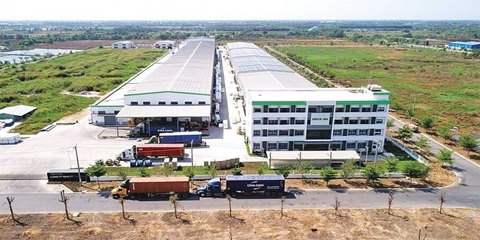
FOREIGN INVESTORS SEEKING A SYNCHRONISED MANUFACTURING ECOSYSTEM
Instead of focusing only on land costs and incentives as usual, foreign investors are seeking a synchronised manufacturing ecosystem, from stable power supply and logistics to shared infrastructure and the convenience of completing residence procedures for experts to serve their long-term investment in the country.
INFRASTRUCTURE / CONSTRUCTION / LOGISTIC / PORT
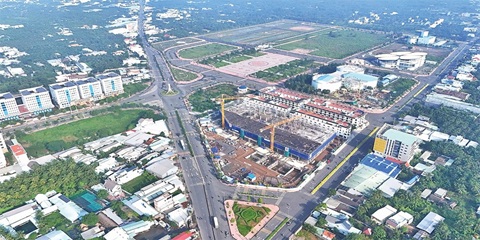
DONG THAP PROVINCE STEPS UP INDUSTRIAL EXPANSION AND INFRASTRUCTURE CONNECTIVITY
Accelerating public investment, strengthening inter-regional connectivity, and expanding industrial land are helping Dong Thap efficiently bolster competitiveness and drive economic growth. Following the 2025 merger of the former Dong Thap and Tien Giang provinces, the expanded Dong Thap province in the Mekong Delta faces mounting pressure to accelerate infrastructure development and strengthen connectivity among local economic zones, urban areas, industrial parks (IPs), and production centres.
PROPERTY / INDUSTRIAL ZONE
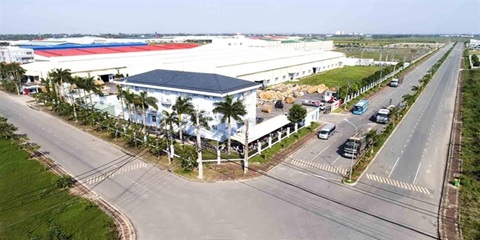
HCM CITY ATTRACTS US$5.7 BILLION INTO EXPORT PROCESSING AND INDUSTRIAL ZONES
HCM City attracted US$5.7 billion in domestic and foreign investment into its export processing and industrial zones during the first nine months of 2026. The figure exceeded the city's full-year target by 31 per cent, highlighting strong momentum in high-quality industrial investment under Resolution No.10-NQ/TW. Total investment reached 131 per cent of the 2026 target of $4.25 billion and represented a 29 per cent increase compared with the same period in 2025, according to the city's Export Processing and Industrial Zones Authority (HEPZA).

BANKING / FINANCE / INSURANCE / TAX
REMITTANCES TO HCM CITY RISE NEARLY 40% IN Q3
Remittances to HCM City reached more than US$2.83 billion in the third quarter of this year, up 39.5 per cent from the previous quarter and 3.6 per cent year-on-year. This was the first quarter showing positive annual growth this year, helping narrow the decline in remittance inflows over the first nine months. According to the State Bank of Vietnam (SBV)’s Regional Branch 2, remittances transferred to HCM City through credit institutions and economic organisations totalled $2.835 billion in Q3, an increase of more than $802 million from the previous quarter.
VIETNAM ECONOMY INVESTMENT
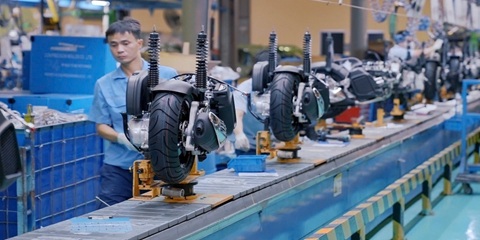
LOCALITIES REPORT BREAKTHROUGH RESULTS IN FDI IN FIRST NINE MONTHS
In Ho Chi Minh City, total registered capital reached $17.2 billion in the first nine months, up 4.2 times from the same period last year. The figure included more than $9.35 billion in newly registered capital and over $4.9 billion in additional capital for existing projects. Foreign investors also registered more than $2.9 billion through capital contributions and share purchases.

TECHNOLOGY
TECH SECTOR GROWTH OPENS UP OPPORTUNITIES FOR VIỆT NAM TO GO GLOBAL
The growth of the electronics, semiconductor and high-tech sectors worldwide is opening up a variety of opportunities for Vietnamese enterprises to integrate more deeply into the global supply chain. However, to become suppliers for these corporations, domestic enterprises must meet rigorous standards regarding quality, technology, productivity and order fulfilment capabilities.
Events Sponsors






















