Want to be in the loop?
subscribe to
our notification
Business News
VIETNAMESE TEXTILE, FOOTWEAR EXPORTERS EYE TARGET MARKETS
This year, the footwear industry continues to target exports to Africa, Asia, Japan, Europe and the US, while also taking initial steps to engage with major e-commerce platforms like Alibaba and Amazon to open new sales channels.

Vietnamese textile, footwear exporters eye target markets — VNA/VNS Photo
HÀ NỘI — In response to shifting global trade dynamics and tariff challenges, Việt Nam’s textile and footwear sectors are actively diversifying their export markets, with a strong focus on destinations that have signed free trade agreements (FTAs) with the country.
Trương Văn Cẩm, Vice Chairman of the Việt Nam Textile and Apparel Association (VITAS), said many companies are currently prioritising the fulfilment of export orders. However, the industry is also in urgent need of detailed market information to accelerate exports to promising destinations such as Russia, Brazil, Chile, and the Middle East.
Phan Thị Thanh Xuân, Vice Chairwoman and General Secretary of the Việt Nam Leather, Footwear and Handbag Association (Lefaso), noted that changes in trade policy from the US and the European Union are having a significant impact on Vietnamese exporters. To mitigate these effects, businesses are expanding into new markets in South America and the Middle East, where consumer demand is both large and diverse.

Vietnamese textile, footwear exporters eye target markets — VNA/VNS Photo
This year, the footwear industry continues to target exports to Africa, Asia, Japan, Europe and the US, while also taking initial steps to engage with major e-commerce platforms like Alibaba and Amazon to open new sales channels.
To support these efforts, the Việt Nam Trade Promotion Agency under the Ministry of Industry and Trade is helping firms participate in trade promotion activities to broaden their reach, especially in emerging and high-potential markets such as Latin America, Halal markets, India, Russia and the Middle East.
A representative of the trade agency noted that most Vietnamese firms are small and lack the resources or experience to join large-scale promotion efforts or to adapt quickly to tariff shifts. Businesses are therefore urged to diversify exports and focus on target markets, optimising FTAs to reduce costs and boost competitiveness in countries like Canada, Australia, Japan, the EU, China, and ASEAN.
The agency will continue supporting firms at major trade fairs such as Anuga in Germany, SIAL in France, Canton Fair in China, World Food Moscow, and Trade Expo Indonesia, with logistical and financial backing.
Đỗ Ngọc Hưng, Việt Nam’s Trade Counsellor in the US, stressed the need for firms to improve competitiveness, diversify supply chains, and reduce dependence on single-source inputs. He also encouraged full use of new-generation FTAs and urged faster domestic consumption and new FTA negotiations, highlighting Canada as a promising market.
Meanwhile, VISTA Vice Chairman Cẩm suggested trade offices regularly update businesses on market trends, US consumer shifts, and trade talks to help exporters adjust strategies. — VNS
Source: VNS
Related News
VIETNAM ECONOMY INVESTMENT
FOREIGN INVESTORS SEEKING A SYNCHRONISED MANUFACTURING ECOSYSTEM
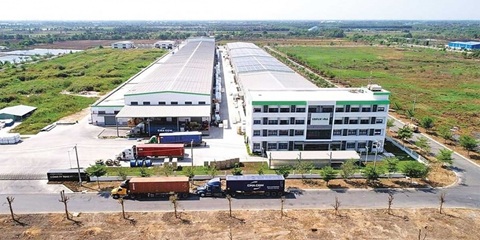
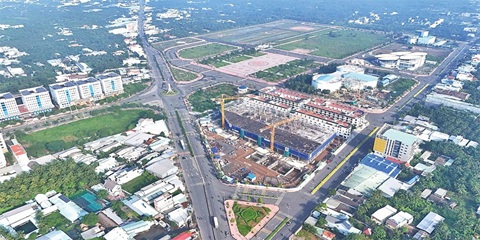
Instead of focusing only on land costs and incentives as usual, foreign investors are seeking a synchronised manufacturing ecosystem, from stable power supply and logistics to shared infrastructure and the convenience of completing residence procedures for experts to serve their long-term investment in the country.
INFRASTRUCTURE / CONSTRUCTION / LOGISTIC / PORT
DONG THAP PROVINCE STEPS UP INDUSTRIAL EXPANSION AND INFRASTRUCTURE CONNECTIVITY
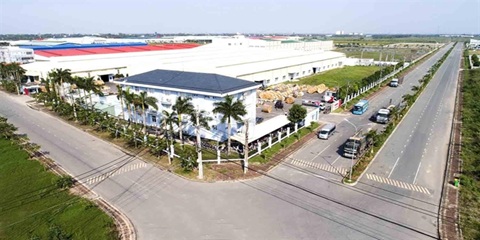
Accelerating public investment, strengthening inter-regional connectivity, and expanding industrial land are helping Dong Thap efficiently bolster competitiveness and drive economic growth. Following the 2025 merger of the former Dong Thap and Tien Giang provinces, the expanded Dong Thap province in the Mekong Delta faces mounting pressure to accelerate infrastructure development and strengthen connectivity among local economic zones, urban areas, industrial parks (IPs), and production centres.
PROPERTY / INDUSTRIAL ZONE
HCM CITY ATTRACTS US$5.7 BILLION INTO EXPORT PROCESSING AND INDUSTRIAL ZONES
HCM City attracted US$5.7 billion in domestic and foreign investment into its export processing and industrial zones during the first nine months of 2026. The figure exceeded the city's full-year target by 31 per cent, highlighting strong momentum in high-quality industrial investment under Resolution No.10-NQ/TW. Total investment reached 131 per cent of the 2026 target of $4.25 billion and represented a 29 per cent increase compared with the same period in 2025, according to the city's Export Processing and Industrial Zones Authority (HEPZA).

BANKING / FINANCE / INSURANCE / TAX
REMITTANCES TO HCM CITY RISE NEARLY 40% IN Q3
Remittances to HCM City reached more than US$2.83 billion in the third quarter of this year, up 39.5 per cent from the previous quarter and 3.6 per cent year-on-year. This was the first quarter showing positive annual growth this year, helping narrow the decline in remittance inflows over the first nine months. According to the State Bank of Vietnam (SBV)’s Regional Branch 2, remittances transferred to HCM City through credit institutions and economic organisations totalled $2.835 billion in Q3, an increase of more than $802 million from the previous quarter.
VIETNAM ECONOMY INVESTMENT
LOCALITIES REPORT BREAKTHROUGH RESULTS IN FDI IN FIRST NINE MONTHS
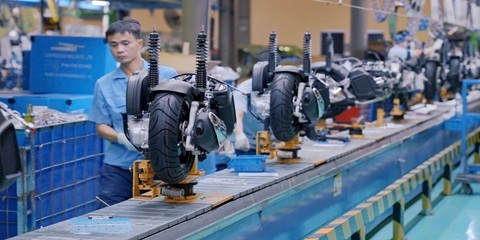
In Ho Chi Minh City, total registered capital reached $17.2 billion in the first nine months, up 4.2 times from the same period last year. The figure included more than $9.35 billion in newly registered capital and over $4.9 billion in additional capital for existing projects. Foreign investors also registered more than $2.9 billion through capital contributions and share purchases.

TECHNOLOGY
TECH SECTOR GROWTH OPENS UP OPPORTUNITIES FOR VIỆT NAM TO GO GLOBAL
The growth of the electronics, semiconductor and high-tech sectors worldwide is opening up a variety of opportunities for Vietnamese enterprises to integrate more deeply into the global supply chain. However, to become suppliers for these corporations, domestic enterprises must meet rigorous standards regarding quality, technology, productivity and order fulfilment capabilities.
Events Sponsors