Want to be in the loop?
subscribe to
our notification
Business News
VIETNAMESE START-UPS EYE GLOBAL MARKETS THROUGH STRATEGIC FRANCHISING
Franchising is an effective strategy for international market expansion across all sectors.
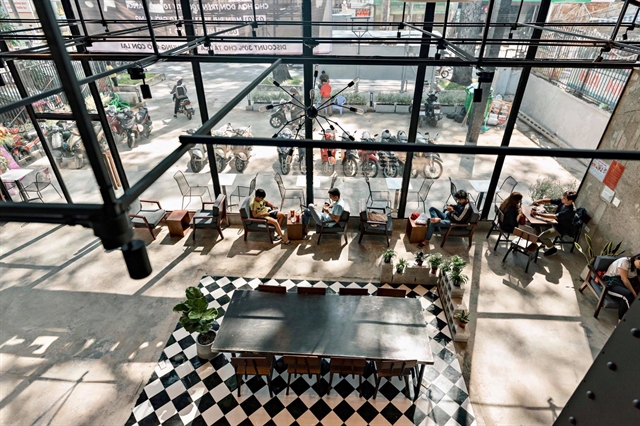
A Three O’Clock coffee shop in HCM City. The brand is set to open its first five franchise stores in India in the next quarter, following a deal with FranGlobal earlier this year. — Photo courtesy of Three O'clock
HÀ NỘI — Franchising abroad is emerging as an effective strategy for businesses — especially start-ups — to rapidly scale up their operations, enhance brand recognition and open new channels to sell raw materials and services in international markets.
While the opportunities are significant, experts said that success hinges on the internal capabilities and readiness of each business to capitalise on these prospects.
Global expansion through franchising
As the global franchising model gains momentum, Vietnamese start-ups — particularly in the food and beverage (F&B) sector — are increasingly eyeing international markets as a key growth avenue. While established names like Highlands Coffee and Trung Nguyen Legend have paved the way abroad, a new generation of dynamic, creative brands such as Three O’Clock, HappiTea and Pho’S are taking centre stage in this next wave of international expansion.
Among the rising stars, coffee chain Three O’Clock is making notable moves. The brand is set to open its first five franchise stores in India in the next quarter, following a deal with FranGlobal earlier this year. The deal also includes franchise rights for Nepal, Sri Lanka and Bangladesh, thesaigontimes.vn reported.
Three O'Clock founder and CEO Thuận Nguyễn told thesaigontimes.vn that her firm aims to open at least 100 stores over the next decade.
She highlighted a growing global shift from tea to coffee among younger demographics as a key market driver. In addition, her brand has recently inked a second exclusive international franchise agreement, expanding into countries within the Gulf Cooperation Council (GCC).
Another standout is Phuc Tea, whose franchise brand HappiTea has established a presence in the Philippines and is now expanding into India, the UAE, Saudi Arabia, Kuwait and Qatar.
Some Vietnamese start-ups in the service sector have also started to go international.
Taking advantage of competitive costs, Gozo Company has signed three franchise contracts in Thailand, opening up the potential for logistics service development in the ASEAN region.
According to CEO Phan Duy Minh, Gozo's advantage lies in its service prices being about 30 per cent lower and its free franchise method, which only requires partners to invest in space, helping to expand quickly without needing large capital.
Meanwhile, Care With Love, which offers health care services for moms and babies at home, has marked its first step into international franchising with the opening of a branch in Cambodia. After nearly four months of operation, the Cambodian franchise has already achieved approximately 80 per cent of its revenue target.
Building on this momentum, the company is planning further expansion into Dubai and other Middle Eastern markets, and is currently in negotiations to enter the Philippines, the online newspaper cited Chairwoman of the Board of Directors Trần Thảo Vi as saying.
According to Vi, the key to successful franchising in the service sector lies in standardising operational processes and selecting experienced local partners. She said that comprehensive support across recruitment, training and supervision is essential for ensuring consistent service quality and long-term franchise success in international markets.

Care With Love, which offers health care services for moms and babies at home, has marked its first step into international franchising with the opening of a branch in Cambodia. — Photo carewithlove.com.vn
Untapped potential
Encouraging signs show that Vietnamese start-ups are increasingly adopting franchising as a flexible and scalable strategy for international expansion. By leveraging digital platforms and forming strategic partnerships, these businesses aim to systematically tap into global markets.
However, despite the growing interest and early momentum, Việt Nam's presence in the international franchising landscape remains limited.
Even Napoli Coffee, one of Việt Nam’s most prominent franchise brands with over 3,000 stores nationwide, currently operates only four international outlets in Laos, Malaysia, South Korea and China.
According to Nguyễn Đức Hưng, CEO of brand owner Napoli Coffee Export Import Trading Production JSC, these overseas stores are primarily operated by individual overseas Vietnamese franchisees and have yet to adopt a standardised, professional franchising model.
In response, the company is now developing international franchising standards, with the goal of expanding its footprint to 100 overseas stores within the next five years, he added.
Experts said that the food and service sectors hold significant potential for international expansion if executed properly. However, small Vietnamese businesses often face major hurdles related to professionalism, operational systems and brand trust when entering foreign markets.
Key challenges include geographical distance, language barriers, maintaining operational control, ensuring consistent service quality, exporting raw materials and securing qualified workers.
Other promising sectors for Vietnamese franchising businesses include beverages, textiles and footwear, experts note. By leveraging local resources, these firms have the potential to move up the value chain — for example, by processing tea into value-added products like milk tea, rather than exporting raw materials.
In the textile and footwear industries, there is growing potential for building independent brands instead of remaining solely as manufacturing hubs. The franchising trend is also expanding into technology start-ups, including in emerging fields such as logistics, virtual reality and augmented reality.
Franchising is an effective strategy for international market expansion across all sectors, according to franchise expert Nguyễn Phi Vân. Agricultural products such as tea and coffee have demonstrated the success of this approach. When franchised effectively, these products have seen their value increase by 30 to 70 times, thanks to raw materials, accessories and branding.
Market research firm Technavio has projected the global franchising industry to grow by approximately 10 per cent annually, reaching a value of US$4.38 trillion by 2027. — VNS
Source: VNS
Related News

BANKING / FINANCE / INSURANCE / TAX
REMITTANCES TO HCM CITY RISE NEARLY 40% IN Q3
Remittances to HCM City reached more than US$2.83 billion in the third quarter of this year, up 39.5 per cent from the previous quarter and 3.6 per cent year-on-year. This was the first quarter showing positive annual growth this year, helping narrow the decline in remittance inflows over the first nine months. According to the State Bank of Vietnam (SBV)’s Regional Branch 2, remittances transferred to HCM City through credit institutions and economic organisations totalled $2.835 billion in Q3, an increase of more than $802 million from the previous quarter.

TECHNOLOGY
TECH SECTOR GROWTH OPENS UP OPPORTUNITIES FOR VIỆT NAM TO GO GLOBAL
The growth of the electronics, semiconductor and high-tech sectors worldwide is opening up a variety of opportunities for Vietnamese enterprises to integrate more deeply into the global supply chain. However, to become suppliers for these corporations, domestic enterprises must meet rigorous standards regarding quality, technology, productivity and order fulfilment capabilities.

VIETNAM ECONOMY INVESTMENT
FOREIGN INVESTORS SEEKING A SYNCHRONISED MANUFACTURING ECOSYSTEM
Instead of focusing only on land costs and incentives as usual, foreign investors are seeking a synchronised manufacturing ecosystem, from stable power supply and logistics to shared infrastructure and the convenience of completing residence procedures for experts to serve their long-term investment in the country.

MEMBER CORNER / PROMOTIONS
SENTRYSAFE FHW40200 – PROTECT YOUR VALUABLES, ENJOY PEACE OF MIND!
Looking for a reliable solution to protect your important documents, cash, and valuables from fire and water damage? Genuine SENTRYSAFE - Reliable protection for your valuables and peace of mind! Contact Sen Wai Vietnam for more information and personalized product recommendations.

PROPERTY / INDUSTRIAL ZONE
HCM CITY ATTRACTS US$5.7 BILLION INTO EXPORT PROCESSING AND INDUSTRIAL ZONES
HCM City attracted US$5.7 billion in domestic and foreign investment into its export processing and industrial zones during the first nine months of 2026. The figure exceeded the city's full-year target by 31 per cent, highlighting strong momentum in high-quality industrial investment under Resolution No.10-NQ/TW. Total investment reached 131 per cent of the 2026 target of $4.25 billion and represented a 29 per cent increase compared with the same period in 2025, according to the city's Export Processing and Industrial Zones Authority (HEPZA).

INFRASTRUCTURE / CONSTRUCTION / LOGISTIC / PORT
DONG THAP PROVINCE STEPS UP INDUSTRIAL EXPANSION AND INFRASTRUCTURE CONNECTIVITY
Accelerating public investment, strengthening inter-regional connectivity, and expanding industrial land are helping Dong Thap efficiently bolster competitiveness and drive economic growth. Following the 2025 merger of the former Dong Thap and Tien Giang provinces, the expanded Dong Thap province in the Mekong Delta faces mounting pressure to accelerate infrastructure development and strengthen connectivity among local economic zones, urban areas, industrial parks (IPs), and production centres.
Events Sponsors






















