Want to be in the loop?
subscribe to
our notification
Business News
VIETNAMESE PRODUCTS HAVE ROOM FOR GROWTH IN THE JAPANESE MARKET
As Viet Nam's exports account for only 2.7 per cent of total import demand in Japan, authorities from the Ministry of Industry and Trade (MoIT) see room for growth in the market.
Nguyễn Duy Kiên, from the Department of Markets for Asia and Africa, MoIT said although Việt Nam's exports increased sharply in recent years, they still accounted for a very small proportion of Japan's total imports, adding Japan is the country's third-largest export market, after China and the US.
Kiên mentioned textiles as a promising product in the market, saying with total imports in the sector of US$28 billion in 2019, Việt Nam's textile and garment accounted for 13.2 per cent while Chinese products accounted for 55 per cent and Bangladesh, Indonesia, Thailand, Cambodia and Italy shared most of the rest.
In Japan’s import of leather and footwear products which was worth $5.3 billion in 2019, Việt Nam accounted for 18.5 per cent while the biggest competitors were China, Indonesia, Italy and Cambodia. In the import market for handicraft products worth $200 million in 2019, Vietnamese products accounted for 8 per cent, ranking second after China with 55 per cent.
According to Kiên’s department, Japan imports $3.5 billion of plywood, wood flooring each year while Việt Nam only provides 3 per cent and 0.01 per cent respectively, adding: “There is a huge potential for exports of the products.”
Bananas, shrimp, crab and squid also have great opportunities to export to the North Asian country.
“Japan needs $1 billion of bananas per year, while Việt Nam only exports $3 million there per year. Ninety per cent of imported bananas from Japan are now supplied by the Philippines," Kiên said.
He added Việt Nam's market shares of shrimp, crab and squid imports were also modest, accounting for 7.5 per cent to 20 per cent, adding: “Việt Nam still has a lot of room to promote exports to the Japanese market.”
Kiên said for all of the above-mentioned products, Việt Nam was entitled to 0 per cent import tax when entering Japan while other competitors in ASEAN, South Korea, and India were all subject to higher taxes.
Kiên said China faced higher import taxes in Japan, noting: "It is a big advantage for Vietnamese goods to compete with countries in the ASEAN region, China, and South Korea if we continue to exploit the Japanese market."
Đỗ Quốc Hưng, deputy director-general of the Asia Africa Market Department under the MoIT, said to take advantage, Vietnamese businesses needed to regularly update information about changes in consumption trends and the Japanese market as in the current context of US-China trade tension, the prolonged pandemic and the development of protectionism in some countries, Japan had tightened the implementation of import regulations.
"Japan is a leading developed economy with high income, in addition to product quality requirements, the market is increasingly paying more attention to environmental friendliness, safety, rich and diverse designs of the products," he said.
Tạ Đức Minh, Viet Nam Trade Counsellor in Japan, noted that to export stably with added value, Vietnamese enterprises needed to make efforts to penetrate and exploit the distribution system in Japan.
Minh said though the retail systems in Japan had strict requirements and most of Việt Nam's exports were made through intermediaries, Vietnamese enterprises should try to directly work with them to enhance the value and brand of their products.
Minh suggested enterprises that want to tap the Japanese market should first participate in fairs and exhibitions in Japan where they can find new partners, as well as learn about consumer trends.
Source: VNS
Related News
BANKING / FINANCE / INSURANCE / TAX
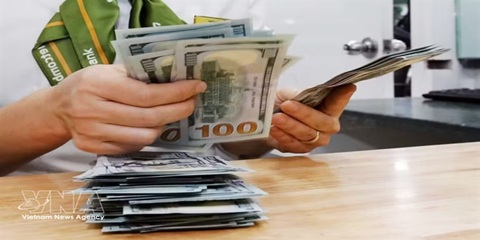
REMITTANCES TO HCM CITY RISE NEARLY 40% IN Q3
Remittances to HCM City reached more than US$2.83 billion in the third quarter of this year, up 39.5 per cent from the previous quarter and 3.6 per cent year-on-year. This was the first quarter showing positive annual growth this year, helping narrow the decline in remittance inflows over the first nine months. According to the State Bank of Vietnam (SBV)’s Regional Branch 2, remittances transferred to HCM City through credit institutions and economic organisations totalled $2.835 billion in Q3, an increase of more than $802 million from the previous quarter.

TECHNOLOGY
TECH SECTOR GROWTH OPENS UP OPPORTUNITIES FOR VIỆT NAM TO GO GLOBAL
The growth of the electronics, semiconductor and high-tech sectors worldwide is opening up a variety of opportunities for Vietnamese enterprises to integrate more deeply into the global supply chain. However, to become suppliers for these corporations, domestic enterprises must meet rigorous standards regarding quality, technology, productivity and order fulfilment capabilities.
VIETNAM ECONOMY INVESTMENT
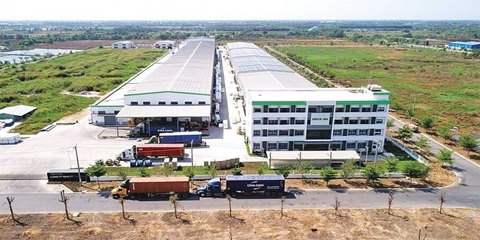
FOREIGN INVESTORS SEEKING A SYNCHRONISED MANUFACTURING ECOSYSTEM
Instead of focusing only on land costs and incentives as usual, foreign investors are seeking a synchronised manufacturing ecosystem, from stable power supply and logistics to shared infrastructure and the convenience of completing residence procedures for experts to serve their long-term investment in the country.

MEMBER CORNER / PROMOTIONS
SENTRYSAFE FHW40200 – PROTECT YOUR VALUABLES, ENJOY PEACE OF MIND!
Looking for a reliable solution to protect your important documents, cash, and valuables from fire and water damage? Genuine SENTRYSAFE - Reliable protection for your valuables and peace of mind! Contact Sen Wai Vietnam for more information and personalized product recommendations.
PROPERTY / INDUSTRIAL ZONE
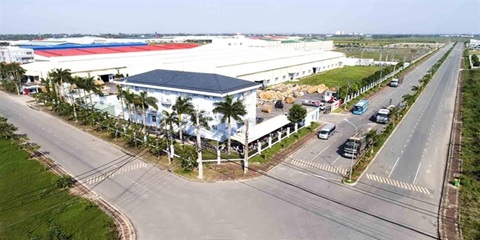
HCM CITY ATTRACTS US$5.7 BILLION INTO EXPORT PROCESSING AND INDUSTRIAL ZONES
HCM City attracted US$5.7 billion in domestic and foreign investment into its export processing and industrial zones during the first nine months of 2026. The figure exceeded the city's full-year target by 31 per cent, highlighting strong momentum in high-quality industrial investment under Resolution No.10-NQ/TW. Total investment reached 131 per cent of the 2026 target of $4.25 billion and represented a 29 per cent increase compared with the same period in 2025, according to the city's Export Processing and Industrial Zones Authority (HEPZA).
INFRASTRUCTURE / CONSTRUCTION / LOGISTIC / PORT
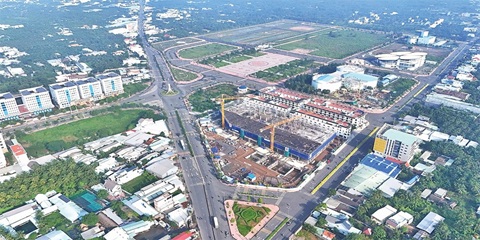
DONG THAP PROVINCE STEPS UP INDUSTRIAL EXPANSION AND INFRASTRUCTURE CONNECTIVITY
Accelerating public investment, strengthening inter-regional connectivity, and expanding industrial land are helping Dong Thap efficiently bolster competitiveness and drive economic growth. Following the 2025 merger of the former Dong Thap and Tien Giang provinces, the expanded Dong Thap province in the Mekong Delta faces mounting pressure to accelerate infrastructure development and strengthen connectivity among local economic zones, urban areas, industrial parks (IPs), and production centres.
Events Sponsors






















