Want to be in the loop?
subscribe to
our notification
Business News
VIETNAMESE INDUSTRIES EYE AMBITIOUS EXPORT GOALS IN 2024
With a positive economic outlook, the Ministry of Industry and Trade aims to increase exports by 6 per cent in 2024, running a trade surplus for nine years in a row, estimated at US$15 billion.
Capitalising on current free trade agreements (FTAs) and signing deals with new markets such as Israel or the UAE would be vital to foster trade, attract investments, and increase exports in the upcoming years, said the ministry.
Strong political ties with countries such as China, the US, and the EU have also created momentum for establishing economic, trade, and investment partnerships.
Import and export activities are forecast to become more active thanks to a less daunting global and domestic economic landscape.
Orders from the US, one of Việt Nam’s major export markets, are expected to increase as the country has seen less bloated inventories and the US Federal Reserve is considering lowering interest rates.
The above-mentioned are incentives for key industries in Việt Nam, such as textiles and fisheries, to set ambitious export goals for this year.
In particular, the textile industry hopes to reach export turnover of $44 billion this year, a 9.2 per cent increase compared to the $40.3 billion seen in 2023, said Chairman of the Vietnam Textile and Apparel Association (VITAS) Trương Văn Cẩm.
Fishery exports expect to reach $9.5 billion and overcome immediate challenges, especially the yellow card warning for illegal, unreported, and unregulated fishing from the European Commission.
However, Việt Nam’s exports still face challenges, such as being targeted by trade protectionism, defence mechanisms, and barriers in multiple countries, the ministry noted.
To tackle these problems, the ministry will carry out more trade negotiations, linkages, and agreements, as well as promote FTAs with potential partners such as the UAE and countries in South America, to diversify export markets, products, and supply chains, said deputy director general of the Agency of Foreign Trade Nguyễn Cẩm Trang.
The agency will support firms in utilising FTAs to boost exports and switch to official exports coupled with effective branding; work with localities, associations, and enterprises to expand markets and boost product consumption; and frequently update businesses on changes in export policies and criteria for them to devise strategic production plans, she added.
“We will also carry out large-scale trade promotion activities for key products in the targeted markets,” Trang said.
Vietnamese businesses are also still struggling with supply chain difficulties and high input prices, said economic expert Dr Cấn Văn Lực, adding that it is challenging for them to abruptly move to green production and a circular economy.
Lực said Vietnamese businesses need to diversify funding and supply sources, expand their markets, and connect with potential partners, as well as proactively opt for green production, green consumption, and circular economic practices.
Moreover, the global transition towards a green, sustainable economy has also created stricter requirements adhering to environmental protection and relevant regulations on imported products; thus, Việt Nam should flexibly adopt green export measures.
For the textile industry, VITAS will apply measures on improving sustainable development, markets, human resources, science and technology, and fundraising, Cẩm said.
“We will continue to find more material supply sources and expand export markets through enhanced marketing activities and connecting with direct customers,” Cẩm said.
He said tax support policies are also a great way for textile businesses to increase production and have more resources to achieve green transformation and fulfil global market requirements.
It is crucial for Vietnamese trade offices in foreign countries to provide updates for policies and regulations for Government agencies and businesses to have proper solutions to increase exports, said Minister of Industry and Trade Nguyễn Hồng Diên.
Source: VNS
Related News
BANKING / FINANCE / INSURANCE / TAX
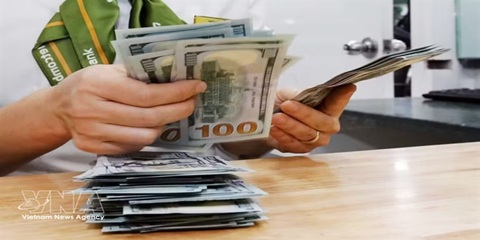
REMITTANCES TO HCM CITY RISE NEARLY 40% IN Q3
Remittances to HCM City reached more than US$2.83 billion in the third quarter of this year, up 39.5 per cent from the previous quarter and 3.6 per cent year-on-year. This was the first quarter showing positive annual growth this year, helping narrow the decline in remittance inflows over the first nine months. According to the State Bank of Vietnam (SBV)’s Regional Branch 2, remittances transferred to HCM City through credit institutions and economic organisations totalled $2.835 billion in Q3, an increase of more than $802 million from the previous quarter.

TECHNOLOGY
TECH SECTOR GROWTH OPENS UP OPPORTUNITIES FOR VIỆT NAM TO GO GLOBAL
The growth of the electronics, semiconductor and high-tech sectors worldwide is opening up a variety of opportunities for Vietnamese enterprises to integrate more deeply into the global supply chain. However, to become suppliers for these corporations, domestic enterprises must meet rigorous standards regarding quality, technology, productivity and order fulfilment capabilities.
VIETNAM ECONOMY INVESTMENT
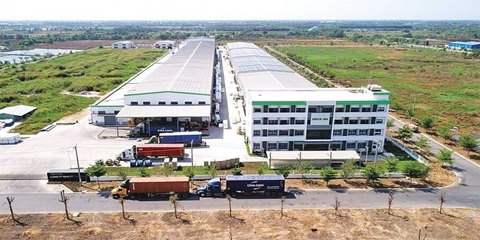
FOREIGN INVESTORS SEEKING A SYNCHRONISED MANUFACTURING ECOSYSTEM
Instead of focusing only on land costs and incentives as usual, foreign investors are seeking a synchronised manufacturing ecosystem, from stable power supply and logistics to shared infrastructure and the convenience of completing residence procedures for experts to serve their long-term investment in the country.
MEMBER CORNER / PROMOTIONS
SENTRYSAFE FHW40200 – PROTECT YOUR VALUABLES, ENJOY PEACE OF MIND!
Looking for a reliable solution to protect your important documents, cash, and valuables from fire and water damage? Genuine SENTRYSAFE - Reliable protection for your valuables and peace of mind! Contact Sen Wai Vietnam for more information and personalized product recommendations.
PROPERTY / INDUSTRIAL ZONE
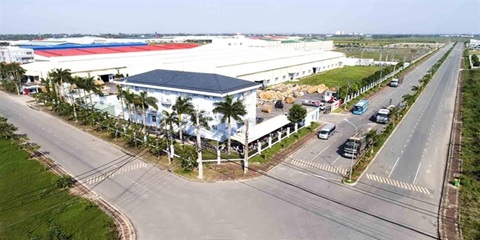
HCM CITY ATTRACTS US$5.7 BILLION INTO EXPORT PROCESSING AND INDUSTRIAL ZONES
HCM City attracted US$5.7 billion in domestic and foreign investment into its export processing and industrial zones during the first nine months of 2026. The figure exceeded the city's full-year target by 31 per cent, highlighting strong momentum in high-quality industrial investment under Resolution No.10-NQ/TW. Total investment reached 131 per cent of the 2026 target of $4.25 billion and represented a 29 per cent increase compared with the same period in 2025, according to the city's Export Processing and Industrial Zones Authority (HEPZA).
INFRASTRUCTURE / CONSTRUCTION / LOGISTIC / PORT
DONG THAP PROVINCE STEPS UP INDUSTRIAL EXPANSION AND INFRASTRUCTURE CONNECTIVITY
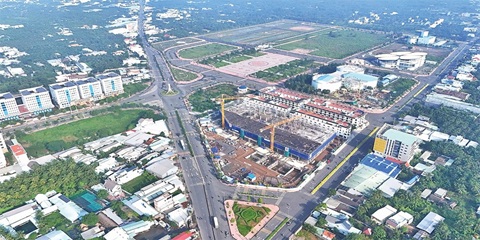
Accelerating public investment, strengthening inter-regional connectivity, and expanding industrial land are helping Dong Thap efficiently bolster competitiveness and drive economic growth. Following the 2025 merger of the former Dong Thap and Tien Giang provinces, the expanded Dong Thap province in the Mekong Delta faces mounting pressure to accelerate infrastructure development and strengthen connectivity among local economic zones, urban areas, industrial parks (IPs), and production centres.
Events Sponsors






















