Want to be in the loop?
subscribe to
our notification
Business News
VIETNAMESE FIRMS STEPPING UP AMID US TARIFF CHALLENGES
The majority of Vietnamese businesses expect intra-ASEAN trade to grow following the announcement of US tariffs, according to the 2025 UOB (United Overseas Bank) Business Outlook Study released on June 25.

Following the US announcement of 46 per cent reciprocal tariffs in April, Vietnamese businesses have been taking steps to manage the impact. Despite the uncertainty, 60 per cent of firms remain optimistic about the year ahead, and 46 per cent plan to accelerate overseas expansion, according to the study.
The 90-day pause by the US government has allowed time for trade negotiations, enabling companies to act swiftly to stabilise supply chains and control rising costs. About 52 per cent expect significant increases in raw material and production costs, while 30 per cent anticipate higher inflation. To cope, businesses are diversifying suppliers, boosting localisation, and reducing reliance on the US market. Nearly 70 per cent foresee growth in intra-ASEAN trade, highlighting the region’s rising importance.
In addition, firms are doubling down on digitalisation and sustainability as key strategic pillars. 61 per cent and 56 per cent of Vietnamese businesses, respectively, plan to step up their efforts in these areas. While digitalisation is expected to enhance operational efficiency and improve customer experience, adopting sustainability practices can help businesses attract investors and strengthen their corporate reputation, factors that are increasingly important in navigating the uncertainties brought about by the US tariffs.
Beyond self-driven initiatives, businesses in Vietnam are also seeking support from the government and financial institutions to tide them over the current challenges. In the near term, financial assistance remains a critical need – 73 per cent of firms are looking for financial relief to cushion the impact of the tariffs, while 65 per cent hope for targeted subsidies or tax exemptions for the most affected sectors.
From a strategic standpoint, businesses are also calling for longer-term support, including bilateral trade agreements with key markets and assistance with supply chain relocation. These were cited by 62 per cent of the study's respondents.
Lim Dyi Chang, head of Commercial Banking at UOB Vietnam, expressed confidence in Vietnam’s economic prospects, despite recent concerns over tariff-related uncertainties.
"The country’s sound fundamentals, recent policy reforms and the swift actions taken by the business community are encouraging. These developments also present an opportunity for Vietnamese firms to recalibrate their strategies – to reduce over-reliance on individual export markets and to tap into the growing strength of intra-ASEAN trade. As highlighted in our Business Outlook Study, strategic adaptability will be a key differentiator for enterprises in this evolving landscape," he said.
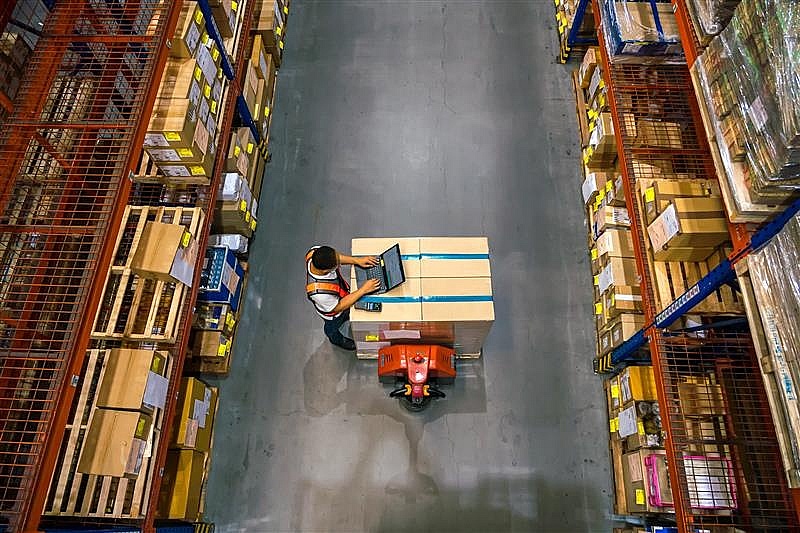
Interest in overseas expansion remains robust among Vietnamese firms, with nearly 90 per cent looking to grow beyond local borders, primarily to drive revenue and profitability. Post-tariffs, 46 per cent of businesses expect to accelerate their expansion efforts.
ASEAN continues to be the top region of interest, both in 2024 and over the next one to three years, with Thailand and Singapore emerging as preferred destinations. Beyond Asia, Europe has also gained prominence, with one in four businesses identifying it as a key market for current and future expansion.
The study highlights top barriers to overseas expansion, including finding the right business partners, limited funding or regulatory support, and a lack of market information and collaboration. Businesses are seeking support in the form of connections to large corporations that can serve as anchor clients (45 per cent), tax incentives or rebates (43 per cent), and funding and grants for market entry (41 per cent).
Supply chain management remains a top priority for 90 per cent of businesses in Vietnam, as geopolitical uncertainties continue to pose risks. The three key challenges identified include rising supply costs, disruptions to existing supply routes, and inventory management issues.
To address these concerns, Vietnamese firms are diversifying their supplier base, digitalising supply chain processes, and strengthening supplier relationships. There is also a growing emphasis on localisation, with companies sourcing and operating closer to home to improve supply chain stability. In 2024, 72 per cent of businesses sourced from domestic suppliers, 67 per cent from within ASEAN, and 43 per cent from China.
The main research for the UOB Business Outlook Study was conducted in January, surveying around 4,200 businesses across ASEAN and Greater China, including 532 from Vietnam. Following the announcement of US tariffs, a follow-up dipstick survey was conducted from April 9-12 with approximately 800 businesses.
Source: VIR
Related News

BANKING / FINANCE / INSURANCE / TAX
REMITTANCES TO HCM CITY RISE NEARLY 40% IN Q3
Remittances to HCM City reached more than US$2.83 billion in the third quarter of this year, up 39.5 per cent from the previous quarter and 3.6 per cent year-on-year. This was the first quarter showing positive annual growth this year, helping narrow the decline in remittance inflows over the first nine months. According to the State Bank of Vietnam (SBV)’s Regional Branch 2, remittances transferred to HCM City through credit institutions and economic organisations totalled $2.835 billion in Q3, an increase of more than $802 million from the previous quarter.
TECHNOLOGY
TECH SECTOR GROWTH OPENS UP OPPORTUNITIES FOR VIỆT NAM TO GO GLOBAL
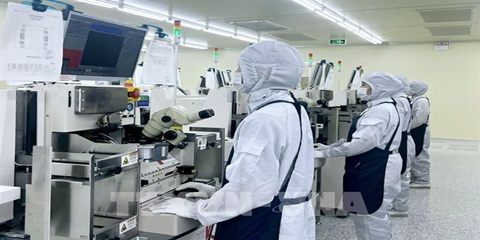
The growth of the electronics, semiconductor and high-tech sectors worldwide is opening up a variety of opportunities for Vietnamese enterprises to integrate more deeply into the global supply chain. However, to become suppliers for these corporations, domestic enterprises must meet rigorous standards regarding quality, technology, productivity and order fulfilment capabilities.
VIETNAM ECONOMY INVESTMENT
FOREIGN INVESTORS SEEKING A SYNCHRONISED MANUFACTURING ECOSYSTEM
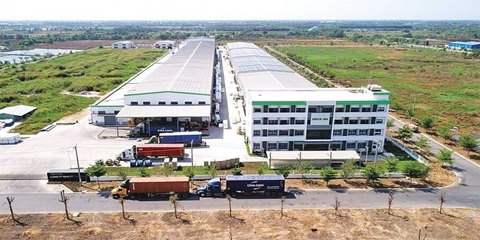
Instead of focusing only on land costs and incentives as usual, foreign investors are seeking a synchronised manufacturing ecosystem, from stable power supply and logistics to shared infrastructure and the convenience of completing residence procedures for experts to serve their long-term investment in the country.
MEMBER CORNER / PROMOTIONS
SENTRYSAFE FHW40200 – PROTECT YOUR VALUABLES, ENJOY PEACE OF MIND!
Looking for a reliable solution to protect your important documents, cash, and valuables from fire and water damage? Genuine SENTRYSAFE - Reliable protection for your valuables and peace of mind! Contact Sen Wai Vietnam for more information and personalized product recommendations.
PROPERTY / INDUSTRIAL ZONE
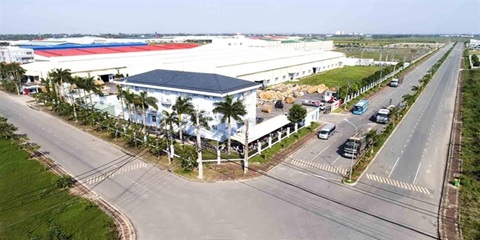
HCM CITY ATTRACTS US$5.7 BILLION INTO EXPORT PROCESSING AND INDUSTRIAL ZONES
HCM City attracted US$5.7 billion in domestic and foreign investment into its export processing and industrial zones during the first nine months of 2026. The figure exceeded the city's full-year target by 31 per cent, highlighting strong momentum in high-quality industrial investment under Resolution No.10-NQ/TW. Total investment reached 131 per cent of the 2026 target of $4.25 billion and represented a 29 per cent increase compared with the same period in 2025, according to the city's Export Processing and Industrial Zones Authority (HEPZA).
INFRASTRUCTURE / CONSTRUCTION / LOGISTIC / PORT
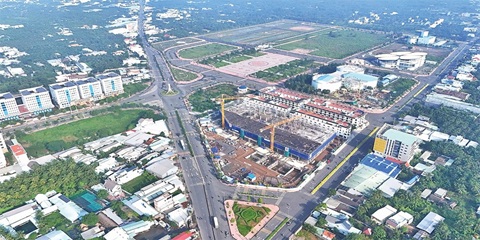
DONG THAP PROVINCE STEPS UP INDUSTRIAL EXPANSION AND INFRASTRUCTURE CONNECTIVITY
Accelerating public investment, strengthening inter-regional connectivity, and expanding industrial land are helping Dong Thap efficiently bolster competitiveness and drive economic growth. Following the 2025 merger of the former Dong Thap and Tien Giang provinces, the expanded Dong Thap province in the Mekong Delta faces mounting pressure to accelerate infrastructure development and strengthen connectivity among local economic zones, urban areas, industrial parks (IPs), and production centres.
Events Sponsors






















