Want to be in the loop?
subscribe to
our notification
Business News
VIETNAMESE ENTERPRISES RACE TOWARDS AI ADOPTION
Vietnamese enterprises are increasingly adopting AI to boost efficiency and competitiveness, but they remain mindful of the technology's potential risks.

Photo: Shutterstock
While Vietnam is rapidly emerging as an AI-ready economy with strong digital ambition, industry leaders caution that successful adoption depends less on new technologies and more on the capability to govern, operate, and integrate them.
At the Vietnam Future Economy Summit by Bloomberg Businessweek Vietnam on November 14, experts stressed that AI must be applied with measurable value and strategic purpose – or risk becoming a costly and ineffective investment.
Ha Trung Kien, vice chairman of G-Group Technology Corporation, said, “Our company's approach to AI is based on practicality. Instead of following trends, we apply AI to very specific problems, from cybersecurity to AI-enabled cameras to enterprise operational systems.”
Kien emphasised that AI only truly creates value when value can be measured. Some critical questions for AI adoption include whether employee productivity has improved, whether costs have decreased, whether efficiency has increased, and whether the company's competitiveness in the market has improved.
Additionally, implementing new technology inevitably reshapes how organisations operate. Among them, people play the critical role in the success of AI implementation.
"I believe that successfully deploying AI in a real business requires strong commitment from top leadership. Despite being a tech company, we have to invite external experts to conduct case studies so everyone can clearly see the value and understand how AI works in practice," Kien said.
When implementing AI for other businesses, he pointed out one issue. Even with a determined leader, the real bottleneck lies in the mindset around governance and employees' ability to modify their daily work habits. Departments may clash, and eventually, people may start to think, “This does not work.”
In the coming years, AI will be a critical technological driver, improving efficiency and fundamentally changing how we approach, deliver, and apply services across business and everyday life. Against the backdrop, more than 60 per cent of organisations in Vietnam show a relatively high level of AI readiness, surpassing the global average, according to the Cisco AI Readiness Index.
These figures somewhat reflect the reality of the Vietnamese market. Vietnam currently has over 4,000 startups and nearly 1.5 million young engineers. The pace of digital transformation is speeding up, while adaptability to new technologies is strong.
Nguyen Le Thanh, executive chairperson of Verichains, said, "Vietnamese businesses have a strong desire to transform and use AI and technology. However, the greatest challenge does not lie in new technologies, but rather in operations, applications, and the readiness of legacy systems."
“The core issue lies in the process of operating and applying the technology,” Thanh noted. “Readiness is not only about having the budget and the willingness to invest, but also about whether our systems are ready to connect, whether our data is sufficient, and whether data is prepared for AI to solve problems effectively.”
A quick survey of delegates at the summit revealed the risks of AI deployment. 54 per cent of respondents selected lack of AI and model governance capabilities as the biggest issue. This was followed by model bias and inaccuracies and data leakage. Only 10 per cent chose insufficiently skilled personnel.
Thanh said, "AI can be powerful, but some problems – even when solved by AI – may not be cost-effective. Therefore, AI should play a decisive role in guiding an enterprise's strategic decisions on where to invest and how to apply AI technologies to solve specific problems in a way that aligns with long-term business direction."
"More importantly, AI must be the one to play the role of controlling the system, ensuring accuracy, limiting the risk of data exposure and damage, and limiting model errors that have consequences. Finally, when there is an incident, AI is the one to solve it, the one to respond and handle those incidents, and take responsibility for those problems," he said.
Source: VIR
Related News

CHARITY / EXHIBITION / OTHER EVENTS
INVESTMENT OPPORTUNITIES IN CA MAU PROVINCE: 96 PROJECTS AND 20 STRATEGIC PROJECTS
We are pleased to share with you information on investment projects currently seeking investors in Ca Mau Province. Should your esteemed company or association be interested, we kindly invite you to review the project information and complete the registration form via the links provided. The Ho Chi Minh City Investment and Trade Promotion Centre (ITPC) will consolidate the expressions of interest and facilitate connections with the leadership of Ca Mau Province at a meeting tentatively scheduled for 13 November 2026 in Ho Chi Minh City.

MEMBER CORNER / PROMOTIONS
BẰNG KIỀU LIVESHOW - A SYMPHONY OF LOVE UNDER THE GOLDEN GLOW
A masterclass in live music that takes the audience on a soulful journey through immortal love songs, guided by the peerless artistry and emotive storytelling of renowned singer Bằng Kiều. The highlight of the night is his seamless musical chemistry with special guest Triệu Hồng Ngọc, promising passionate and deeply resonant duets inside the magnificent Grand Ballroom.
INFRASTRUCTURE / CONSTRUCTION / LOGISTIC / PORT
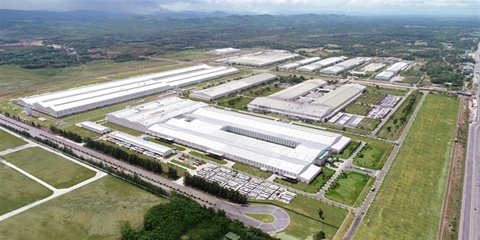
ĐÀ NẴNG GREEN-LIGHTS US$105 MILLION THAI DEVELOPMENT DEAL
The central city has approved an investment proposal by Thailand’s WHA Group to develop infrastructure for the 400ha WHA Đà Nẵng Industrial Park project on two communes of Thăng Bình and Đồng Dương, with an investment of more than VNĐ2.7 trillion (US$105 million). The city said it approved WHA Industrial Development International's status as an investor in the project, which is expected to take place between 2027 and 2034.
VIETNAM ECONOMY INVESTMENT
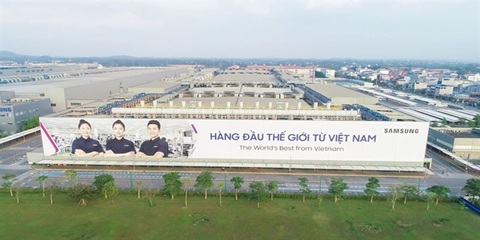
MOBILE PHONE EXPORTS RISE 20% TO $51.8 BILLION IN FIRST NINE MONTHS
Exports of mobile phones and components rose 20 per cent year-on-year to nearly US$51.8 billion in the first nine months of 2026, with China, the US and Republic of Korea accounting for more than half of the total. Shipments to the three markets reached a combined $26.18 billion, or 50.6 per cent of total exports of the product group during the period, according to data from the Vietnam Department of Customs under the Ministry of Finance.
INFRASTRUCTURE / CONSTRUCTION / LOGISTIC / PORT
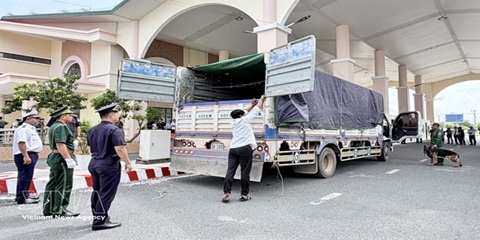
VIỆT NAM-CAMBODIA TRADE GATHERS PACE TOWARDS $20 BILLION TARGET
Trade between Việt Nam and Cambodia continues to grow, remaining a bright spot and a key pillar of bilateral cooperation as the two countries aim to raise two-way trade to US$20 billion in the coming years. After setting a record of more than $11.3 billion last year, bilateral trade reached about $8.7 billion in the first eight months of this year, up 8.3 per cent year on year.
VIETNAM ECONOMY INVESTMENT
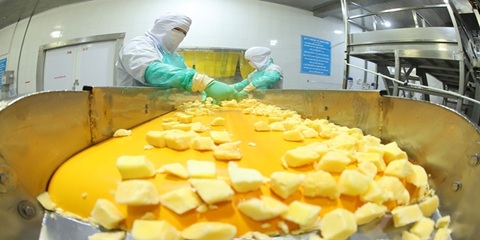
FRUIT AND VEGETABLE EXPORTS POISED TO HIT $10 BILLION IN 2026
Fruit and vegetable exports are on track to reach nearly US$10 billion in 2026, after rising 19.9 per cent year on year to nearly US$7.4 billion in the first nine months, driven by strong seasonal demand and abundant tropical fruit supplies. The Ministry of Agriculture and Environment said the growth reflected stronger international demand for fresh produce and processed agricultural products.
Events Sponsors






















