Want to be in the loop?
subscribe to
our notification
Business News
VIETNAM WELL-PLACED TO REMAIN STRATEGIC M&A LEADER
A number of potential deals in the pipeline signifies bright prospects for Vietnam’s mergers and acquisitions landscape.
SCGJWD Logistics (SJWD), the logistics arm under Siam Cement Group (SCG), in early May announced that it is purchasing SCG International Vietnam Co., Ltd. (SCG Inter VN) for approximately $5.4 million.
The deal marks SJWD’s expansion in Vietnam’s fast-growing logistics industry. The company’s agreement to enter into the contract is set for this month. The expected closing date for the transaction is in June.
SCG Inter VN is a third-party logistics provider with over 10 years of experience in the logistics industry. It has established a network of service providers specialising in truck and container transport, offering logistics services across Vietnam and facilitating cross-border freight transport in Thailand, Cambodia, Laos, and China, as well as being an expert in warehouse management.
SCG Inter VN also offers logistics services for the Long Son Petrochemicals complex in Vietnam, which is operated by SCG Chemicals, the chemical arm of SCG.
“We expect to start recognising revenues from SCG Inter VN in the third quarter of 2024,” Eakaponng Tungsrisanguan, CFO of SJWD, told Bangkok Post.
Meanwhile, Japan’s Mitsubishi Materials Corporation Group (MMC Group) also reached a framework agreement with Masan High-Tech Materials to acquire H.C. Starck Holding (HCS).
MMC Group’s potential acquisition of HCS plays to its strengths in the mid-stream and down-stream tungsten value chain. The acquisition will provide MMC Group with access to HCS’ production hubs in Europe, North America and China as well as a comprehensive tungsten scrap recycling platform backed by proprietary intellectual property including 90 worldwide patents and another 53 patents in the application phase.
Meanwhile, the sale of HCS to MMC Group will help Masan High-Tech to focus on optimising its domestic operations. This agreement marks the next step in both parties’ business cooperation.
Vo Ha Duyen, chairperson of law firm VILAF, told VIR that challenges in the financial markets are likely to persist across certain domestic sectors in 2024 as investors grapple with the evolving global and domestic political and regulatory landscapes.
Despite this, the country will likely remain a key growth leader in Southeast Asia, largely thanks to the effective free trade agreements boosting its export industries.
“For 2024 and 2025, Vietnam is probably expected to experience robust merger and acquisition (M&A) activity in healthcare, financial services, and digital infrastructure. This growth is likely driven by an ageing population, heightened health awareness, and technological advancements such as fintech and digital banking,” Duyen said.
Additionally, the recent relaxation of foreign ownership restrictions in data centres and telecom services will further stimulate this trend. From an external perspective, the US Federal Trade Commission’s increased scrutiny of M&A transactions in the US may redirect more investors towards Asia, including Vietnam, Duyen added.
The energy sector likely also holds potential for M&A activities in Asia. However, Vietnam would need to accelerate the development of its legal framework surrounding energy investments to fully capitalise on this opportunity and rejuvenate investment flows within the sector, she added.
According to data by the General Statistics Office, foreign investors injected $929.6 million into 902 capital contribution and share purchase deals in January-April. For the form of capital contribution and share purchase by foreign investors, capital invested in transportation and warehousing activities reached $277.2 million, accounting for 29.8 per cent of the value of capital contribution.
The figure for sci-tech and professional activities stood at $228.7 million, accounting for 24.6 per cent. The remaining industry has $423.7 million, making up for 45.6 per cent.
Masataka "Sam" Yoshida, head of the Cross-border Division of RECOF Corporation, is also upbeat about the outlook of Vietnam’s M&A market. The company forecasts a stable but stronger growth of Japanese investments not only in the number of transactions but also in the transaction size, backed up with the increase in valuation of Vietnamese companies which have added value in their financial performances.
“The presence of Japanese investors may bring a new dimension of competition to the Vietnamese market, not just for local companies but also for foreign investors from Thailand, South Korea, and Singapore,” Yoshida said.
The strategic, long-term investment approach of Japanese firms, coupled with their technology and operational efficiency, sets a high benchmark for value creation and sustainable growth, he added.
“This not only challenges existing players to elevate their game to higher levels but also offers Vietnamese companies opportunities for technological and managerial enhancement.”
Source: VIR
Related News

BANKING / FINANCE / INSURANCE / TAX
REMITTANCES TO HCM CITY RISE NEARLY 40% IN Q3
Remittances to HCM City reached more than US$2.83 billion in the third quarter of this year, up 39.5 per cent from the previous quarter and 3.6 per cent year-on-year. This was the first quarter showing positive annual growth this year, helping narrow the decline in remittance inflows over the first nine months. According to the State Bank of Vietnam (SBV)’s Regional Branch 2, remittances transferred to HCM City through credit institutions and economic organisations totalled $2.835 billion in Q3, an increase of more than $802 million from the previous quarter.

TECHNOLOGY
TECH SECTOR GROWTH OPENS UP OPPORTUNITIES FOR VIỆT NAM TO GO GLOBAL
The growth of the electronics, semiconductor and high-tech sectors worldwide is opening up a variety of opportunities for Vietnamese enterprises to integrate more deeply into the global supply chain. However, to become suppliers for these corporations, domestic enterprises must meet rigorous standards regarding quality, technology, productivity and order fulfilment capabilities.
VIETNAM ECONOMY INVESTMENT
FOREIGN INVESTORS SEEKING A SYNCHRONISED MANUFACTURING ECOSYSTEM
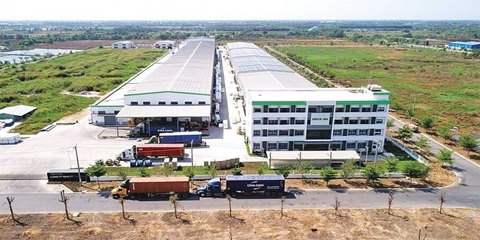
Instead of focusing only on land costs and incentives as usual, foreign investors are seeking a synchronised manufacturing ecosystem, from stable power supply and logistics to shared infrastructure and the convenience of completing residence procedures for experts to serve their long-term investment in the country.
MEMBER CORNER / PROMOTIONS
SENTRYSAFE FHW40200 – PROTECT YOUR VALUABLES, ENJOY PEACE OF MIND!
Looking for a reliable solution to protect your important documents, cash, and valuables from fire and water damage? Genuine SENTRYSAFE - Reliable protection for your valuables and peace of mind! Contact Sen Wai Vietnam for more information and personalized product recommendations.
PROPERTY / INDUSTRIAL ZONE
HCM CITY ATTRACTS US$5.7 BILLION INTO EXPORT PROCESSING AND INDUSTRIAL ZONES
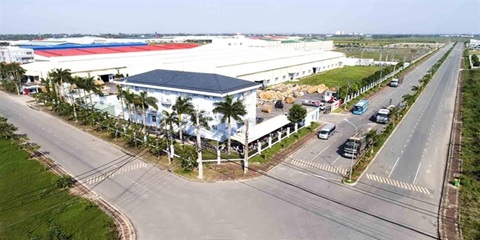
HCM City attracted US$5.7 billion in domestic and foreign investment into its export processing and industrial zones during the first nine months of 2026. The figure exceeded the city's full-year target by 31 per cent, highlighting strong momentum in high-quality industrial investment under Resolution No.10-NQ/TW. Total investment reached 131 per cent of the 2026 target of $4.25 billion and represented a 29 per cent increase compared with the same period in 2025, according to the city's Export Processing and Industrial Zones Authority (HEPZA).
INFRASTRUCTURE / CONSTRUCTION / LOGISTIC / PORT
DONG THAP PROVINCE STEPS UP INDUSTRIAL EXPANSION AND INFRASTRUCTURE CONNECTIVITY
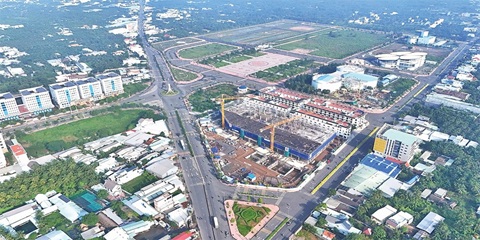
Accelerating public investment, strengthening inter-regional connectivity, and expanding industrial land are helping Dong Thap efficiently bolster competitiveness and drive economic growth. Following the 2025 merger of the former Dong Thap and Tien Giang provinces, the expanded Dong Thap province in the Mekong Delta faces mounting pressure to accelerate infrastructure development and strengthen connectivity among local economic zones, urban areas, industrial parks (IPs), and production centres.
Events Sponsors






















