Want to be in the loop?
subscribe to
our notification
Business News
VIETNAM WANTS TO ACCELERATE PRIVATE-SECTOR GROWTH
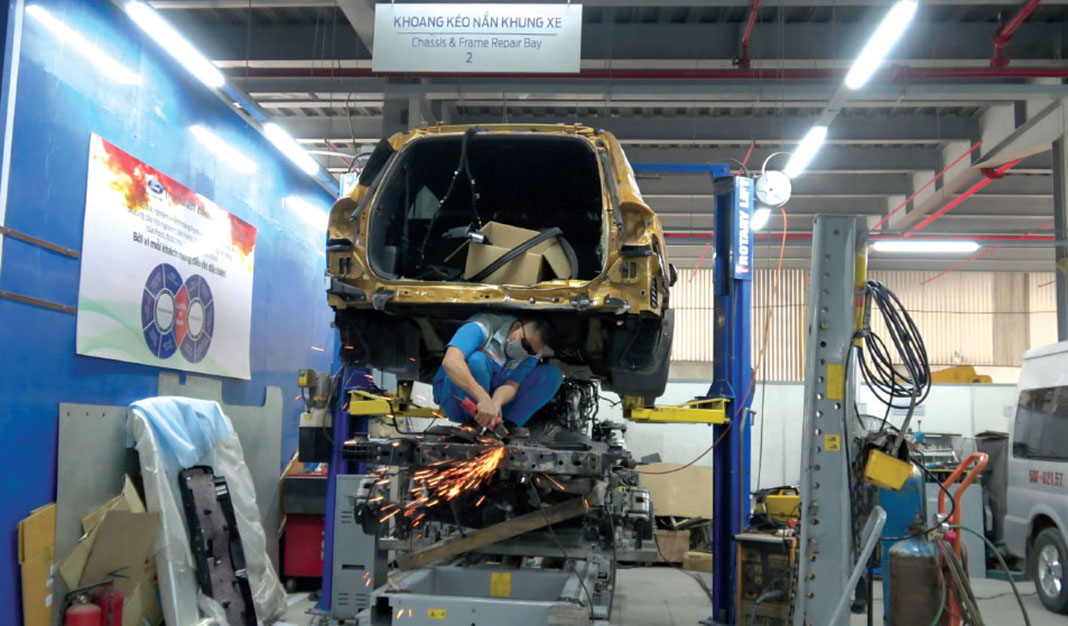
Vietnam will need to boost private-sector growth, especially small and medium-sized enterprises (SMEs), according to the Party Central Committee's Conclusion 18 - PHOTO: LE VU
HCMC – Vietnam will need to boost private-sector growth, especially small and medium-sized enterprises (SMEs) while adopting appropriate policies and creating a transparent, enabling, and safe business environment to ensure domestic private firms have equal access to resources.
This is among the notable points highlighted in the conclusion of the second plenum of the 14th Party Central Committee regarding the socio-economic development plan, national financial strategy, public debt borrowing and repayment, and the medium-term public investment plan for 2026–2030, aligned with the goal of achieving “double-digit” growth.
According to Conclusion 18, recently signed by Party General Secretary To Lam, reforms of the state sector will continue, with a focus on aligning state-owned enterprise (SOE) governance with international standards, enhancing efficiency, and strengthening the leading role of SOEs in key sectors. Equitization and state capital divestment will be further accelerated, ensuring efficiency and preventing losses and wastefulness.
Priority will be given to developing large economic groups, corporations, and enterprises with regional and global competitiveness. Foreign investment will be selectively attracted, with a shift in FDI policies from tax incentives toward other forms of incentives, including ex-post and performance-based incentives. Greater emphasis will be placed on technology transfer, strengthening linkages between the FDI and domestic sectors, and promoting effective outbound investment.
Conclusion 18 says the country will have to work toward achieving an average annual GDP growth rate of at least 10%, maintaining macroeconomic stability, controlling inflation, and ensuring major economic balances, alongside improving overall living standards. By 2030, Vietnam aims to become a developing country with modern industry, upper-middle income, and rank among the world’s top 30 economies by GDP size.
The conclusion also outlines key tasks and solutions for socio-economic development in 2026–2030, including aligning thinking, awareness, aspirations, and actions, and reforming governance to achieve “double-digit” growth.
At the same time, efforts will focus on completing a synchronized, modern, and competitive institutional framework to drive growth breakthroughs, and urgently addressing institutional bottlenecks and policy constraints.
The conclusion emphasizes transitioning to a new growth model driven primarily by science and technology, innovation, and digital transformation. Economic restructuring will continue, revitalizing traditional growth drivers—investment, consumption, and exports—while fostering new industries, sectors, and economic models. Breakthroughs will be pursued across all economic sectors, alongside effective implementation of Politburo resolutions.
Priority will be given to developing the domestic capital market as a long-term funding channel, reducing reliance on the banking system. Measures will be implemented to improve the national credit rating and upgrade the stock market classification. Special and breakthrough mechanisms and policies will be introduced to enhance the effectiveness of international financial centers and free trade zones in attracting indirect investment flows and global investment funds.
The banking system and credit institutions will be modernized, with stronger efforts to address weak institutions and cross-ownership, improve credit quality and efficiency, and ensure system stability and safety.
Institutional, regulatory, and policy frameworks for science, technology, and innovation will be urgently improved to remove bottlenecks, with a focus on output-based management and controlled risk-taking. Priority areas include governance mechanisms, financial frameworks, investment policies, and mechanisms for public science and technology units. Enterprises will be encouraged to invest in and apply science and technology, particularly new, high, and strategic technologies. Investment in and effective utilization of science and technology infrastructure—especially digital infrastructure and big data—will be strengthened.
Synchronized and modern infrastructure development will be accelerated, alongside urbanization and regional connectivity. This includes prioritizing expressways, international gateway seaports, major airports, the North–South high-speed railway, international rail links, and urban rail systems. By 2030, over 5,000 kilometers of expressways are expected to be operational. Energy infrastructure will be expanded to meet high growth demand, ensure energy security, and include a balanced development of coal-fired power (with emissions control roadmaps), renewable energy, and new energy sources.
The plan also envisions the formation of strong growth poles, key economic regions, major urban centers, and next-generation special economic zones with regional and global competitiveness.
Source: The Saigon Times
Related News

BANKING / FINANCE / INSURANCE / TAX
REMITTANCES TO HCM CITY RISE NEARLY 40% IN Q3
Remittances to HCM City reached more than US$2.83 billion in the third quarter of this year, up 39.5 per cent from the previous quarter and 3.6 per cent year-on-year. This was the first quarter showing positive annual growth this year, helping narrow the decline in remittance inflows over the first nine months. According to the State Bank of Vietnam (SBV)’s Regional Branch 2, remittances transferred to HCM City through credit institutions and economic organisations totalled $2.835 billion in Q3, an increase of more than $802 million from the previous quarter.
TECHNOLOGY
TECH SECTOR GROWTH OPENS UP OPPORTUNITIES FOR VIỆT NAM TO GO GLOBAL
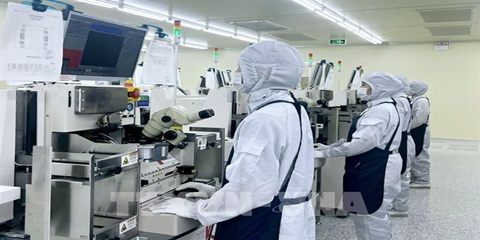
The growth of the electronics, semiconductor and high-tech sectors worldwide is opening up a variety of opportunities for Vietnamese enterprises to integrate more deeply into the global supply chain. However, to become suppliers for these corporations, domestic enterprises must meet rigorous standards regarding quality, technology, productivity and order fulfilment capabilities.
VIETNAM ECONOMY INVESTMENT
FOREIGN INVESTORS SEEKING A SYNCHRONISED MANUFACTURING ECOSYSTEM
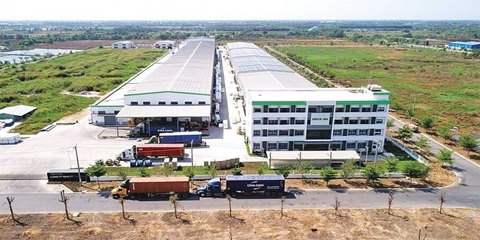
Instead of focusing only on land costs and incentives as usual, foreign investors are seeking a synchronised manufacturing ecosystem, from stable power supply and logistics to shared infrastructure and the convenience of completing residence procedures for experts to serve their long-term investment in the country.
MEMBER CORNER / PROMOTIONS
SENTRYSAFE FHW40200 – PROTECT YOUR VALUABLES, ENJOY PEACE OF MIND!
Looking for a reliable solution to protect your important documents, cash, and valuables from fire and water damage? Genuine SENTRYSAFE - Reliable protection for your valuables and peace of mind! Contact Sen Wai Vietnam for more information and personalized product recommendations.
PROPERTY / INDUSTRIAL ZONE
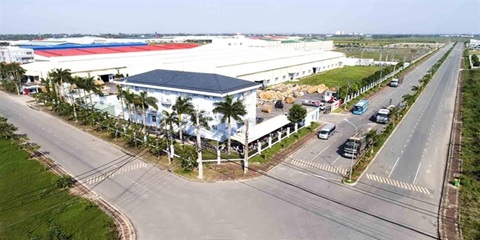
HCM CITY ATTRACTS US$5.7 BILLION INTO EXPORT PROCESSING AND INDUSTRIAL ZONES
HCM City attracted US$5.7 billion in domestic and foreign investment into its export processing and industrial zones during the first nine months of 2026. The figure exceeded the city's full-year target by 31 per cent, highlighting strong momentum in high-quality industrial investment under Resolution No.10-NQ/TW. Total investment reached 131 per cent of the 2026 target of $4.25 billion and represented a 29 per cent increase compared with the same period in 2025, according to the city's Export Processing and Industrial Zones Authority (HEPZA).
INFRASTRUCTURE / CONSTRUCTION / LOGISTIC / PORT
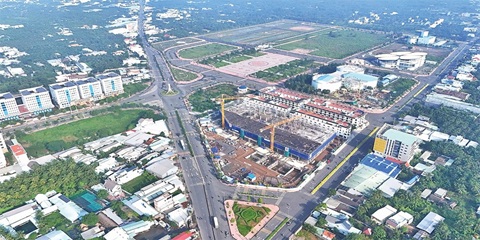
DONG THAP PROVINCE STEPS UP INDUSTRIAL EXPANSION AND INFRASTRUCTURE CONNECTIVITY
Accelerating public investment, strengthening inter-regional connectivity, and expanding industrial land are helping Dong Thap efficiently bolster competitiveness and drive economic growth. Following the 2025 merger of the former Dong Thap and Tien Giang provinces, the expanded Dong Thap province in the Mekong Delta faces mounting pressure to accelerate infrastructure development and strengthen connectivity among local economic zones, urban areas, industrial parks (IPs), and production centres.
Events Sponsors






















