Want to be in the loop?
subscribe to
our notification
Business News
VIETNAM TARGETS PER-CAPITA GDP OF US$8,500 BY 2030
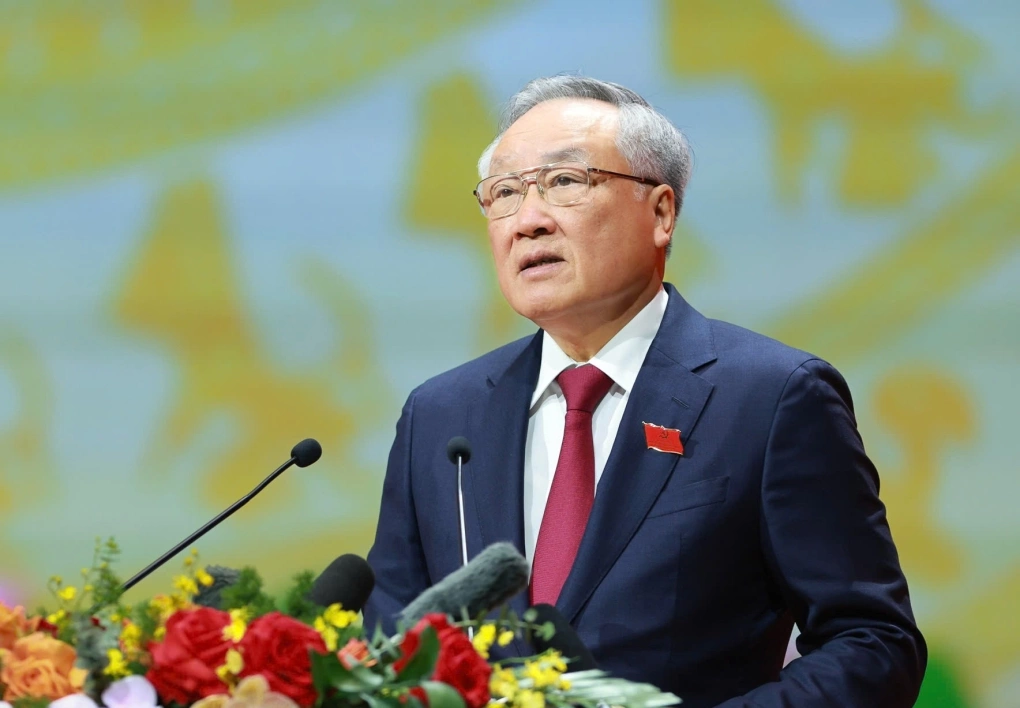
Permanent Deputy Prime Minister Nguyen Hoa Binh - PHOTO: VGP
HCMC – The Vietnamese Government has set an ambitious goal to achieve annual economic growth of 10% or higher, aiming to take the country’s per-capita GDP to around US$8,500 by 2030.
At the first Congress of the Government’s Party Committee for the 2025-2030 tenure that opened today, October 13, Permanent Deputy Prime Minister Nguyen Hoa Binh said Vietnam aims to become a modern industrialized nation with upper-middle income by the end of the decade. The country also targets being among the 30 largest economies in the world and the third largest in ASEAN.
According to the Government’s report, Vietnam’s GDP this year is estimated at US$510 billion, ranking 32nd globally, up five places from five years ago. Per-capita GDP has increased 1.4 times, from US$3,552 in 2020 to over US$5,000 by the end of this year. Meeting the 2030 target would mean a further 1.7-fold rise in per-capita income within the next five years.
Economic growth for 2025 is projected to exceed 8%, creating momentum toward achieving double-digit growth rates in the following years.
During 2021–2025, the state budget revenue is expected to reach VND9.6 quadrillion, 1.6 times higher than in the previous five-year period and above the original target. Vietnam’s total trade could climb to US$850 billion by 2025, putting the country among the world’s top 20 trading nations.
Looking ahead, the Government plans to build a modern national education system aligned with global standards and to invest in high-quality human resources. Infrastructure development will focus on synchronizing urban and rural growth, with cities serving as engines for regional development.
On governance, Binh emphasized the Government’s commitment to fighting corruption and waste and strengthening digital oversight to improve transparency.
To sustain double-digit growth, the Government will pursue a new growth model centered on industrialization, economic restructuring, and innovation. Science, technology, and digital transformation will be key drivers, positioning Vietnam among leading upper-middle-income economies.
Binh noted that inflation, public debt, and budget deficits will remain under control, while emerging growth drivers such as digital transformation, green growth, and the circular economy will be actively promoted.
The Government reaffirmed that the state-owned enterprise sector will continue to play a leading role, while the private sector remains a crucial growth engine. Foreign direct investment (FDI) will be selectively attracted, prioritizing technology transfer and innovation.
Vietnam also aims to complete 5,000 kilometers of expressways by 2030 and fully open the coastal highway, as well as railway projects linking Lao Cai – Hanoi – Haiphong and urban metro systems in Hanoi and HCMC (each 100 kilometers long).
Plans to develop nuclear energy will be revisited, with the Ninh Thuan 1 and 2 plants expected to be operational after 2030, using new, safe technologies.
Human resource development will focus on 11 strategic technology sectors, with the digital economy expected to account for at least 30% of GDP by 2030.
Earlier, Prime Minister Pham Minh Chinh highlighted Vietnam’s recent socio-economic achievements and urged delegates to propose breakthrough solutions to sustain macroeconomic stability, control inflation, and achieve average annual GDP growth of 10% or higher during 2026–2030.
He also called for accelerating institutional reforms to unlock productivity and fully harness both traditional and new growth engines, including digital and green economies.
Source: The Saigon Times
Related News

BANKING / FINANCE / INSURANCE / TAX
REMITTANCES TO HCM CITY RISE NEARLY 40% IN Q3
Remittances to HCM City reached more than US$2.83 billion in the third quarter of this year, up 39.5 per cent from the previous quarter and 3.6 per cent year-on-year. This was the first quarter showing positive annual growth this year, helping narrow the decline in remittance inflows over the first nine months. According to the State Bank of Vietnam (SBV)’s Regional Branch 2, remittances transferred to HCM City through credit institutions and economic organisations totalled $2.835 billion in Q3, an increase of more than $802 million from the previous quarter.

TECHNOLOGY
TECH SECTOR GROWTH OPENS UP OPPORTUNITIES FOR VIỆT NAM TO GO GLOBAL
The growth of the electronics, semiconductor and high-tech sectors worldwide is opening up a variety of opportunities for Vietnamese enterprises to integrate more deeply into the global supply chain. However, to become suppliers for these corporations, domestic enterprises must meet rigorous standards regarding quality, technology, productivity and order fulfilment capabilities.

VIETNAM ECONOMY INVESTMENT
FOREIGN INVESTORS SEEKING A SYNCHRONISED MANUFACTURING ECOSYSTEM
Instead of focusing only on land costs and incentives as usual, foreign investors are seeking a synchronised manufacturing ecosystem, from stable power supply and logistics to shared infrastructure and the convenience of completing residence procedures for experts to serve their long-term investment in the country.

MEMBER CORNER / PROMOTIONS
SENTRYSAFE FHW40200 – PROTECT YOUR VALUABLES, ENJOY PEACE OF MIND!
Looking for a reliable solution to protect your important documents, cash, and valuables from fire and water damage? Genuine SENTRYSAFE - Reliable protection for your valuables and peace of mind! Contact Sen Wai Vietnam for more information and personalized product recommendations.

PROPERTY / INDUSTRIAL ZONE
HCM CITY ATTRACTS US$5.7 BILLION INTO EXPORT PROCESSING AND INDUSTRIAL ZONES
HCM City attracted US$5.7 billion in domestic and foreign investment into its export processing and industrial zones during the first nine months of 2026. The figure exceeded the city's full-year target by 31 per cent, highlighting strong momentum in high-quality industrial investment under Resolution No.10-NQ/TW. Total investment reached 131 per cent of the 2026 target of $4.25 billion and represented a 29 per cent increase compared with the same period in 2025, according to the city's Export Processing and Industrial Zones Authority (HEPZA).

INFRASTRUCTURE / CONSTRUCTION / LOGISTIC / PORT
DONG THAP PROVINCE STEPS UP INDUSTRIAL EXPANSION AND INFRASTRUCTURE CONNECTIVITY
Accelerating public investment, strengthening inter-regional connectivity, and expanding industrial land are helping Dong Thap efficiently bolster competitiveness and drive economic growth. Following the 2025 merger of the former Dong Thap and Tien Giang provinces, the expanded Dong Thap province in the Mekong Delta faces mounting pressure to accelerate infrastructure development and strengthen connectivity among local economic zones, urban areas, industrial parks (IPs), and production centres.
Events Sponsors






















