Want to be in the loop?
subscribe to
our notification
Business News
VIETNAM TAKES STEPS TO REALISE 8.3–8.5% GROWTH TARGET IN 2025
Việt Nam is stepping up efforts to achieve an ambitious GDP growth target of 8.3–8.5 per cent this year, despite global uncertainties and divergent economic forecasts.
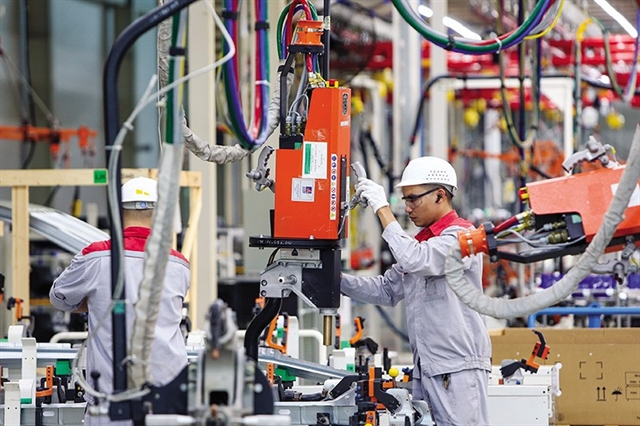
Authorities are focusing on boosting traditional growth drivers such as investment, consumption, and exports. — VNA/VNS Photo
HÀ NỘI — Việt Nam is stepping up efforts to achieve an ambitious GDP growth target of 8.3–8.5 per cent this year, despite global uncertainties and divergent economic forecasts.
Authorities are focusing on boosting traditional growth drivers such as investment, consumption and exports while implementing a broad array of policy measures to maintain economic momentum.
Recent GDP projections for Việt Nam in the second half of 2025 show a wide divergence.
The Asian Development Bank (ADB) and the Standard Chartered have revised their forecasts downward to 6.3 per cent and 6.1 per cent, respectively, citing external risks, particularly from rising trade tensions and new US tariff policies scheduled to take effect on August 1.
In contrast, several financial institutions remain upbeat. The United Overseas Bank (UOB) raised its projection from 6 per cent to 6.9 per cent, CitiGroup revised its forecast from 6.6 per cent to 7 per cent, and Maybank increased its projection to 7.3 per cent. Meanwhile, the BIDV Research Group anticipated the country's growth could reach 7.5–7.7 per cent in a base scenario and as high as 7.8-8.1 per cent under an optimistic scenario.
This disparity underscores continued uncertainties in the global economic environment and challenges facing Việt Nam, especially as the US's new tariffs are expected to impact major export sectors like electronics, textiles, furniture, and aquatic products.
Despite these headwinds, the Ministry of Finance has proposed a bold economic growth scenario of 8.3–8.5 per cent for 2025, which was approved by Prime Minister Phạm Minh Chính. This target is seen as achievable and essential to lay the groundwork for potential double-digit growth in the coming year.
Traditional economic engines
To support this effort, the government plans to leverage traditional economic engines. The Ministry of Finance estimates that total social investment in the second half of the year could reach US$111 billion, with retail and service revenue growing by at least 13 per cent, and total trade volume increasing by 17 per cent or more.
PM Chính has stressed that the growth target is “not impossible” and must be pursued decisively. Key policy directions include accelerating public investment disbursement, mobilising social investment, stimulating domestic consumption, and negotiating trade agreements, particularly with the US, to ease export pressures.
The second half of the year offers a seasonal advantage, with heightened domestic and international demand expected during the year-end shopping period. The government is working to ensure these trends are translated into real economic gains.
Measures being rolled out include cracking down on smuggling and trade fraud, developing tourism products to attract foreign visitors, and ensuring timely compensation and policy implementation for public employees affected by administrative restructuring.
To stimulate domestic demand, fiscal policy is being loosened. The Ministry of Finance is implementing tax relief measures, including a 2 per cent VAT cut and a proposal to increase personal income tax deductions. Additionally, financial support for civil servants is being expedited to enhance household consumption.
Albert Park, chief economist at ADB said that despite the increased risks from tariff uncertainties, domestic reforms, if implemented effectively and quickly, can mitigate these risks by strengthening domestic factors. This will also positively support Việt Nam’s economic growth in 2025. — VNS
Source: VNS
Related News

BANKING / FINANCE / INSURANCE / TAX
REMITTANCES TO HCM CITY RISE NEARLY 40% IN Q3
Remittances to HCM City reached more than US$2.83 billion in the third quarter of this year, up 39.5 per cent from the previous quarter and 3.6 per cent year-on-year. This was the first quarter showing positive annual growth this year, helping narrow the decline in remittance inflows over the first nine months. According to the State Bank of Vietnam (SBV)’s Regional Branch 2, remittances transferred to HCM City through credit institutions and economic organisations totalled $2.835 billion in Q3, an increase of more than $802 million from the previous quarter.

TECHNOLOGY
TECH SECTOR GROWTH OPENS UP OPPORTUNITIES FOR VIỆT NAM TO GO GLOBAL
The growth of the electronics, semiconductor and high-tech sectors worldwide is opening up a variety of opportunities for Vietnamese enterprises to integrate more deeply into the global supply chain. However, to become suppliers for these corporations, domestic enterprises must meet rigorous standards regarding quality, technology, productivity and order fulfilment capabilities.
VIETNAM ECONOMY INVESTMENT
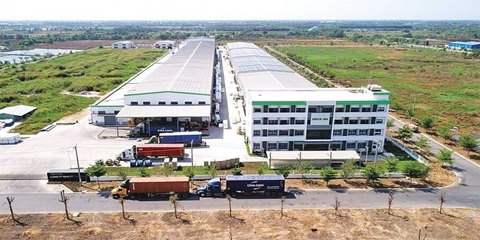
FOREIGN INVESTORS SEEKING A SYNCHRONISED MANUFACTURING ECOSYSTEM
Instead of focusing only on land costs and incentives as usual, foreign investors are seeking a synchronised manufacturing ecosystem, from stable power supply and logistics to shared infrastructure and the convenience of completing residence procedures for experts to serve their long-term investment in the country.

MEMBER CORNER / PROMOTIONS
SENTRYSAFE FHW40200 – PROTECT YOUR VALUABLES, ENJOY PEACE OF MIND!
Looking for a reliable solution to protect your important documents, cash, and valuables from fire and water damage? Genuine SENTRYSAFE - Reliable protection for your valuables and peace of mind! Contact Sen Wai Vietnam for more information and personalized product recommendations.
PROPERTY / INDUSTRIAL ZONE
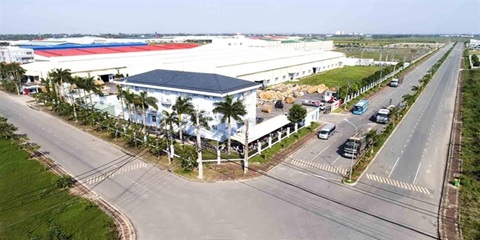
HCM CITY ATTRACTS US$5.7 BILLION INTO EXPORT PROCESSING AND INDUSTRIAL ZONES
HCM City attracted US$5.7 billion in domestic and foreign investment into its export processing and industrial zones during the first nine months of 2026. The figure exceeded the city's full-year target by 31 per cent, highlighting strong momentum in high-quality industrial investment under Resolution No.10-NQ/TW. Total investment reached 131 per cent of the 2026 target of $4.25 billion and represented a 29 per cent increase compared with the same period in 2025, according to the city's Export Processing and Industrial Zones Authority (HEPZA).
INFRASTRUCTURE / CONSTRUCTION / LOGISTIC / PORT
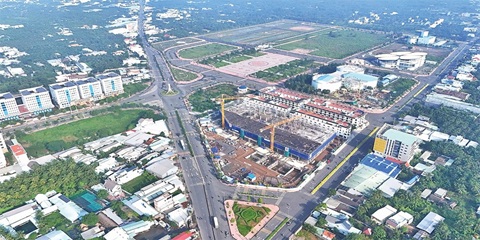
DONG THAP PROVINCE STEPS UP INDUSTRIAL EXPANSION AND INFRASTRUCTURE CONNECTIVITY
Accelerating public investment, strengthening inter-regional connectivity, and expanding industrial land are helping Dong Thap efficiently bolster competitiveness and drive economic growth. Following the 2025 merger of the former Dong Thap and Tien Giang provinces, the expanded Dong Thap province in the Mekong Delta faces mounting pressure to accelerate infrastructure development and strengthen connectivity among local economic zones, urban areas, industrial parks (IPs), and production centres.
Events Sponsors






















