Want to be in the loop?
subscribe to
our notification
Business News
VIETNAM TAKES ACTION TO CLEAN OUT OCEAN ENVIRONS
By 2030, Vietnam’s fishing and tourism industry will suffer if nothing is done to fight plastic pollution, figures warn.
Estimates predict that without prompt government action, between 0.28 and 0.73 million tonnes of plastic will flow into Vietnam’s seas each year, causing tremendous economic, social, and environmental damage. Conscious of this issue, the Vietnamese government passed the Law on Environmental Protection in November 2020 and committed to a number of activities to tackle this issue, led by the National Action Plan for Management of Marine Plastic Litter by 2030.
Taking stock of growing plastic waste pollution across the globe and Vietnam, the government has launched a comprehensive action plan mobilising ministries and national agencies of all levels in one unprecedented country-wide push to protect Vietnams marine environment form plastic waste.
The plan includes 5-year and 10-year targets to decrease plastic waste in Vietnam’s waters. By 2025, Vietnam is determined to reduce marine plastic litter by 50 per cent. The country also aims to collect 50 per cent of abandoned, lost, or discarded fishing gear, such as fishing nets, and to prevent the use of single-use plastics and non-biodegradable plastic bags in 80 per cent of coastal tourism areas, tourist attractions and accommodations, and other coastal tourism service areas.
In addition, the country is planning to conduct nationwide beach cleanup campaigns at least twice a year and strive to make 80 per cent of protected marine areas free of plastic litter.
By 2030, the aim is to reduce marine plastic litter by 75 per cent in Vietnam’s waters with all abandoned, lost, or discarded fishing gear collected and disposed of. By then, the country strives to eliminate the use of single-use plastics and non-biodegradable plastic bags from all coastal tourism areas and ensure that all protected marine areas are free of plastic litter.
In order to realise the above targets, Vietnam is focusing on education and behaviour change with regards to plastics and marine plastic litter.
Another key action being deployed by Vietnam aims to improve the collection, classification, storage, transfer, and processing of plastic waste from coastal and ocean-based activities. In this regard, the government has tasked the Ministry of Natural Resources and Environment (MoNRE) and other relevant regulatory bodies to deploy beach cleanup movements and campaigns in coastal localities and residential communities. These public agencies will also have to decide on and invest in the necessary infrastructure for plastic waste storage equipment and collection sites to ensure safety, environmental hygiene, and aesthetics. They will also be key partners in the development of a marine plastic litter database to complement the national waste source database.
In addition to these initiatives, Vietnam will increase international cooperation and scientific research, as well as the development, transfer, and application of marine plastic litter processing technologies to support these ambitious targets.
Since promulgation of the action plan in December 2020 in Decision No.1746/QD-TTg, Vietnam has already engaged in numerous international activities and collaborations to address marine plastic waste.
In January, the Vietnamese government decided to join formal international talks on plastic waste reduction. The talks initially took off in 2020, when 80 countries began advocating for a legally-binding global agreement on plastic waste. The MoNRE and other ministries and authorities were then assigned to compile a project on Vietnam’s participation in discussions taking place in the second quarter of 2021 and the fifth meeting of the UN Environment Assembly next February.
The ministry in turn assigned the Vietnam Administration of Seas and Islands to participate in this preparatory work for a stronger representation of marine expertise. Since then, the administration has submitted various ideas to fight ocean litter and achieve microplastics reduction to the UN Environment Council’s expert group and has been actively participating in shaping the global deal on plastic waste.
In addition, in February, the Ministry of Agriculture and Rural Development issued Decision No.687/QD-BNN-TCTS approving the very first action plan in Vietnam’s history on marine plastic waste management in the fisheries sector (2020-2030). This action plan aims to reduce plastic waste in fisheries production by gradually managing marine plastic waste from source to the sea, implementing a circular economy approach, developing a green economy, and raising awareness and social responsibility of farming and fishing communities, fishermen, and businesses.
According to MoNRE Minister Tran Hong Ha, Vietnam will also promote research and sharing of information and data concerning marine plastic litter with other nations and territories in the region and around the world. Vietnam also aims to maintain and strengthen cooperation with international marine organisations and to proactively adopt new and existing international conventions on marine litter.
International collaboration for the control and management of marine plastic waste is also a national objective. Furthermore, it is studying the establishment of a public-private partnership mechanism to facilitate cooperation between businesses and government agencies in solving the problem of plastic waste pollution and ocean plastic waste.
Source: VIR
Related News

BANKING / FINANCE / INSURANCE / TAX
REMITTANCES TO HCM CITY RISE NEARLY 40% IN Q3
Remittances to HCM City reached more than US$2.83 billion in the third quarter of this year, up 39.5 per cent from the previous quarter and 3.6 per cent year-on-year. This was the first quarter showing positive annual growth this year, helping narrow the decline in remittance inflows over the first nine months. According to the State Bank of Vietnam (SBV)’s Regional Branch 2, remittances transferred to HCM City through credit institutions and economic organisations totalled $2.835 billion in Q3, an increase of more than $802 million from the previous quarter.
TECHNOLOGY
TECH SECTOR GROWTH OPENS UP OPPORTUNITIES FOR VIỆT NAM TO GO GLOBAL
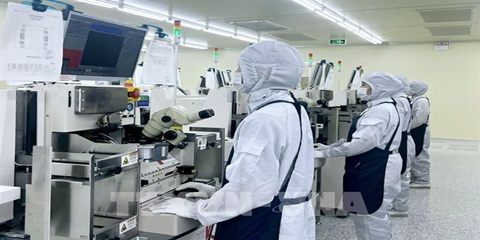
The growth of the electronics, semiconductor and high-tech sectors worldwide is opening up a variety of opportunities for Vietnamese enterprises to integrate more deeply into the global supply chain. However, to become suppliers for these corporations, domestic enterprises must meet rigorous standards regarding quality, technology, productivity and order fulfilment capabilities.
VIETNAM ECONOMY INVESTMENT
FOREIGN INVESTORS SEEKING A SYNCHRONISED MANUFACTURING ECOSYSTEM
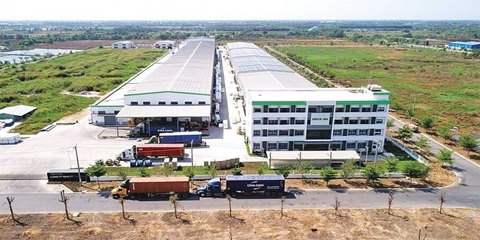
Instead of focusing only on land costs and incentives as usual, foreign investors are seeking a synchronised manufacturing ecosystem, from stable power supply and logistics to shared infrastructure and the convenience of completing residence procedures for experts to serve their long-term investment in the country.
MEMBER CORNER / PROMOTIONS
SENTRYSAFE FHW40200 – PROTECT YOUR VALUABLES, ENJOY PEACE OF MIND!
Looking for a reliable solution to protect your important documents, cash, and valuables from fire and water damage? Genuine SENTRYSAFE - Reliable protection for your valuables and peace of mind! Contact Sen Wai Vietnam for more information and personalized product recommendations.
PROPERTY / INDUSTRIAL ZONE
HCM CITY ATTRACTS US$5.7 BILLION INTO EXPORT PROCESSING AND INDUSTRIAL ZONES
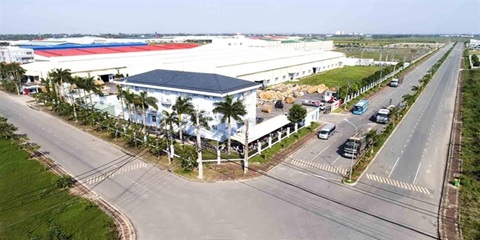
HCM City attracted US$5.7 billion in domestic and foreign investment into its export processing and industrial zones during the first nine months of 2026. The figure exceeded the city's full-year target by 31 per cent, highlighting strong momentum in high-quality industrial investment under Resolution No.10-NQ/TW. Total investment reached 131 per cent of the 2026 target of $4.25 billion and represented a 29 per cent increase compared with the same period in 2025, according to the city's Export Processing and Industrial Zones Authority (HEPZA).
INFRASTRUCTURE / CONSTRUCTION / LOGISTIC / PORT
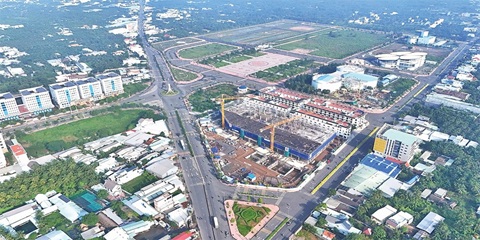
DONG THAP PROVINCE STEPS UP INDUSTRIAL EXPANSION AND INFRASTRUCTURE CONNECTIVITY
Accelerating public investment, strengthening inter-regional connectivity, and expanding industrial land are helping Dong Thap efficiently bolster competitiveness and drive economic growth. Following the 2025 merger of the former Dong Thap and Tien Giang provinces, the expanded Dong Thap province in the Mekong Delta faces mounting pressure to accelerate infrastructure development and strengthen connectivity among local economic zones, urban areas, industrial parks (IPs), and production centres.
Events Sponsors






















