Want to be in the loop?
subscribe to
our notification
Business News
VIETNAM SETS SIGHTS ON HO CHI MINH CITY'S TRANSFORMATION INTO A GLOBAL FINANCIAL HUB BY 2030
Vietnam established a steering committee, led by Deputy Prime Minister Le Minh Khai, on October 6 to guide the development of a new international financial hub, underscoring its ambition to elevate its global financial stature.
Vietnam has recently laid the foundations for the conception of a regional and international financial hub, demonstrating its keen intent to upscale its presence in the global financial landscape.
The initiation was marked by the establishment of a steering committee to oversee this monumental endeavour, with Deputy Prime Minister Le Minh Khai spearheading the group.
Formed following a decision on October 6 by Prime Minister Pham Minh Chinh, the committee's primary role will be to advise the government and assist the prime minister with research, coordination efforts, and the resolution of tasks associated with building the envisioned financial centre.
Lending weight to the committee’s prominence is a roster of esteemed officials. Beyond the leadership of DPM Khai, the committee includes Minister of Planning and Investment Nguyen Chi Dung and is bolstered by the involvement of top-tier executives from several ministries, including Finance, Trade and Industry, Defence, Public Security, Information and Communication, Natural Resources and Environment, the State Bank, the Government Office, and also representation from the administrative agencies of Ho Chi Minh City and Danang.
Ho Chi Minh City and Danang have previously delved into foundational research into the inception of such a financial epicentre. As revealed by the Ministry of Planning and Investment in May, there have been joint explorations with these cities on the matter.
However, the proposition of sculpting an international financial hub in Ho Chi Minh City is perceived as a formidable and intricate undertaking.
The blueprint for this endeavour seeks to leverage the myriad of potential and advantages inherent in both Vietnam as a nation and the cities of Ho Chi Minh City and Danang.
Preliminary drafts from Ho Chi Minh City in 2022 shed light on the three-pronged structure for the international financial hub. This encompasses a monetary market coupled with a banking system, a capital market, and another dedicated to derivative commodities.
To realise this grand vision, Ho Chi Minh City has delineated a quartet of specific action programmes. These include the proliferation of Fintech, digital banking, and digital financial transactions, the regional integration of the hub, the promotion of the Thu Thiem Financial and Trade Zone, and the growth of the commodities market.
Furthermore, the prospective financial centre in Ho Chi Minh City has been envisaged to host entertainment quarters and casinos, albeit not as core components but as strategic add-ons to enhance its appeal to global investors.
The city’s blueprint sets forth a phased deployment plan, aiming for the establishment of this international financial hub by 2030.
Source: VIR
Related News

BANKING / FINANCE / INSURANCE / TAX
REMITTANCES TO HCM CITY RISE NEARLY 40% IN Q3
Remittances to HCM City reached more than US$2.83 billion in the third quarter of this year, up 39.5 per cent from the previous quarter and 3.6 per cent year-on-year. This was the first quarter showing positive annual growth this year, helping narrow the decline in remittance inflows over the first nine months. According to the State Bank of Vietnam (SBV)’s Regional Branch 2, remittances transferred to HCM City through credit institutions and economic organisations totalled $2.835 billion in Q3, an increase of more than $802 million from the previous quarter.
TECHNOLOGY
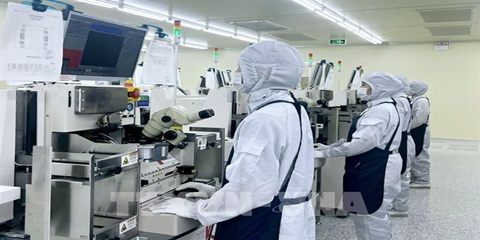
TECH SECTOR GROWTH OPENS UP OPPORTUNITIES FOR VIỆT NAM TO GO GLOBAL
The growth of the electronics, semiconductor and high-tech sectors worldwide is opening up a variety of opportunities for Vietnamese enterprises to integrate more deeply into the global supply chain. However, to become suppliers for these corporations, domestic enterprises must meet rigorous standards regarding quality, technology, productivity and order fulfilment capabilities.
VIETNAM ECONOMY INVESTMENT
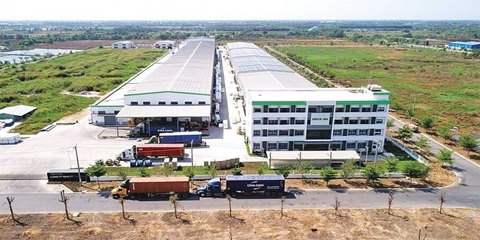
FOREIGN INVESTORS SEEKING A SYNCHRONISED MANUFACTURING ECOSYSTEM
Instead of focusing only on land costs and incentives as usual, foreign investors are seeking a synchronised manufacturing ecosystem, from stable power supply and logistics to shared infrastructure and the convenience of completing residence procedures for experts to serve their long-term investment in the country.
MEMBER CORNER / PROMOTIONS
SENTRYSAFE FHW40200 – PROTECT YOUR VALUABLES, ENJOY PEACE OF MIND!
Looking for a reliable solution to protect your important documents, cash, and valuables from fire and water damage? Genuine SENTRYSAFE - Reliable protection for your valuables and peace of mind! Contact Sen Wai Vietnam for more information and personalized product recommendations.
PROPERTY / INDUSTRIAL ZONE
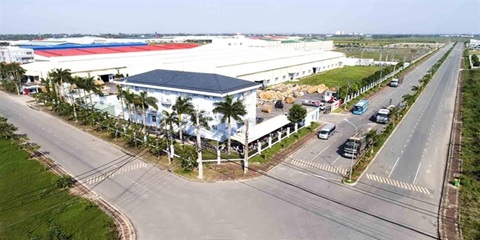
HCM CITY ATTRACTS US$5.7 BILLION INTO EXPORT PROCESSING AND INDUSTRIAL ZONES
HCM City attracted US$5.7 billion in domestic and foreign investment into its export processing and industrial zones during the first nine months of 2026. The figure exceeded the city's full-year target by 31 per cent, highlighting strong momentum in high-quality industrial investment under Resolution No.10-NQ/TW. Total investment reached 131 per cent of the 2026 target of $4.25 billion and represented a 29 per cent increase compared with the same period in 2025, according to the city's Export Processing and Industrial Zones Authority (HEPZA).
INFRASTRUCTURE / CONSTRUCTION / LOGISTIC / PORT
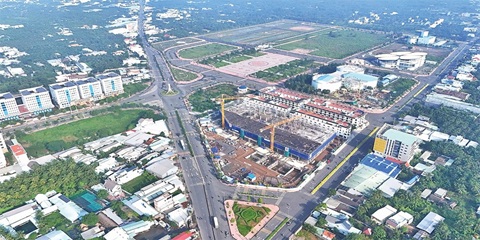
DONG THAP PROVINCE STEPS UP INDUSTRIAL EXPANSION AND INFRASTRUCTURE CONNECTIVITY
Accelerating public investment, strengthening inter-regional connectivity, and expanding industrial land are helping Dong Thap efficiently bolster competitiveness and drive economic growth. Following the 2025 merger of the former Dong Thap and Tien Giang provinces, the expanded Dong Thap province in the Mekong Delta faces mounting pressure to accelerate infrastructure development and strengthen connectivity among local economic zones, urban areas, industrial parks (IPs), and production centres.
Events Sponsors






















