Want to be in the loop?
subscribe to
our notification
Business News
VIETNAM’S SHRIMP EXPORTS IN FIRST 7 MONTHS: ACCELERATING IN ASIA, FACING HEAVY PRESSURE FROM THE US
In July 2025, Vietnam’s shrimp exports reached USD 410 million, up 9% compared to the same period in 2024. Cumulatively, shrimp exports in the first seven months of the year totaled USD 2.5 billion, an increase of 24% year-on-year.
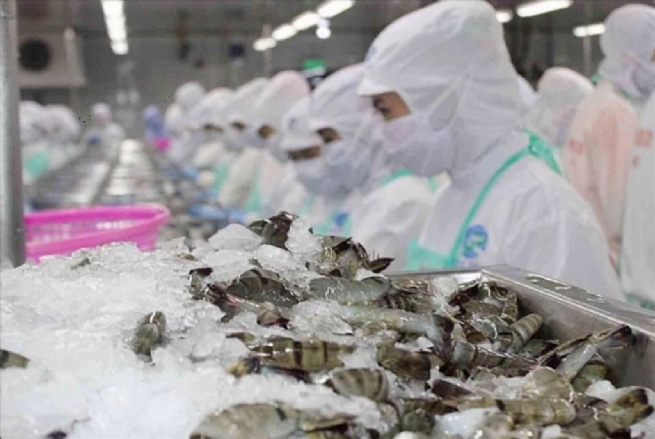
Vietnam’s shrimp exports to the US – the second largest market after China – are under heavy pressure from taxation policies, causing orders from exporters to stagnate. Compared to rivals such as Ecuador (import tariff only 15%) or Indonesia and the Philippines (19%), Vietnam is gradually losing competitiveness with a 20% countervailing duty. The industry is entering a difficult phase as preliminary results of POR19, announced by the US Department of Commerce in June, showed sharply higher anti-dumping duties for many major exporters. If these rates are not adjusted in the final results due in December, Vietnamese shrimp may risk losing access to the US market.
China & Hong Kong continue to lead with USD 710 million (up 78%), accounting for 29% of total shrimp exports. In July alone, exports reached USD 115 million, up 63% year-on-year. Strong recovery in domestic consumption and import demand, particularly for lobster products, along with geographical advantages and low logistics costs, helped Vietnam compete more effectively with rivals.
CPTPP bloc recorded USD 699 million in seven months, up 36%, accounting for 28% of total value. Japan – the largest market within the bloc – reached USD 320 million (up 15%). In July alone, exports to Japan slipped slightly by 1.4% year-on-year as the weak yen continued to weigh on purchasing power. However, Japanese buyers still favor value-added and ready-to-eat products, which helps maintain stable orders.
EU market reached USD 309 million (up 17%), with Germany and France posting strong growth of 28% and 17% respectively. In July, exports to the EU reached USD 57 million, up 21% from the same period last year. The bloc benefits from EVFTA, stable demand as inflation eases, and a preference for value-added processed products.
South Korea imported USD 203 million (up 13%), accounting for 8% of total shrimp exports. This is a stable market thanks to demand for processed shrimp and convenience products for the HORECA channel, with consumption holding steady amid relatively stable domestic economic conditions.
US market: In July 2025, exports reached only USD 63 million, down 29% year-on-year. Cumulatively for 7 months, exports reached USD 404 million, up only 3%. After strong growth in May–June from “tax-avoiding” orders, exports to the US slowed as the 20% countervailing duty on Vietnamese shrimp began to bite, coupled with the risks of high anti-dumping and countervailing duties. Narrower profit margins have forced exporters to reconsider pricing strategies and order structures.
White leg shrimp remains dominant in Vietnam’s export structure.
In the first seven months, white leg shrimp exports reached USD 1.6 billion, accounting for 63% of total shrimp export value, up 8% year-on-year. Black tiger shrimp exports reached USD 260 million (up 5%), accounting for 10%. Other shrimp exports totaled USD 657 million, soaring 117%, driven by frozen shrimp orders from Asian markets.
Outlook: For the full year, shrimp exports could reach USD 3.6–3.8 billion if exporters continue to capitalize on Asian markets, the EU, CPTPP members, and expand value-added products to Japan. However, growth momentum may slow in the second half of the year if the US continues to cut imports from Vietnam due to countervailing duties and trade defense measures. Meanwhile, rivals such as Ecuador, Indonesia, and the Philippines are maintaining lower import tariffs, creating stronger competitive pressure. To sustain growth, Vietnamese exporters need to diversify markets, increase the share of processed products, comply with stringent certification requirements, and develop pricing strategies that align with international policy shifts.
Source: VCCI
Related News

BANKING / FINANCE / INSURANCE / TAX
REMITTANCES TO HCM CITY RISE NEARLY 40% IN Q3
Remittances to HCM City reached more than US$2.83 billion in the third quarter of this year, up 39.5 per cent from the previous quarter and 3.6 per cent year-on-year. This was the first quarter showing positive annual growth this year, helping narrow the decline in remittance inflows over the first nine months. According to the State Bank of Vietnam (SBV)’s Regional Branch 2, remittances transferred to HCM City through credit institutions and economic organisations totalled $2.835 billion in Q3, an increase of more than $802 million from the previous quarter.

TECHNOLOGY
TECH SECTOR GROWTH OPENS UP OPPORTUNITIES FOR VIỆT NAM TO GO GLOBAL
The growth of the electronics, semiconductor and high-tech sectors worldwide is opening up a variety of opportunities for Vietnamese enterprises to integrate more deeply into the global supply chain. However, to become suppliers for these corporations, domestic enterprises must meet rigorous standards regarding quality, technology, productivity and order fulfilment capabilities.

VIETNAM ECONOMY INVESTMENT
FOREIGN INVESTORS SEEKING A SYNCHRONISED MANUFACTURING ECOSYSTEM
Instead of focusing only on land costs and incentives as usual, foreign investors are seeking a synchronised manufacturing ecosystem, from stable power supply and logistics to shared infrastructure and the convenience of completing residence procedures for experts to serve their long-term investment in the country.
MEMBER CORNER / PROMOTIONS
SENTRYSAFE FHW40200 – PROTECT YOUR VALUABLES, ENJOY PEACE OF MIND!
Looking for a reliable solution to protect your important documents, cash, and valuables from fire and water damage? Genuine SENTRYSAFE - Reliable protection for your valuables and peace of mind! Contact Sen Wai Vietnam for more information and personalized product recommendations.

PROPERTY / INDUSTRIAL ZONE
HCM CITY ATTRACTS US$5.7 BILLION INTO EXPORT PROCESSING AND INDUSTRIAL ZONES
HCM City attracted US$5.7 billion in domestic and foreign investment into its export processing and industrial zones during the first nine months of 2026. The figure exceeded the city's full-year target by 31 per cent, highlighting strong momentum in high-quality industrial investment under Resolution No.10-NQ/TW. Total investment reached 131 per cent of the 2026 target of $4.25 billion and represented a 29 per cent increase compared with the same period in 2025, according to the city's Export Processing and Industrial Zones Authority (HEPZA).

INFRASTRUCTURE / CONSTRUCTION / LOGISTIC / PORT
DONG THAP PROVINCE STEPS UP INDUSTRIAL EXPANSION AND INFRASTRUCTURE CONNECTIVITY
Accelerating public investment, strengthening inter-regional connectivity, and expanding industrial land are helping Dong Thap efficiently bolster competitiveness and drive economic growth. Following the 2025 merger of the former Dong Thap and Tien Giang provinces, the expanded Dong Thap province in the Mekong Delta faces mounting pressure to accelerate infrastructure development and strengthen connectivity among local economic zones, urban areas, industrial parks (IPs), and production centres.
Events Sponsors






















