Want to be in the loop?
subscribe to
our notification
Business News
VIETNAM’S SEVEN-MONTH TRADE REACHES $659.58 BILLION AS DEFICIT WIDENS
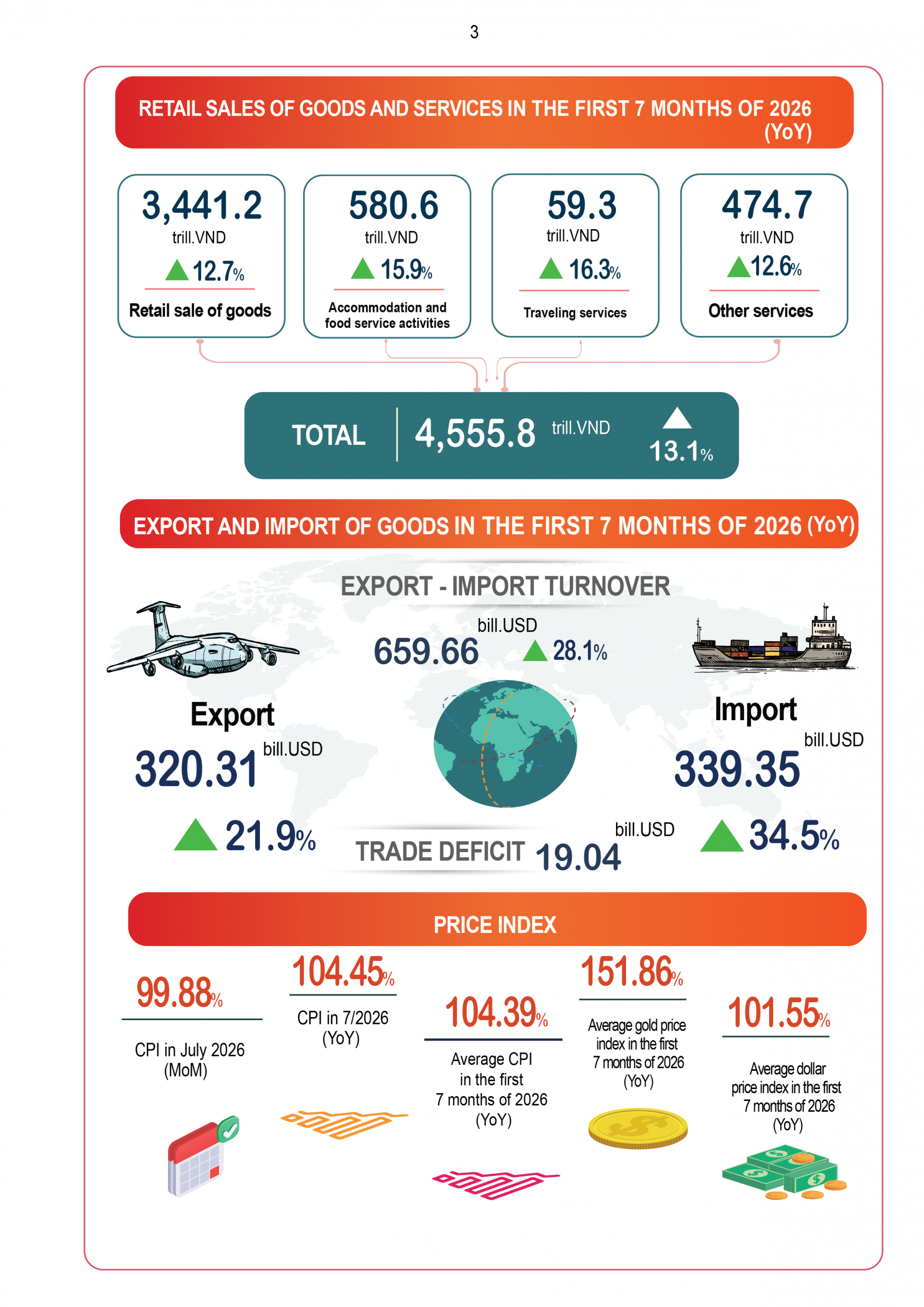
Vietnam’s merchandise trade surged in the first seven months of 2026, but faster import growth pushed the country into a $20.52 billion trade deficit.
Source: The National Statistics Office
The National Statistics Office reported on August 3 that total export-import turnover reached $659.58 billion during the period, up 28.1 per cent on-year. Exports increased by 21.7 per cent, while imports rose by a faster 34.8 per cent.
The widening gap between export and import growth reflected stronger demand for raw materials, machinery, equipment, and other goods used for manufacturing and investment activities.
In July, Vietnam’s total merchandise trade value stood at $109.75 billion, an increase of 5.3 per cent compared with June and 33 per cent against the same month last year.
July export turnover was estimated at $53.08 billion, up 4.5 per cent on-month. The domestic sector generated $10.27 billion, rising 2.7 per cent, while foreign-invested enterprises (FIEs), including crude oil, contributed $42.81 billion, up 5 per cent.
Compared with July 2025, the country’s export value expanded by 25 per cent. Exports by domestically owned businesses increased by 14 per cent, while FIEs recorded growth of 27.9 per cent.
During the first seven months, Vietnam exported goods worth $319.53 billion, an increase of 21.7 per cent from a year earlier. FIEs continued to dominate export activity, generating $255.89 billion, equivalent to 80.1 per cent of the national total. Its export turnover increased by 26.4 per cent on-year.
Meanwhile, the domestic sector recorded export revenue of $63.64 billion, accounting for 19.9 per cent of total exports and representing growth of 5.8 per cent.
The country had 31 commodity groups with export turnover exceeding $1 billion each during the seven-month period. Together, these products accounted for 93 per cent of total export value.
Of these, seven commodity groups posted export turnover of more than $10 billion each, collectively making up 69.7 per cent of Vietnam’s total merchandise exports.
On the import side, turnover reached $340.05 billion in the first seven months, rising 34.8 per cent compared with the same period of 2025.
Imports by the domestic sector stood at $92.14 billion, up 24.1 per cent, while FIEs imported goods worth $247.91 billion, representing a sharper increase of 39.2 per cent.
The strong expansion in imports exceeded export growth and caused Vietnam’s merchandise trade balance to move from surplus into deficit.
The country recorded an estimated trade deficit of $3.59 billion in July. For the full seven-month period, the deficit reached $20.52 billion, compared with a trade surplus of $10.35 billion in the corresponding period last year.
The domestic sector posted a trade deficit of $28.5 billion, while FIEs, including crude oil, maintained a trade surplus of $7.98 billion.
The figures indicated that businesses were increasing imports of production inputs, machinery, and equipment as they mobilised resources for manufacturing expansion and investment in the coming period.
Source: VIR
Related News

BANKING / FINANCE / INSURANCE / TAX
REMITTANCES TO HCM CITY RISE NEARLY 40% IN Q3
Remittances to HCM City reached more than US$2.83 billion in the third quarter of this year, up 39.5 per cent from the previous quarter and 3.6 per cent year-on-year. This was the first quarter showing positive annual growth this year, helping narrow the decline in remittance inflows over the first nine months. According to the State Bank of Vietnam (SBV)’s Regional Branch 2, remittances transferred to HCM City through credit institutions and economic organisations totalled $2.835 billion in Q3, an increase of more than $802 million from the previous quarter.

TECHNOLOGY
TECH SECTOR GROWTH OPENS UP OPPORTUNITIES FOR VIỆT NAM TO GO GLOBAL
The growth of the electronics, semiconductor and high-tech sectors worldwide is opening up a variety of opportunities for Vietnamese enterprises to integrate more deeply into the global supply chain. However, to become suppliers for these corporations, domestic enterprises must meet rigorous standards regarding quality, technology, productivity and order fulfilment capabilities.
VIETNAM ECONOMY INVESTMENT
FOREIGN INVESTORS SEEKING A SYNCHRONISED MANUFACTURING ECOSYSTEM
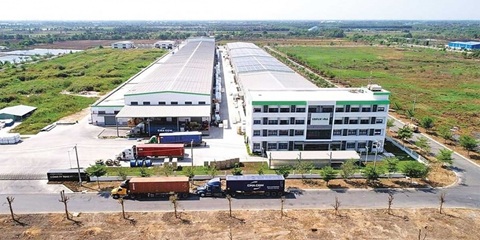
Instead of focusing only on land costs and incentives as usual, foreign investors are seeking a synchronised manufacturing ecosystem, from stable power supply and logistics to shared infrastructure and the convenience of completing residence procedures for experts to serve their long-term investment in the country.

MEMBER CORNER / PROMOTIONS
SENTRYSAFE FHW40200 – PROTECT YOUR VALUABLES, ENJOY PEACE OF MIND!
Looking for a reliable solution to protect your important documents, cash, and valuables from fire and water damage? Genuine SENTRYSAFE - Reliable protection for your valuables and peace of mind! Contact Sen Wai Vietnam for more information and personalized product recommendations.
PROPERTY / INDUSTRIAL ZONE
HCM CITY ATTRACTS US$5.7 BILLION INTO EXPORT PROCESSING AND INDUSTRIAL ZONES
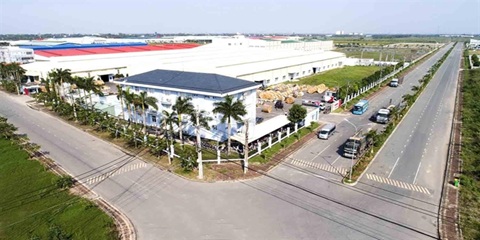
HCM City attracted US$5.7 billion in domestic and foreign investment into its export processing and industrial zones during the first nine months of 2026. The figure exceeded the city's full-year target by 31 per cent, highlighting strong momentum in high-quality industrial investment under Resolution No.10-NQ/TW. Total investment reached 131 per cent of the 2026 target of $4.25 billion and represented a 29 per cent increase compared with the same period in 2025, according to the city's Export Processing and Industrial Zones Authority (HEPZA).
INFRASTRUCTURE / CONSTRUCTION / LOGISTIC / PORT
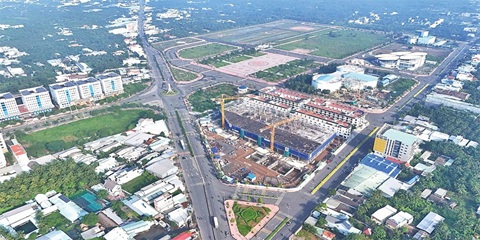
DONG THAP PROVINCE STEPS UP INDUSTRIAL EXPANSION AND INFRASTRUCTURE CONNECTIVITY
Accelerating public investment, strengthening inter-regional connectivity, and expanding industrial land are helping Dong Thap efficiently bolster competitiveness and drive economic growth. Following the 2025 merger of the former Dong Thap and Tien Giang provinces, the expanded Dong Thap province in the Mekong Delta faces mounting pressure to accelerate infrastructure development and strengthen connectivity among local economic zones, urban areas, industrial parks (IPs), and production centres.
Events Sponsors