Want to be in the loop?
subscribe to
our notification
Business News
VIETNAM’S REAL ESTATE MARKET ON A PATH TO RECOVERY
Vietnam’s real estate market has been showing signs of recovery despite current challenges faced by the sector this year, according to the Vietnam Real Estate Association (VNREA).
The association said that many real estate developers continue to face difficulties in meeting their profit targets this year, with data showing a significant drop of 20% in revenue and 43% in profit, primarily due to a sharp decline in sales compared to 2023. Lingering issues from a bad year have haunted businesses, leaving up to 60% of them struggling to achieve their financial goals this year.
Despite these difficulties, housing demand remains robust, with a healthy absorption rate reflecting strong growth in mortgage activities. This trend signals recovery, especially in buyer confidence. One of the pivotal factors driving the gradual recovery of the real estate market in 2024 was the introduction and implementation of over 20 circulars and decrees in Q3 and Q4 this year.
These regulations guided the implementation of revised laws on land, housing and real estate business operations. By addressing numerous legal hurdles, the new policies have introduced transparency and consistency in administrative processes, covering everything from land valuation and acquisition to related fees.
As Q4 draws to a close, real estate businesses are struggling to cover financial leverage with limited cash flow. Excessive reliance on leverage from 2021 to 2023 for project development combined with large inventories left many firms in a precarious position financially. As 2024 comes to an end, many real estate firms have achieved only half of their annual revenue and profit targets.
Meanwhile, according to a recent report by VIS Rating, sales in Vietnam’s two largest cities, Hanoi and Ho Chi Minh City, surged by 48% in Q4 2024 compared to the previous quarter. Yet, revenue and profit for developers in these major cities declined by 20% and 43% respectively year-on-year. Consequently, over 60% of businesses said they were unlikely to meet their targets on schedule.
To make matters worse, VIS Rating's findings showed around 22 trillion VND or 865 million USD in bonds issued by developers will mature by the end of 2024, most of which have already faced delays in principal and interest payments. With low repayment capacity and stagnant financial performance, achieving success in 2024 remains a formidable challenge for the real estate sector.
Nonetheless, by late 2024, the market has witnessed a swift rebound in transaction volume, driven by strong housing demand and positive legal reforms. These factors provide a brighter outlook for the sector in early 2025 and beyond. Improved cash flow from new supply has eased the repayment pressures on developers, helping the market regain stability after a prolonged period of difficulty.
Next year's outlook
Compared to 2022 and 2023, when the industry faced severe supply shortages due to financial, legal and liquidity pressures, this year saw firms gradually regain momentum to restart projects, said experts.
According to CEO of SGO Homes Le Dinh Chung, real estate firms' access to capital has improved markedly, thanks to abundant credit availability and reduced lending rates. This has enabled businesses to manage cash flow, restart projects and increase supply.
Looking ahead to 2025, Associate Professor Dr Tran Kim Chung, former deputy director of the Central Institute for Economic Management (CIEM), said there are three possible scenarios for the real estate market: a slight decline, stagnation or growth. He is optimistic that the market is most likely to grow at a solid pace.
"Alongside external support, real estate enterprises must restructure their operations to overcome difficulties, restart stalled projects and strategically invest in new developments. This will help paint a brighter picture for 2025," said Chung.
Business insiders have long maintained that a robust recovery will require decisive support from the Government and local authorities. The Government must continue to refine the regulatory framework to ease obstacles for real estate projects and accelerate infrastructure development, while local authorities must collaborate to assist businesses in resolving challenges and reviving economic activities.
Source: VIR
Related News

BANKING / FINANCE / INSURANCE / TAX
REMITTANCES TO HCM CITY RISE NEARLY 40% IN Q3
Remittances to HCM City reached more than US$2.83 billion in the third quarter of this year, up 39.5 per cent from the previous quarter and 3.6 per cent year-on-year. This was the first quarter showing positive annual growth this year, helping narrow the decline in remittance inflows over the first nine months. According to the State Bank of Vietnam (SBV)’s Regional Branch 2, remittances transferred to HCM City through credit institutions and economic organisations totalled $2.835 billion in Q3, an increase of more than $802 million from the previous quarter.

TECHNOLOGY
TECH SECTOR GROWTH OPENS UP OPPORTUNITIES FOR VIỆT NAM TO GO GLOBAL
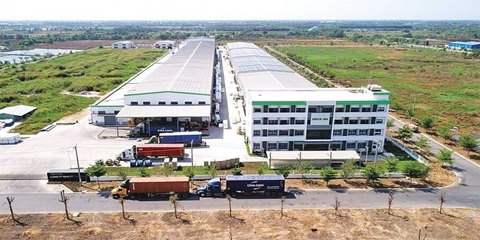
The growth of the electronics, semiconductor and high-tech sectors worldwide is opening up a variety of opportunities for Vietnamese enterprises to integrate more deeply into the global supply chain. However, to become suppliers for these corporations, domestic enterprises must meet rigorous standards regarding quality, technology, productivity and order fulfilment capabilities.
VIETNAM ECONOMY INVESTMENT
FOREIGN INVESTORS SEEKING A SYNCHRONISED MANUFACTURING ECOSYSTEM
Instead of focusing only on land costs and incentives as usual, foreign investors are seeking a synchronised manufacturing ecosystem, from stable power supply and logistics to shared infrastructure and the convenience of completing residence procedures for experts to serve their long-term investment in the country.
MEMBER CORNER / PROMOTIONS
SENTRYSAFE FHW40200 – PROTECT YOUR VALUABLES, ENJOY PEACE OF MIND!
Looking for a reliable solution to protect your important documents, cash, and valuables from fire and water damage? Genuine SENTRYSAFE - Reliable protection for your valuables and peace of mind! Contact Sen Wai Vietnam for more information and personalized product recommendations.
PROPERTY / INDUSTRIAL ZONE
HCM CITY ATTRACTS US$5.7 BILLION INTO EXPORT PROCESSING AND INDUSTRIAL ZONES
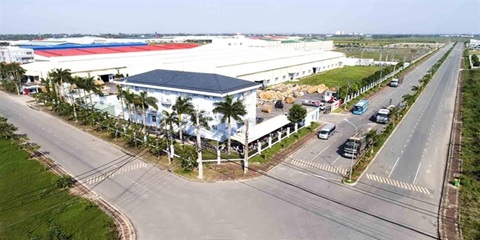
HCM City attracted US$5.7 billion in domestic and foreign investment into its export processing and industrial zones during the first nine months of 2026. The figure exceeded the city's full-year target by 31 per cent, highlighting strong momentum in high-quality industrial investment under Resolution No.10-NQ/TW. Total investment reached 131 per cent of the 2026 target of $4.25 billion and represented a 29 per cent increase compared with the same period in 2025, according to the city's Export Processing and Industrial Zones Authority (HEPZA).
INFRASTRUCTURE / CONSTRUCTION / LOGISTIC / PORT
DONG THAP PROVINCE STEPS UP INDUSTRIAL EXPANSION AND INFRASTRUCTURE CONNECTIVITY
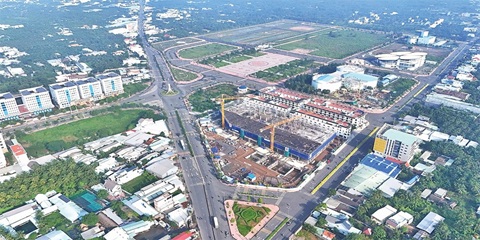
Accelerating public investment, strengthening inter-regional connectivity, and expanding industrial land are helping Dong Thap efficiently bolster competitiveness and drive economic growth. Following the 2025 merger of the former Dong Thap and Tien Giang provinces, the expanded Dong Thap province in the Mekong Delta faces mounting pressure to accelerate infrastructure development and strengthen connectivity among local economic zones, urban areas, industrial parks (IPs), and production centres.
Events Sponsors






















