Want to be in the loop?
subscribe to
our notification
Business News
VIETNAM’S NON-CASH PAYMENT MARKET BOOMS IN Q1
Online and mobile payments have kept booming, with year-on-year growth in the first quarter of 2019 reaching 70% and 97.7%, respectively.
The figures suggest that mobile transaction has turned more popular in Vietnam, in tandem with the Government’s push for the development of non-cash payment methods, according to the Payment Department under the State Bank of Vietnam.
According to a plan on non-cash payment in Vietnam in the 2016-2020 period approved by the Prime Minister, by the end of 2020, the ratio of cash transactions should be reduced to below 10%. Early this year, the Government issued a resolution supporting a project exploring depositing cash into electronic wallets without via a bank payment account and piloting new payment modes in the banking sector.
Commenting on the plan, Nghiem Thanh Son, deputy head of the Payment Department of the central bank, said the project has created positive results in legal framework and payment infrastructure. Banks and enterprises have diversified products and services to facilitate payments via different channels.
Notably, the nation has seen the soaring number of customers making online and mobile transactions. In the first quarter of 2019, payments via the Internet jumped nearly 70% in volume and 13.4% in value over the same period last year while the growth rates of the mobile channel were 97.7% and 232.3%, respectively, Son said at a press briefing announcing the Banking Vietnam 2019 forum in Hanoi today.
Mobile payment has become a channel with strong growth. Local banks have applied advanced technologies to secure safe and convenient services for customers, Son added.
Besides this, banks handled 37 million transactions worth VND20,690 trillion, up 23% and 17.8% year-on-year, respectively, far lower than the growths of online and mobile payments. Meanwhile, there were 65 million card transactions with the total value of VND171 trillion, rising by 18.4% and 8.8%, respectively.
Banks continued upgrading infrastructures for non-cash payments. Ending the January-March period, the nation had over 18,500 automated teller machines (ATMs) and 260,000 points of sale installed at large retail outlets, hotels, hospitals and schools.
Despite the significant development, Phung Nguyen Hai Yen, deputy general director of Vietcombank, said that the project is still facing many challenges as most citizens still keep the habit of paying in cash. Further, the number of people that have bank accounts is still modest.
While people living in cities can access banking and digital payment services easily, those living in rural areas still shun advanced technologies, she said.
According to the Central Institute for Economic Management, the use of cash for payments is a deep-rooted habit in Vietnam with cash transactions accounting for 90%. Up to 99% of population use cash for payments of less than VND100,000 and nearly 85% use ATMs for cash withdrawal.
Source: The Saigon Times
Related News

MEMBER CORNER / PROMOTIONS
AN ELECTRIFYING NIGHT WITH THE "QUEEN OF DANCE" THU MINH AT THE GRAND HO TRAM!
The stage at The Grand Ballroom is set to catch fire as Vietnam’s undisputed "Queen of Dance," Thu Minh, takes the spotlight. Renowned for her powerhouse vocals, magnetic stage presence, and sultry, high-energy performances, Thu Minh promises an evening of pure musical euphoria. The energy escalates with an exclusive appearance by special guest and The Voice champion, Vu Thao My.

HR / LABOUR/ EMPLOYMENT
HIGH-QUALITY HUMAN RESOURCES NEEDED TO ATTRACT NEW TECH INVESTMENT CAPITAL
Besides infrastructure, Việt Nam must also rapidly develop a highly skilled workforce to attract investment in AI, semiconductors and advanced manufacturing, experts have said. Don Lam, CEO and co-founder of investment management company VinaCapital, said that global technology investors were increasingly looking at the readiness of the entire ecosystem, with high-quality human resources a decisive factor.

HR / LABOUR/ EMPLOYMENT
HIRING OUTLOOK STRENGTHENS IN Q4 AS SKILLS SHORTAGES PERSIST
Hiring intentions among employers in Việt Nam strengthened in the fourth quarter, with 52 per cent of surveyed companies planning to increase headcount between October and December, according to a ManpowerGroup survey released this week. Việt Nam's hiring outlook was stronger than the Asia Pacific and Middle East (APME) regional average of 33 per cent and the global average of 29 per cent, ranking third in the region and 11th globally among 42 markets surveyed.

BANKING / FINANCE / INSURANCE / TAX
LARGE BANKS FORECAST TO GAIN HIGHER PROFITABILITY IN H2 2026
The return on average assets (ROAA) of the banking sector will likely remain stable at around 1.5 per cent in the second half of 2026, but profitability divergence among banks will increase, with large banks outperforming peers on stronger margins and diversified earnings, analysts forecast. In a recent report on the banking sector, analysts from the Vietnam Investors Service Rating said the sector’s ROAA rose by 10 basis points quarter-on-quarter to 1.51 per cent in the first half of this year, driven by net interest margin (NIM) improvements at some State-owned banks and large private banks.
GARMENT / TEXTILE
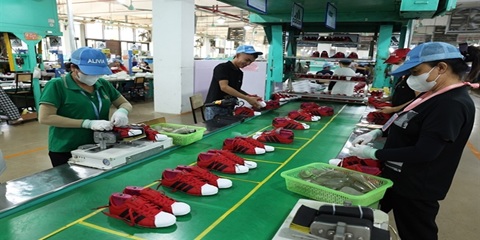
VIỆT NAM'S FOOTWEAR, BAG EXPORTS TO US TOP $8 BILLION IN EIGHT MONTHS
Việt Nam's exports of footwear and handbags to the US exceeded US$8 billion in the first eight months of 2026, as the US and EU remained the country's biggest markets despite sluggish growth in footwear shipments. Exports from Việt Nam's leather and footwear sector reached more than $2.45 billion in August, down 9 per cent from July but up 3 per cent from a year earlier, according to preliminary statistics.
VIETNAM ECONOMY INVESTMENT
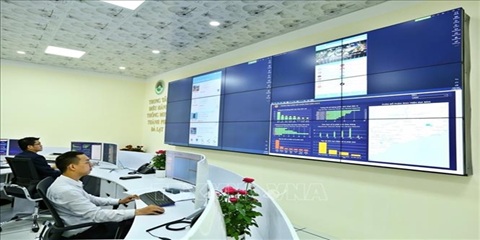
LÂM ĐỒNG TARGETS DIGITAL ECONOMY TO ACCOUNT FOR 30 PER CENT OF GRDP BY 2030
Lâm Đồng Province aims to raise the digital economy’s contribution to around 30 per cent of its gross regional domestic product (GRDP) by 2030, as part of a five-year plan to develop digital economy and society issued recently. Under Plan No. 15358/KH-UBND, the province targets more than 60 per cent of small- and medium-sized enterprises (SMEs) to adopt digital technologies by 2030 while increasing the value of cashless payments to 30 times its GRDP.
Events Sponsors






















