Want to be in the loop?
subscribe to
our notification
Business News
VIETNAM'S MANUFACTURING OUTPUT CONTINUES TO CLIMB IN AUGUST
Manufacturing production continued to increase in the Vietnam during August, but at a slower pace amid subdued demand.
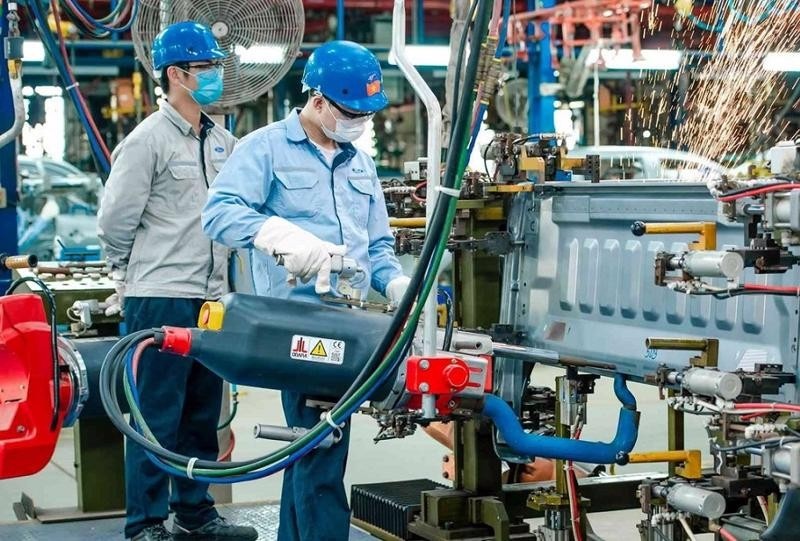
According to an S&P Global report released on September 3, the Vietnam Manufacturing Purchasing Managers' Index (PMI) remained above the 50-point no-change mark in August and signalled a second consecutive monthly improvement in the manufacturing sector. That said, at 50.4 points, the PMI was down from 52.4 points in July and registered only a marginal strengthening in business conditions.
The main positive from the latest survey was a sustained expansion of manufacturing production, with growth recorded for the fourth month running. The increase in August was solid, albeit slower than that seen in July. Those firms that raised output did so in response to positive new order inflows, while the slowdown in the upturn reflected reports of a subdued demand environment.
New orders decreased in August, after having risen for the first time in four months during July. Demand was muted, in part due to US tariffs. Issues around tariffs meant that new export orders continued to fall for the tenth month running. The solid reduction seen in August was sharper than that seen for total new business.
With new orders down, manufacturers again scaled back their workforce numbers midway through the third quarter of the year. Employment decreased for the eleventh successive month, and at a modest pace. The drop in new orders, however, meant that spare capacity remained evident in the sector. Backlogs of work fell markedly, and to the largest degree since April.
Stocks of finished goods were also down as firms reported a reluctance to hold inventories at a time of falling new orders, and the dispatch of finished products to customers.
While manufacturers reduced their staffing levels and stocks of finished goods, an increase in purchasing activity was recorded for the second month running, linked by panellists to higher output requirements and efforts to build stocks ahead of an expected improvement in demand.
Stocks of purchases fell, however, amid reports of a reduction of imports. Material shortages also impacted efforts to secure inputs, with suppliers' delivery times lengthening.
Material shortages, tariffs, and increased transportation costs meant that input prices increased again in August. The rate of inflation ticked higher and was the fastest in 2025 so far, albeit still weaker than the series average.
Business confidence strengthened to a six-month high in August, albeit remaining below the series average. A number of respondents predicted an improvement in new orders over the coming year, supporting optimism around output. On the other hand, concerns around global economic conditions limited confidence.
Andrew Harker, economics director at S&P Global Market Intelligence, said, "While it was positive to see output expand again during August, a renewed fall in new orders calls into question how long firms will be able to keep increasing production. The drop in new sales was led by exports, which decreased solidly again as issues around tariffs continued to impact the sector."
"Firms were at least more confident in the year-ahead outlook, in part based on hopes of a pick-up in demand, which encouraged a rise in purchasing activity. Manufacturers were hampered to some extent by material shortages, however," Harker said.
"With the path ahead for tariffs seemingly more stable now, the predicted improvements in demand will hopefully materialise in the months ahead, helping to maintain production growth in the sector," Harker added.
Source: VIR
Related News

BANKING / FINANCE / INSURANCE / TAX
REMITTANCES TO HCM CITY RISE NEARLY 40% IN Q3
Remittances to HCM City reached more than US$2.83 billion in the third quarter of this year, up 39.5 per cent from the previous quarter and 3.6 per cent year-on-year. This was the first quarter showing positive annual growth this year, helping narrow the decline in remittance inflows over the first nine months. According to the State Bank of Vietnam (SBV)’s Regional Branch 2, remittances transferred to HCM City through credit institutions and economic organisations totalled $2.835 billion in Q3, an increase of more than $802 million from the previous quarter.
TECHNOLOGY
TECH SECTOR GROWTH OPENS UP OPPORTUNITIES FOR VIỆT NAM TO GO GLOBAL
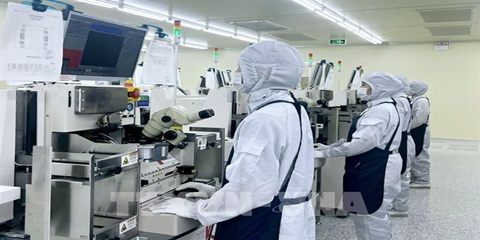
The growth of the electronics, semiconductor and high-tech sectors worldwide is opening up a variety of opportunities for Vietnamese enterprises to integrate more deeply into the global supply chain. However, to become suppliers for these corporations, domestic enterprises must meet rigorous standards regarding quality, technology, productivity and order fulfilment capabilities.
VIETNAM ECONOMY INVESTMENT
FOREIGN INVESTORS SEEKING A SYNCHRONISED MANUFACTURING ECOSYSTEM
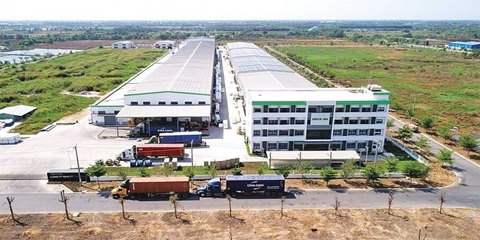
Instead of focusing only on land costs and incentives as usual, foreign investors are seeking a synchronised manufacturing ecosystem, from stable power supply and logistics to shared infrastructure and the convenience of completing residence procedures for experts to serve their long-term investment in the country.
MEMBER CORNER / PROMOTIONS
SENTRYSAFE FHW40200 – PROTECT YOUR VALUABLES, ENJOY PEACE OF MIND!
Looking for a reliable solution to protect your important documents, cash, and valuables from fire and water damage? Genuine SENTRYSAFE - Reliable protection for your valuables and peace of mind! Contact Sen Wai Vietnam for more information and personalized product recommendations.
PROPERTY / INDUSTRIAL ZONE
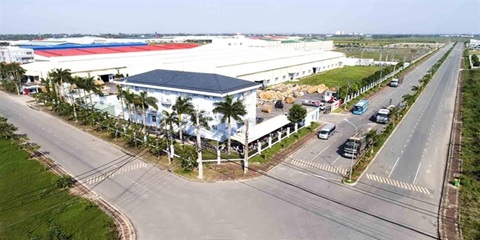
HCM CITY ATTRACTS US$5.7 BILLION INTO EXPORT PROCESSING AND INDUSTRIAL ZONES
HCM City attracted US$5.7 billion in domestic and foreign investment into its export processing and industrial zones during the first nine months of 2026. The figure exceeded the city's full-year target by 31 per cent, highlighting strong momentum in high-quality industrial investment under Resolution No.10-NQ/TW. Total investment reached 131 per cent of the 2026 target of $4.25 billion and represented a 29 per cent increase compared with the same period in 2025, according to the city's Export Processing and Industrial Zones Authority (HEPZA).
INFRASTRUCTURE / CONSTRUCTION / LOGISTIC / PORT
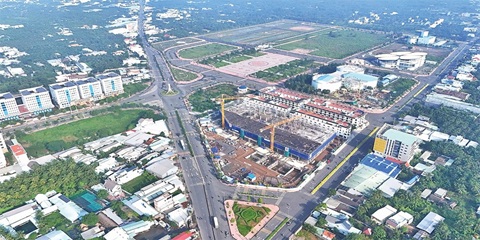
DONG THAP PROVINCE STEPS UP INDUSTRIAL EXPANSION AND INFRASTRUCTURE CONNECTIVITY
Accelerating public investment, strengthening inter-regional connectivity, and expanding industrial land are helping Dong Thap efficiently bolster competitiveness and drive economic growth. Following the 2025 merger of the former Dong Thap and Tien Giang provinces, the expanded Dong Thap province in the Mekong Delta faces mounting pressure to accelerate infrastructure development and strengthen connectivity among local economic zones, urban areas, industrial parks (IPs), and production centres.
Events Sponsors






















