Want to be in the loop?
subscribe to
our notification
Business News
VIETNAM’S MANUFACTURERS STAND TO REALISE HIGHER PRODUCTIVITY AND EFFECTIVE UTILISATION WITH COLLABORATIVE ROBOTS
Universal Robots (UR), Denmark-based collaborative robots (cobots) technology market leader, has advised Vietnam’s manufacturing industry leaders to implement cobots as an effective solution to address skills and labour shortage as well as achieve higher productivity.
In 2020, the manufacturing sector continues to play a pivotal role in driving Vietnam’s economy, contributing to a percentage of 5.82 percent in the economy. Additionally, it accounts for 16.69 percent of the gross domestic product (GDP) in Vietnam. According to Nikkei and IHS Market, the Vietnam Manufacturing Purchasing Managers’ Index (PMI) reflected 51.7 points in December, marking an increased from 49.9 in November. Hence, business conditions in the Vietnamese manufacturing sector witnessed an improvement gradually.
According to "Collaborative Robot Market by Payload, Component, Application, Industry, and Geography - Global Forecast to 2026" report by Markets and Markets, cobots are increasingly being adopted by various industries due to advantages such as increased productivity and effective employee utilisation. The market is expected to reach US$7,972 million by 2026 at a CAGR of 41.8%. Cobots’ market in APAC is also expected to surpass that in Europe by 2021 due to large scale manufacturing industries especially automotive, electronics, and metals sectors which are increasingly deploying cobots.
Vietnam manufacturing industry stands to benefit most from robotics as its processes involve repetitive work in confined, structured spaces, environments that robots excel in. Cobots can work around the clock, produce consistent work under harsh working conditions without any rest.
Today, UR’s cobots allow employees to move from repetitive, low-value tasks to higher value activities that increase work productivity and quality. “Ever since the term ‘Collaborative Robotics’ was coined, we have been the frontrunners in the robotics industry. We have also marked an entire decade since the very first cobot from Universal Robots was deployed in South Asia. Safety is imperative and has become the cost of entry into the cobot market now. UR believes in developing affordable, lightweight, and flexible cobots that could deliver a rapid ROI for the manufacturing industry,” says James McKew, Regional Director of Asia-Pacific in Universal Robots.
Safety and Versatility
Yokota Corporation, a Japan-based company that designs and manufactures bearing races, Factory Automation (FA) equipment, machines for assembly, packing and inspections, selected UR5 cobots to address its labour shortages. The company tried engaging part-time employees and redeploying workers from other departments. However, these measures proved unproductive. Traditional industrial robots were also considered as a solution but were later found not feasible due to additional space requirements and the need for safety guarding.
With safety and versatility as key benefits, the deployment of UR5 cobots led to the establishment of a stable production system, delivering a 20 percent production increase without the need for additional human resources. As Asia remains the strongest market for industrial robots, Universal Robots encourages local manufacturers to deploy cobots on manufacturing floors.
“By lowering automation barrier within the reach of manufacturers who never thought that they could deploy robots due to cost and complexity, we hope to help Vietnam’s industries realise higher productivity and maintain effective utilisation of their plants," concludes McKew.
Source: VCCI
Related News

BANKING / FINANCE / INSURANCE / TAX
REMITTANCES TO HCM CITY RISE NEARLY 40% IN Q3
Remittances to HCM City reached more than US$2.83 billion in the third quarter of this year, up 39.5 per cent from the previous quarter and 3.6 per cent year-on-year. This was the first quarter showing positive annual growth this year, helping narrow the decline in remittance inflows over the first nine months. According to the State Bank of Vietnam (SBV)’s Regional Branch 2, remittances transferred to HCM City through credit institutions and economic organisations totalled $2.835 billion in Q3, an increase of more than $802 million from the previous quarter.
TECHNOLOGY
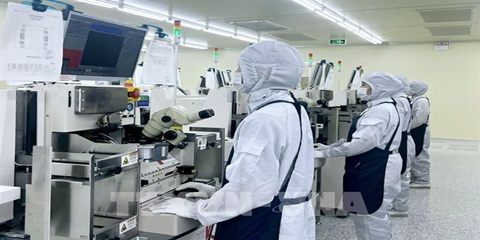
TECH SECTOR GROWTH OPENS UP OPPORTUNITIES FOR VIỆT NAM TO GO GLOBAL
The growth of the electronics, semiconductor and high-tech sectors worldwide is opening up a variety of opportunities for Vietnamese enterprises to integrate more deeply into the global supply chain. However, to become suppliers for these corporations, domestic enterprises must meet rigorous standards regarding quality, technology, productivity and order fulfilment capabilities.
VIETNAM ECONOMY INVESTMENT
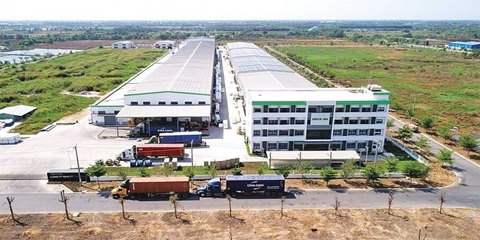
FOREIGN INVESTORS SEEKING A SYNCHRONISED MANUFACTURING ECOSYSTEM
Instead of focusing only on land costs and incentives as usual, foreign investors are seeking a synchronised manufacturing ecosystem, from stable power supply and logistics to shared infrastructure and the convenience of completing residence procedures for experts to serve their long-term investment in the country.
MEMBER CORNER / PROMOTIONS
SENTRYSAFE FHW40200 – PROTECT YOUR VALUABLES, ENJOY PEACE OF MIND!
Looking for a reliable solution to protect your important documents, cash, and valuables from fire and water damage? Genuine SENTRYSAFE - Reliable protection for your valuables and peace of mind! Contact Sen Wai Vietnam for more information and personalized product recommendations.
PROPERTY / INDUSTRIAL ZONE
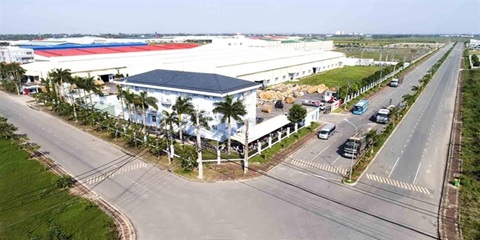
HCM CITY ATTRACTS US$5.7 BILLION INTO EXPORT PROCESSING AND INDUSTRIAL ZONES
HCM City attracted US$5.7 billion in domestic and foreign investment into its export processing and industrial zones during the first nine months of 2026. The figure exceeded the city's full-year target by 31 per cent, highlighting strong momentum in high-quality industrial investment under Resolution No.10-NQ/TW. Total investment reached 131 per cent of the 2026 target of $4.25 billion and represented a 29 per cent increase compared with the same period in 2025, according to the city's Export Processing and Industrial Zones Authority (HEPZA).
INFRASTRUCTURE / CONSTRUCTION / LOGISTIC / PORT
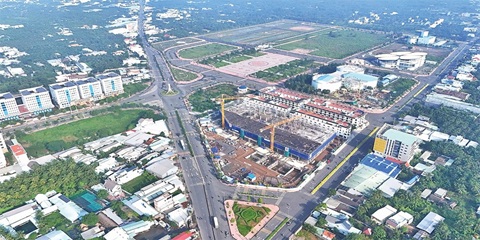
DONG THAP PROVINCE STEPS UP INDUSTRIAL EXPANSION AND INFRASTRUCTURE CONNECTIVITY
Accelerating public investment, strengthening inter-regional connectivity, and expanding industrial land are helping Dong Thap efficiently bolster competitiveness and drive economic growth. Following the 2025 merger of the former Dong Thap and Tien Giang provinces, the expanded Dong Thap province in the Mekong Delta faces mounting pressure to accelerate infrastructure development and strengthen connectivity among local economic zones, urban areas, industrial parks (IPs), and production centres.
Events Sponsors






















