Want to be in the loop?
subscribe to
our notification
Business News
VIETNAM’S LEATHER-FOOTWEAR INDUSTRY SEES DOUBLE-DIGIT EXPORT GROWTH IN H1
Vietnam's leather and footwear industry posted more than $14 billion in total export value in the first six months of the year, reaffirming its resilience and strategic position in the global supply chain.
According to data from the National Statistics Office, the leather and footwear industry witnessed over a 10 per cent jump on-year in export growth.
Footwear alone accounted for around $12 billion, up 10.1 per cent on-year, while handbags, suitcases, and umbrellas contributed nearly $2.2 billion, marking an 11.6 per cent increase.
Vietnam is currently the third-largest producer of leather and footwear globally, manufacturing 1.4 billion pairs of shoes annually, behind only China and India.
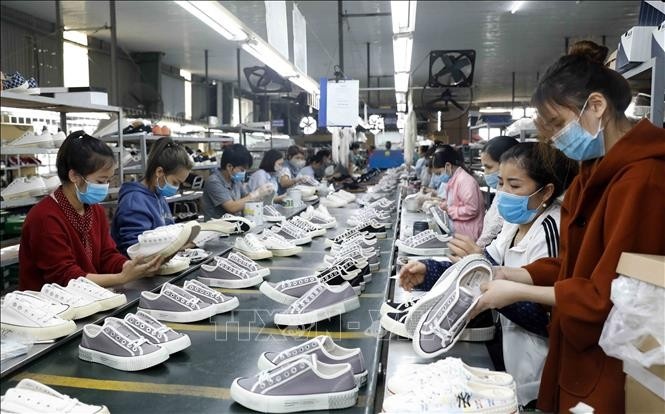
In terms of exports, the country ranks second worldwide with 1.3 billion pairs exported each year, trailing only China.
The sector’s competitiveness stems from its effective utilisation of tariff advantages under 16 free trade agreements (FTAs) with major markets, combined with a large and cost-efficient labour force, where average monthly wages range between $181 and $200.
Despite challenges in 2024, ranging from pricing pressures and rising input costs to sustainability requirements and labour shortages, the leather-footwear sector still generated an impressive $26 billion in revenue, representing nearly a 10 per cent jump compared to 2023.
Looking to 2025, the industry has set its sights on 10 per cent on-year export growth, aiming to reach $29 billion in total export value.
To achieve this ambitious target, companies are accelerating the shift towards green and circular production models, enhancing environmental sustainability, and increasing the localisation rate of raw materials to meet increasingly stringent standards in key markets such as the EU and the United States.
Vietnamese footwear and handbags are exported primarily to core markets including the US, the EU, South Korea, China, and the UK. Among them, the US remains the largest importer, with 2024 export turnover reaching nearly $8.3 billion, a remarkable 15.6 per cent increase. Over the years, Vietnamese footwear has been subject to a 10 per cent export tax when entering the US market.
The US presence in Vietnam’s footwear manufacturing sector is notable, with many American brands operating production facilities in the country.
For example, Nike, one of the world’s largest sportswear companies, has made Vietnam its main global production hub.
Of the approximately 600 million pairs of shoes Nike produces annually, half are made in Vietnam.
At a conference in late May held by the Ministry of Industry and Trade, with the participation of an executive representative from the Vietnam Leather, Footwear, and Handbag Association, discussions focused on both the opportunities and challenges facing the industry.
The participants put forward a series of critical recommendations aimed at enhancing the sector’s competitiveness and export market diversification.
A recurring theme was the importance of human resource development, with a special emphasis on professional training in marketing and design, viewed as two core competencies for the industry to transition from contract manufacturing to owning products and building global brands.
To support this transformation, proposals referred to inviting international experts in fashion trends, consumer behaviour, and product design to Vietnam for direct training and consultancy.
Simultaneously, digital transformation in trade promotion was deemed essential. Applying technology to improve product traceability and information transparency is now vital to meet evolving demands from global consumers and regulators.
Another strategic priority is developing a more resilient domestic supply chain. This includes building specialised industrial parks to foster the supporting industries needed for leather and footwear production.
The objective is to reduce dependency on imported materials, and fully leverage the preferential tariffs provided under free trade agreements.
Source: VIR
Related News
VIETNAM ECONOMY INVESTMENT
FOREIGN INVESTORS SEEKING A SYNCHRONISED MANUFACTURING ECOSYSTEM
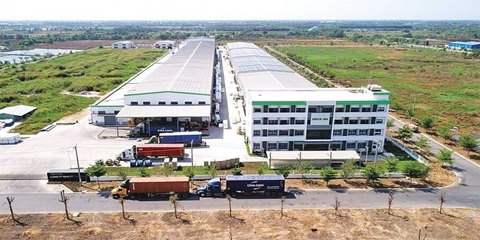
Instead of focusing only on land costs and incentives as usual, foreign investors are seeking a synchronised manufacturing ecosystem, from stable power supply and logistics to shared infrastructure and the convenience of completing residence procedures for experts to serve their long-term investment in the country.
INFRASTRUCTURE / CONSTRUCTION / LOGISTIC / PORT
DONG THAP PROVINCE STEPS UP INDUSTRIAL EXPANSION AND INFRASTRUCTURE CONNECTIVITY
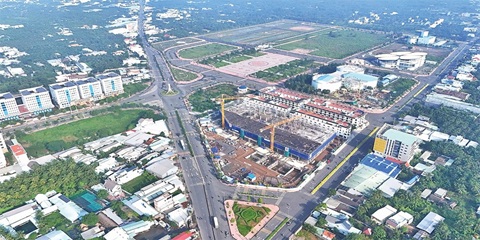
Accelerating public investment, strengthening inter-regional connectivity, and expanding industrial land are helping Dong Thap efficiently bolster competitiveness and drive economic growth. Following the 2025 merger of the former Dong Thap and Tien Giang provinces, the expanded Dong Thap province in the Mekong Delta faces mounting pressure to accelerate infrastructure development and strengthen connectivity among local economic zones, urban areas, industrial parks (IPs), and production centres.
PROPERTY / INDUSTRIAL ZONE
HCM CITY ATTRACTS US$5.7 BILLION INTO EXPORT PROCESSING AND INDUSTRIAL ZONES
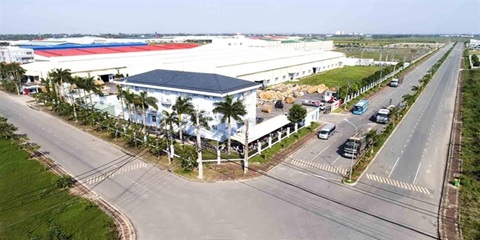
HCM City attracted US$5.7 billion in domestic and foreign investment into its export processing and industrial zones during the first nine months of 2026. The figure exceeded the city's full-year target by 31 per cent, highlighting strong momentum in high-quality industrial investment under Resolution No.10-NQ/TW. Total investment reached 131 per cent of the 2026 target of $4.25 billion and represented a 29 per cent increase compared with the same period in 2025, according to the city's Export Processing and Industrial Zones Authority (HEPZA).

BANKING / FINANCE / INSURANCE / TAX
REMITTANCES TO HCM CITY RISE NEARLY 40% IN Q3
Remittances to HCM City reached more than US$2.83 billion in the third quarter of this year, up 39.5 per cent from the previous quarter and 3.6 per cent year-on-year. This was the first quarter showing positive annual growth this year, helping narrow the decline in remittance inflows over the first nine months. According to the State Bank of Vietnam (SBV)’s Regional Branch 2, remittances transferred to HCM City through credit institutions and economic organisations totalled $2.835 billion in Q3, an increase of more than $802 million from the previous quarter.
VIETNAM ECONOMY INVESTMENT
LOCALITIES REPORT BREAKTHROUGH RESULTS IN FDI IN FIRST NINE MONTHS
In Ho Chi Minh City, total registered capital reached $17.2 billion in the first nine months, up 4.2 times from the same period last year. The figure included more than $9.35 billion in newly registered capital and over $4.9 billion in additional capital for existing projects. Foreign investors also registered more than $2.9 billion through capital contributions and share purchases.

TECHNOLOGY
TECH SECTOR GROWTH OPENS UP OPPORTUNITIES FOR VIỆT NAM TO GO GLOBAL
The growth of the electronics, semiconductor and high-tech sectors worldwide is opening up a variety of opportunities for Vietnamese enterprises to integrate more deeply into the global supply chain. However, to become suppliers for these corporations, domestic enterprises must meet rigorous standards regarding quality, technology, productivity and order fulfilment capabilities.
Events Sponsors






















