Want to be in the loop?
subscribe to
our notification
Business News
VIETNAM’S INFRASTRUCTURE EXPANSION ACCELERATES ON BOND MARKET INNOVATION
Vietnam’s infrastructure ambitions, which are estimated to cost $245 billion through 2030, depend on unlocking long-term private capital.
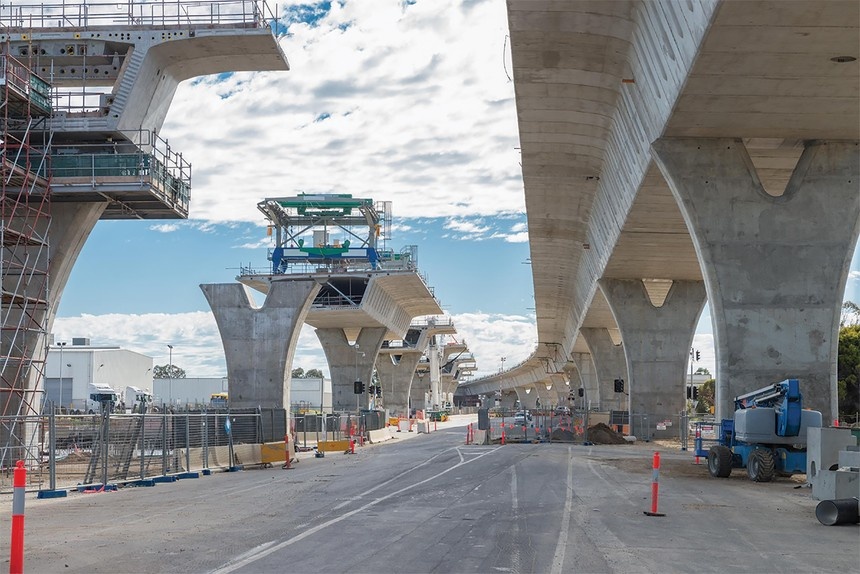
Photo: Istock
According to a report by VIS Rating and Credit Guarantee & Investment Facility (CGIF) on July 24, with public funding falling short and bank lending constrained, Vietnam’s infrastructure ambitions hinge on mobilising private capital through the corporate bond market. Between 2025 and 2030, the country will need an estimated $245 billion for expressways, high-speed rail, and power projects, yet public funding can only cover 70 per cent. Private investment has already become a key driver, accounting for over half of registered fixed asset investment.
As bank lending tightens, due to regulatory limits on using short-term deposits for long-term loans, the role of the bond market becomes even more critical. Bank credit to toll road projects, for instance, has declined by 6 per cent annually since 2020. To close the infrastructure financing gap, Vietnam must deepen its corporate bond market and attract long-term private capital.
Indeed, Vietnam’s bond market is gaining traction as a key channel for infrastructure financing. Recent regulatory reforms are paving the way for companies to issue bonds more flexibly, such as through private placements without historical financials under the amended Public-Private Partnership Law. The state is also stepping in with higher equity contributions to ease debt burdens and improve credit quality.
A forthcoming decree is expected to further unlock the market by allowing public offerings and immediate listings of infrastructure bonds. While issuance conditions will be eased, post-issuance controls, such as trustee oversight, escrow accounts, and regulated disbursements, will tighten, creating a more robust legal framework.
Meanwhile, new requirements on disclosure, issuance standards, and mandatory credit ratings are boosting transparency and investor confidence. Together, these reforms position corporate bonds as a more viable, long-term funding tool for Vietnam’s infrastructure ambitions.
The report also indicates that credit guarantees and credit ratings are crucial tools for unlocking private capital for infrastructure development. Infrastructure projects often carry weaker credit profiles due to high leverage, single revenue streams, and exposure to construction risks. Limited track records and restricted access to project agreements further complicate investor assessments. Long tenors, often 15 to 20 years, also heighten liquidity risk.
Credit guarantees provide support to project bond issuers, thereby enhancing credit quality and reducing bondholders’ exposure to project-related risks. CGIF’s regional portfolio, including several infrastructure projects in Vietnam, demonstrates how credit guarantees can support project owners in broadening their investor base and facilitating access to capital markets.
Recent regulatory reforms, along with stronger disclosure, credit ratings, and guarantees, are laying the groundwork for deeper investor participation.
Source: VIR
Related News

MEMBER CORNER / PROMOTIONS
AN ELECTRIFYING NIGHT WITH THE "QUEEN OF DANCE" THU MINH AT THE GRAND HO TRAM!
The stage at The Grand Ballroom is set to catch fire as Vietnam’s undisputed "Queen of Dance," Thu Minh, takes the spotlight. Renowned for her powerhouse vocals, magnetic stage presence, and sultry, high-energy performances, Thu Minh promises an evening of pure musical euphoria. The energy escalates with an exclusive appearance by special guest and The Voice champion, Vu Thao My.

HR / LABOUR/ EMPLOYMENT
HIGH-QUALITY HUMAN RESOURCES NEEDED TO ATTRACT NEW TECH INVESTMENT CAPITAL
Besides infrastructure, Việt Nam must also rapidly develop a highly skilled workforce to attract investment in AI, semiconductors and advanced manufacturing, experts have said. Don Lam, CEO and co-founder of investment management company VinaCapital, said that global technology investors were increasingly looking at the readiness of the entire ecosystem, with high-quality human resources a decisive factor.

HR / LABOUR/ EMPLOYMENT
HIRING OUTLOOK STRENGTHENS IN Q4 AS SKILLS SHORTAGES PERSIST
Hiring intentions among employers in Việt Nam strengthened in the fourth quarter, with 52 per cent of surveyed companies planning to increase headcount between October and December, according to a ManpowerGroup survey released this week. Việt Nam's hiring outlook was stronger than the Asia Pacific and Middle East (APME) regional average of 33 per cent and the global average of 29 per cent, ranking third in the region and 11th globally among 42 markets surveyed.

BANKING / FINANCE / INSURANCE / TAX
LARGE BANKS FORECAST TO GAIN HIGHER PROFITABILITY IN H2 2026
The return on average assets (ROAA) of the banking sector will likely remain stable at around 1.5 per cent in the second half of 2026, but profitability divergence among banks will increase, with large banks outperforming peers on stronger margins and diversified earnings, analysts forecast. In a recent report on the banking sector, analysts from the Vietnam Investors Service Rating said the sector’s ROAA rose by 10 basis points quarter-on-quarter to 1.51 per cent in the first half of this year, driven by net interest margin (NIM) improvements at some State-owned banks and large private banks.
GARMENT / TEXTILE
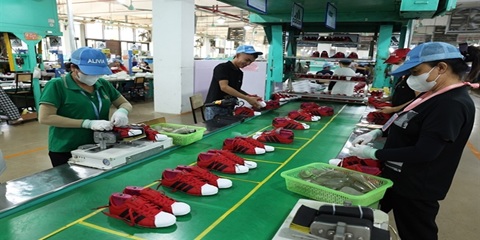
VIỆT NAM'S FOOTWEAR, BAG EXPORTS TO US TOP $8 BILLION IN EIGHT MONTHS
Việt Nam's exports of footwear and handbags to the US exceeded US$8 billion in the first eight months of 2026, as the US and EU remained the country's biggest markets despite sluggish growth in footwear shipments. Exports from Việt Nam's leather and footwear sector reached more than $2.45 billion in August, down 9 per cent from July but up 3 per cent from a year earlier, according to preliminary statistics.

VIETNAM ECONOMY INVESTMENT
LÂM ĐỒNG TARGETS DIGITAL ECONOMY TO ACCOUNT FOR 30 PER CENT OF GRDP BY 2030
Lâm Đồng Province aims to raise the digital economy’s contribution to around 30 per cent of its gross regional domestic product (GRDP) by 2030, as part of a five-year plan to develop digital economy and society issued recently. Under Plan No. 15358/KH-UBND, the province targets more than 60 per cent of small- and medium-sized enterprises (SMEs) to adopt digital technologies by 2030 while increasing the value of cashless payments to 30 times its GRDP.
Events Sponsors






















