Want to be in the loop?
subscribe to
our notification
Business News
VIETNAM’S FRUIT AND VEGETABLE EXPORTS HIT RECORD US$8.6 BILLION IN 2025
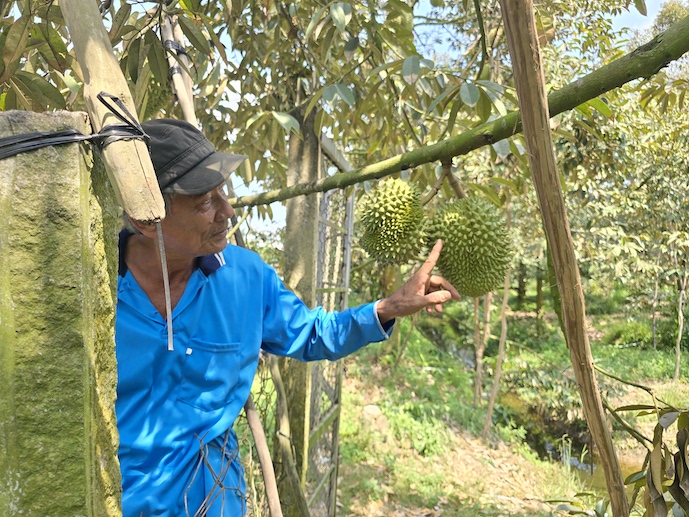
A durian farmer in the Mekong Delta region – PHOTO: TRUNG CHANH
HCMC – Vietnam’s fruit and vegetable exports reached a record US$8.6 billion in 2025, marking the third consecutive year of all-time highs, driven largely by durian and a shift toward stricter quality control and market compliance.
The result came despite mounting pressure early in the year. Major markets such as China and the EU tightened technical standards, while U.S. tariff policies remained uncertain. China’s stricter controls on residues of auramine O and cadmium disrupted durian exports, the sector’s largest revenue source, causing a sharp decline in export revenue in the first half of the year.
In response, exporters reviewed their entire supply chains, from growing areas and packing facilities to testing and traceability systems. Rather than expanding output, the industry shifted its focus to quality control and process standardization to meet higher market requirements.
Exports began to recover from June 2025 as durian shipments resumed. Growth accelerated between August and October during the peak harvest season in the Central Highlands, helping the sector regain momentum. Alongside durian, exports of bananas, mangoes and jackfruit posted steady gains, while pomelo and coconut emerged as new growth drivers.
Durian remained the backbone of the industry, generating an estimated US$4 billion in export revenue, up about US$800 million from 2024.
Market access played a key role in the sector’s performance. In 2025 alone, Vietnam and China signed five export protocols, including those covering passion fruit and fresh jackfruit. Fresh pomelo was also officially approved for export to Australia, a market known for strict technical standards.
China continued to be Vietnam’s largest and most strategic market, importing an estimated US$78 billion worth of fruit annually. Vietnam’s share remains below US$5 billion, highlighting significant growth potential.
Industry players are increasingly looking beyond durian. Bananas are seen as the next major growth segment. According to Pham Quoc Liem, chairman of U&I Agricultural JSC (Unifarm), the global banana market is projected to reach US$21 billion by 2030, while Vietnam’s banana exports currently stand at around US$380 million.
Vietnam’s average banana export value is less than US$2,500 per hectare per year. Raising this figure to US$25,000 per hectare, as achieved by some large-scale producers, could lift banana exports to US$3.8 billion in the future, Liem said.
Looking ahead, growth is expected to rely less on expanding acreage and more on improving quality, standardizing growing areas, strengthening traceability and promoting deep processing. If market discipline is maintained and key products such as durian, bananas, pomelo and coconut are developed through integrated value chains, Vietnam’s fruit and vegetable exports could approach US$10 billion next year.
Source: The Saigon Times
Related News

BANKING / FINANCE / INSURANCE / TAX
REMITTANCES TO HCM CITY RISE NEARLY 40% IN Q3
Remittances to HCM City reached more than US$2.83 billion in the third quarter of this year, up 39.5 per cent from the previous quarter and 3.6 per cent year-on-year. This was the first quarter showing positive annual growth this year, helping narrow the decline in remittance inflows over the first nine months. According to the State Bank of Vietnam (SBV)’s Regional Branch 2, remittances transferred to HCM City through credit institutions and economic organisations totalled $2.835 billion in Q3, an increase of more than $802 million from the previous quarter.
TECHNOLOGY
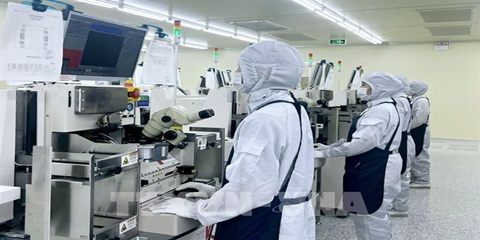
TECH SECTOR GROWTH OPENS UP OPPORTUNITIES FOR VIỆT NAM TO GO GLOBAL
The growth of the electronics, semiconductor and high-tech sectors worldwide is opening up a variety of opportunities for Vietnamese enterprises to integrate more deeply into the global supply chain. However, to become suppliers for these corporations, domestic enterprises must meet rigorous standards regarding quality, technology, productivity and order fulfilment capabilities.
VIETNAM ECONOMY INVESTMENT
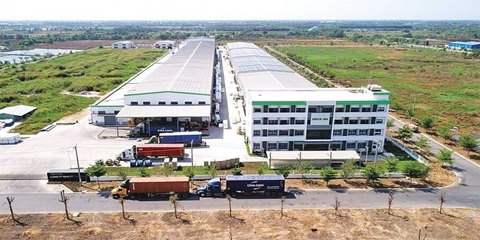
FOREIGN INVESTORS SEEKING A SYNCHRONISED MANUFACTURING ECOSYSTEM
Instead of focusing only on land costs and incentives as usual, foreign investors are seeking a synchronised manufacturing ecosystem, from stable power supply and logistics to shared infrastructure and the convenience of completing residence procedures for experts to serve their long-term investment in the country.
MEMBER CORNER / PROMOTIONS
SENTRYSAFE FHW40200 – PROTECT YOUR VALUABLES, ENJOY PEACE OF MIND!
Looking for a reliable solution to protect your important documents, cash, and valuables from fire and water damage? Genuine SENTRYSAFE - Reliable protection for your valuables and peace of mind! Contact Sen Wai Vietnam for more information and personalized product recommendations.
PROPERTY / INDUSTRIAL ZONE
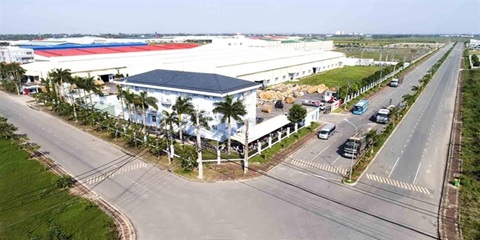
HCM CITY ATTRACTS US$5.7 BILLION INTO EXPORT PROCESSING AND INDUSTRIAL ZONES
HCM City attracted US$5.7 billion in domestic and foreign investment into its export processing and industrial zones during the first nine months of 2026. The figure exceeded the city's full-year target by 31 per cent, highlighting strong momentum in high-quality industrial investment under Resolution No.10-NQ/TW. Total investment reached 131 per cent of the 2026 target of $4.25 billion and represented a 29 per cent increase compared with the same period in 2025, according to the city's Export Processing and Industrial Zones Authority (HEPZA).
INFRASTRUCTURE / CONSTRUCTION / LOGISTIC / PORT
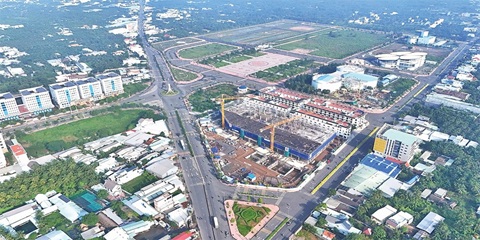
DONG THAP PROVINCE STEPS UP INDUSTRIAL EXPANSION AND INFRASTRUCTURE CONNECTIVITY
Accelerating public investment, strengthening inter-regional connectivity, and expanding industrial land are helping Dong Thap efficiently bolster competitiveness and drive economic growth. Following the 2025 merger of the former Dong Thap and Tien Giang provinces, the expanded Dong Thap province in the Mekong Delta faces mounting pressure to accelerate infrastructure development and strengthen connectivity among local economic zones, urban areas, industrial parks (IPs), and production centres.
Events Sponsors






















