Want to be in the loop?
subscribe to
our notification
Business News
VIETNAM ROLLS OUT RED CARPET FOR US CHIP GIANT’S INVESTMENT: MINISTER
Vietnam boasts huge potential to develop semiconductor and AI industries, and pledges to create favourable conditions for NVIDIA corporation, a leading chip producer in the US, Minister of Planning and Investment Nguyen Chi Dung said on December 11.
Hanoi - Vietnam boasts huge potential to develop semiconductor and AI industries, and pledges to create favourable conditions for NVIDIA corporation, a leading chip producer in the US, Minister of Planning and Investment Nguyen Chi Dung said on December 11.
At a roundtable discussion on the semiconductor industry and AI development trends and opportunities for Vietnam, Dung suggested NVIDIA enhance research and development (R&D) activities, carry out semiconductor and AI projects in Vietnam, and build R&D centres and labs at the National Innovation Centre (NIC), and high-tech parks.
Dung expressed his hope that NVIDIA will facilitate conditions for Vietnamese engineers to engage in internships and work at the corporation, help Vietnam develop incubators for semiconductor firms, while supporting the country to get access to and implement projects under the US’s fund for semiconductor production and development activities.
Dung recommended NVIDIA expand cooperative and investment projects in Vietnam and partner with Vietnamese companies to develop a supporting ecosystem for the Southeast Asian country’s semiconductor and AI industries. It can also join hands with the NIC to carry out a project on semiconductor human resources development until 2030, and cooperate with Vietnam’s education establishments to implement human resources training programmes.
Dung stressed that a sound environment and close coordination between government agencies and businesses have an important role to play in developing the spearhead industries and making contributions to improving the competitive edge as well as making Vietnam a leading innovation centre in the region.
For his part, President and CEO of the US chip giant Jensen Huang spoke highly of Vietnam’s potential and opportunities to branch out its semiconductor and AI industries, especially the country’s human resources in the fields.
Vietnam is prepared for the AI development wave, and it is time for both sides to set up strategic relations in the fields, he said, adding NVIDIA will expand its existing partnership with Vietnam, making the country its second homeland.
According to Jensen Huang, it is necessary for the country to encourage new generations to engage in AI as well as improve the skills of its human resources, and develop 1 million AI experts.
NVIDIA stands ready to cooperate with Vietnam to improve its human resources capacity, and AI infrastructure, he stressed.
Earlier, Jensen Huang had a meeting with Prime Minister Pham Minh Chinh, during which he said NVIDIA wishes to establish a base in Vietnam to attract talents in the fields.
NVIDIA is a multinational corporation specialising in the production of innovative graphics processing units (GPUs), application programming interfaces (APIs) for data science and high-performance computing, and system on chip units (SoCs) for mobile computing and the automotive market.
The company has more than 27,000 employees, and recently recorded a revenue of nearly 27 billion USD.
With the AI fever gripping across the globe, NVIDIA has plans to triple its AI production for 2024.
Source: VIR
Related News

BANKING / FINANCE / INSURANCE / TAX
REMITTANCES TO HCM CITY RISE NEARLY 40% IN Q3
Remittances to HCM City reached more than US$2.83 billion in the third quarter of this year, up 39.5 per cent from the previous quarter and 3.6 per cent year-on-year. This was the first quarter showing positive annual growth this year, helping narrow the decline in remittance inflows over the first nine months. According to the State Bank of Vietnam (SBV)’s Regional Branch 2, remittances transferred to HCM City through credit institutions and economic organisations totalled $2.835 billion in Q3, an increase of more than $802 million from the previous quarter.
TECHNOLOGY
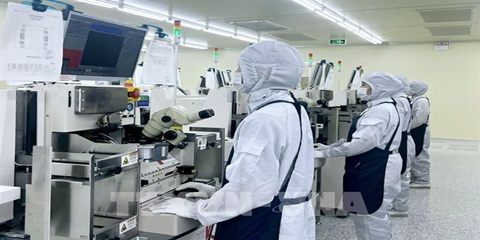
TECH SECTOR GROWTH OPENS UP OPPORTUNITIES FOR VIỆT NAM TO GO GLOBAL
The growth of the electronics, semiconductor and high-tech sectors worldwide is opening up a variety of opportunities for Vietnamese enterprises to integrate more deeply into the global supply chain. However, to become suppliers for these corporations, domestic enterprises must meet rigorous standards regarding quality, technology, productivity and order fulfilment capabilities.
VIETNAM ECONOMY INVESTMENT
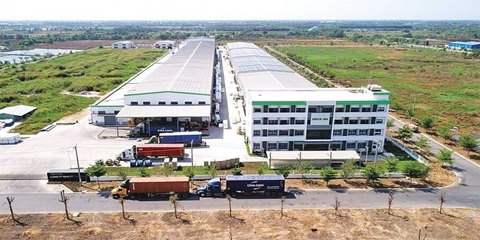
FOREIGN INVESTORS SEEKING A SYNCHRONISED MANUFACTURING ECOSYSTEM
Instead of focusing only on land costs and incentives as usual, foreign investors are seeking a synchronised manufacturing ecosystem, from stable power supply and logistics to shared infrastructure and the convenience of completing residence procedures for experts to serve their long-term investment in the country.

MEMBER CORNER / PROMOTIONS
SENTRYSAFE FHW40200 – PROTECT YOUR VALUABLES, ENJOY PEACE OF MIND!
Looking for a reliable solution to protect your important documents, cash, and valuables from fire and water damage? Genuine SENTRYSAFE - Reliable protection for your valuables and peace of mind! Contact Sen Wai Vietnam for more information and personalized product recommendations.
PROPERTY / INDUSTRIAL ZONE
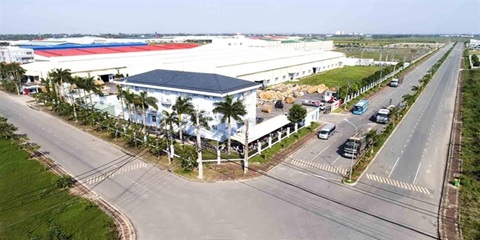
HCM CITY ATTRACTS US$5.7 BILLION INTO EXPORT PROCESSING AND INDUSTRIAL ZONES
HCM City attracted US$5.7 billion in domestic and foreign investment into its export processing and industrial zones during the first nine months of 2026. The figure exceeded the city's full-year target by 31 per cent, highlighting strong momentum in high-quality industrial investment under Resolution No.10-NQ/TW. Total investment reached 131 per cent of the 2026 target of $4.25 billion and represented a 29 per cent increase compared with the same period in 2025, according to the city's Export Processing and Industrial Zones Authority (HEPZA).
INFRASTRUCTURE / CONSTRUCTION / LOGISTIC / PORT
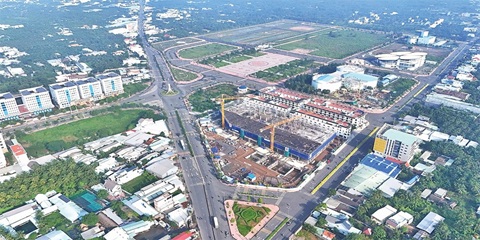
DONG THAP PROVINCE STEPS UP INDUSTRIAL EXPANSION AND INFRASTRUCTURE CONNECTIVITY
Accelerating public investment, strengthening inter-regional connectivity, and expanding industrial land are helping Dong Thap efficiently bolster competitiveness and drive economic growth. Following the 2025 merger of the former Dong Thap and Tien Giang provinces, the expanded Dong Thap province in the Mekong Delta faces mounting pressure to accelerate infrastructure development and strengthen connectivity among local economic zones, urban areas, industrial parks (IPs), and production centres.
Events Sponsors






















