Want to be in the loop?
subscribe to
our notification
Business News
VIETNAM RECORDS 8.02% GDP GROWTH, FASTEST IN ASEAN
Vietnam’s 8.02% economic growth in 2025 stood out amid ongoing global economic fluctuations, particularly trade tensions and U.S. reciprocal tariff policies. This rate was the highest in the ASEAN region and among the leading growth rates worldwide.
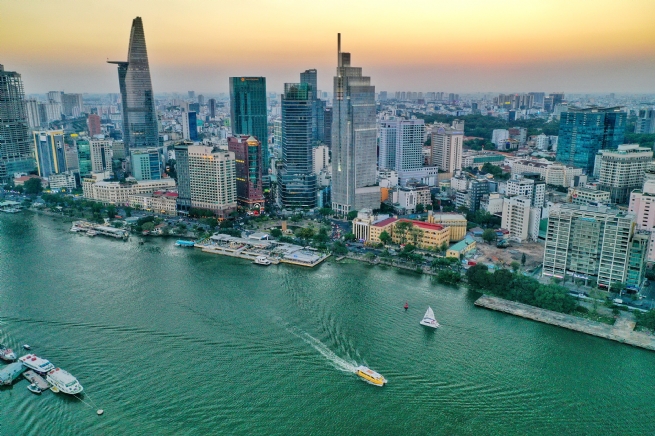
In 2025, Ho Chi Minh City is the largest contributor to the country’s total GDP, accounting for 23.11% of overall national growth
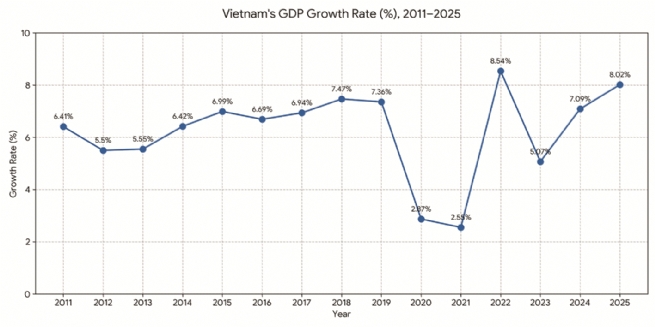
According to the National Statistics Office (Ministry of Finance), Vietnam’s GDP in 2025 increased by 8.02% compared with 2024. This was slightly below the 8.12% growth recorded in 2022, the highest level in the past 15 years, driven primarily by the services and industrial manufacturing sectors. With this outcome, the average GDP growth for the 2021-2025 period reached approximately 6.3% per year, surpassing the 6.2% achieved in the previous term.
Nguyen Thi Huong, Director of the National Statistics Office, reported that GDP in Q4 2025 reached the highest growth rate of the 2021-2025 period. The economy maintained a pattern of stronger growth in each successive quarter throughout the year.
At current prices, Vietnam’s GDP in 2025 was estimated at US$514 billion, up US$38 billion from the previous year. GDP per capita reached US$5,026, an increase of US$326 from 2024 (US$4,700), placing Vietnam among upper-middle-income countries. Average consumer price inflation (CPI) in 2025 rose 3.31% compared with the previous year.
In terms of gross value added, the agriculture, forestry, and fisheries sector grew 3.78%, contributing 5.30%; the industry and construction sector increased 8.95%, contributing 43.62%; and the services sector rose 8.62%, contributing 51.08%.
Within the agriculture, forestry, and fisheries sector, despite adverse impacts from storms and flooding, timely measures mitigated damage, keeping production stable. Agricultural value added in 2025 was estimated to increase 3.48%, contributing 3.59% to overall economic growth; forestry grew 5.70% but with a small share, contributing 0.38%; and fisheries grew 4.41%, contributing 1.33%.
In the industry and construction sector, industrial growth reached its highest level since 2019. Industrial value added in 2025 was estimated to grow 8.80% year-on-year, contributing 35.15% to total economic growth. Manufacturing increased 9.97%, the highest rate in the 2019-2025 period, remaining a key growth driver and contributing 31.49%.
Trade and tourism activities rose significantly, with international arrivals reaching an all-time high in 2025, providing strong support for service sector growth. Service sector value added in 2025 was estimated to increase 8.62%, slightly below the 10.66% growth recorded in 2022 during the 2011-2025 period.
Vietnam’s total trade value surpassed US$930 billion for the first time, increasing 18.2% compared with 2024. Exports reached US$475 billion, up 17%, with 36 products generating more than US$1 billion each.
In 2025, nearly 297,500 enterprises were newly registered or resumed operations, an increase of 27.4% compared with the same period in 2024. On average, nearly 24,800 enterprises were established or resumed operations each month, while approximately 18,900 enterprises exited the market monthly.
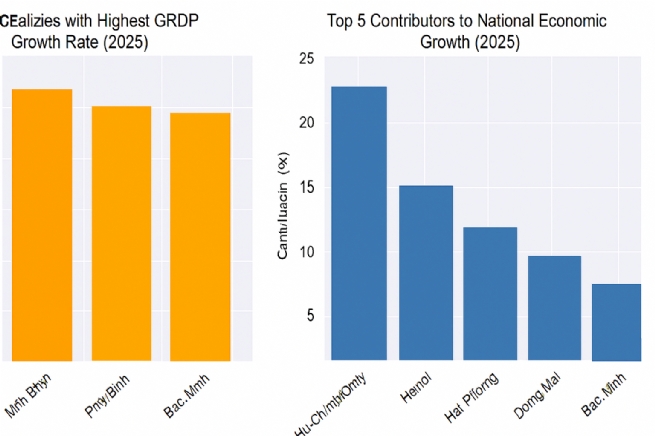
Regional gross regional domestic product (GRDP) growth ranged from 5.84% to 11.89%, with six localities exceeding 10%. Quang Ninh and Hai Phong led with GRDP growth of 11.89% and 11.81%, respectively, followed by Ninh Binh, Phu Tho, Bac Ninh, and Quang Ngai. Most other provinces achieved stable growth of 7-10%, while five provinces remained below 7%. In terms of contribution to national GDP growth, Hanoi, Ho Chi Minh City, Hai Phong, Dong Nai, and Bac Ninh continued to serve as the pillars of the economy, contributing 55.4% to overall growth.
For 2026, Vietnam aims to achieve double-digit growth while maintaining macroeconomic stability, controlling inflation, and ensuring key economic balances. According to Huong, this represents a significant challenge, requiring strong measures to accelerate public investment disbursement, particularly for major national projects. Simultaneously, Vietnam needs to resolve lingering projects and continue deep economic restructuring while promoting exports and expanding the domestic market.
Additionally, regulatory agencies need to implement competitive, business-friendly policies to attract large-scale, high-tech projects. Selective mechanisms should be established to draw foreign investment in high-potential sectors such as semiconductors, innovation, and green hydrogen, creating new drivers for growth.
Mariam Sherman, World Bank Country Director for Vietnam, said Vietnam should continue strengthening the private sector, prioritize human capital and technology, advance sustainable infrastructure and green growth, and ensure that the benefits of growth and institutional modernization are shared equitably.
She added that Vietnam’s goal of becoming a developed, high-income country is ambitious but achievable. Success will require optimism combined with a sense of urgency, along with clear objectives and timelines, consistent reforms, and a readiness to address challenges directly.
Source: VCCI
Related News

BANKING / FINANCE / INSURANCE / TAX
REMITTANCES TO HCM CITY RISE NEARLY 40% IN Q3
Remittances to HCM City reached more than US$2.83 billion in the third quarter of this year, up 39.5 per cent from the previous quarter and 3.6 per cent year-on-year. This was the first quarter showing positive annual growth this year, helping narrow the decline in remittance inflows over the first nine months. According to the State Bank of Vietnam (SBV)’s Regional Branch 2, remittances transferred to HCM City through credit institutions and economic organisations totalled $2.835 billion in Q3, an increase of more than $802 million from the previous quarter.

TECHNOLOGY
TECH SECTOR GROWTH OPENS UP OPPORTUNITIES FOR VIỆT NAM TO GO GLOBAL
The growth of the electronics, semiconductor and high-tech sectors worldwide is opening up a variety of opportunities for Vietnamese enterprises to integrate more deeply into the global supply chain. However, to become suppliers for these corporations, domestic enterprises must meet rigorous standards regarding quality, technology, productivity and order fulfilment capabilities.

VIETNAM ECONOMY INVESTMENT
FOREIGN INVESTORS SEEKING A SYNCHRONISED MANUFACTURING ECOSYSTEM
Instead of focusing only on land costs and incentives as usual, foreign investors are seeking a synchronised manufacturing ecosystem, from stable power supply and logistics to shared infrastructure and the convenience of completing residence procedures for experts to serve their long-term investment in the country.

MEMBER CORNER / PROMOTIONS
SENTRYSAFE FHW40200 – PROTECT YOUR VALUABLES, ENJOY PEACE OF MIND!
Looking for a reliable solution to protect your important documents, cash, and valuables from fire and water damage? Genuine SENTRYSAFE - Reliable protection for your valuables and peace of mind! Contact Sen Wai Vietnam for more information and personalized product recommendations.

PROPERTY / INDUSTRIAL ZONE
HCM CITY ATTRACTS US$5.7 BILLION INTO EXPORT PROCESSING AND INDUSTRIAL ZONES
HCM City attracted US$5.7 billion in domestic and foreign investment into its export processing and industrial zones during the first nine months of 2026. The figure exceeded the city's full-year target by 31 per cent, highlighting strong momentum in high-quality industrial investment under Resolution No.10-NQ/TW. Total investment reached 131 per cent of the 2026 target of $4.25 billion and represented a 29 per cent increase compared with the same period in 2025, according to the city's Export Processing and Industrial Zones Authority (HEPZA).

INFRASTRUCTURE / CONSTRUCTION / LOGISTIC / PORT
DONG THAP PROVINCE STEPS UP INDUSTRIAL EXPANSION AND INFRASTRUCTURE CONNECTIVITY
Accelerating public investment, strengthening inter-regional connectivity, and expanding industrial land are helping Dong Thap efficiently bolster competitiveness and drive economic growth. Following the 2025 merger of the former Dong Thap and Tien Giang provinces, the expanded Dong Thap province in the Mekong Delta faces mounting pressure to accelerate infrastructure development and strengthen connectivity among local economic zones, urban areas, industrial parks (IPs), and production centres.
Events Sponsors






















