Want to be in the loop?
subscribe to
our notification
Business News
VIETNAM REAL ESTATE MARKET RISING APPEAL TO INT’L INVESTORS
Leveraging its macroeconomic strengths and compelling attributes across various sectors, the Vietnamese real estate market is emerging as a promising investment destination for international investors.
Bright macroeconomic spot
The General Statistics Office (GSO) projected the disbursed foreign direct investment (FDI) in Vietnam for the first two months of 2024 to be approximately US$2.8 billion, marking a year-on-year surge of 9.8%. This represents the most substantial amount of actualized FDI capital for the January-February timeframe in the past five years.
Besides, Vietnam is highly appreciated for its open policy factors and a favorable investment environment for foreign investors. Regarding the control of macro factors such as foreign exchanges or interest rates, the government has managed to maintain stable exchange rates and effectively reduce inflation. Maintaining the value stability has reassured foreign investors when they do business in Vietnam. Stable interest rates make borrowing capital for investment projects more attractive to foreign investors while helping boost economic growth by stimulating purchases and increasing capital turnover for foreign investors.
Besides the monetary policy, the Government has also adopted the fiscal policy to accelerate economic growth, including lowering the VAT by 2% for most products, extending the deadline for payment of taxes and land rents in 2023 and reducing land rents in 2023. In 2024, the Government intended to maintain the expansionary fiscal policy and the loosening monetary policy to ensure budget revenue, support people and companies to continue recoveries and stimulate growth.
Regarding real estate policies, in 2023, Vietnam adopted many decrees and resolutions to support the market, including Decree 08/2023/ND-CP, Resolution 33/NQ-CP, a VND120 trillion credit package for social housing, Circular 06/2023/TT-NHNN, the Law on Real Estate Business, the Housing Law and the Land Law. These policies are expected to increase predictability and stability for the real estate market while creating great opportunities for foreign investors to take part in investment projects.
Mr. Nguyen Trong Toan, Investment Manager at Savills Hanoi, said: “Vietnam shows stability in both the political background and the macro context. The economy is experiencing a strong post-pandemic recovery, with lower inflation and mor stable exchange rates than other countries in the region. Therefore, in the real estate sector, Vietnam remains a to notable investment destination for foreign real estate investors and developers in locations and segments with much room for development.”
Many attractive real estate segments
Each real estate segment of the Vietnamese market in 2024 will have its own investment appeals to foreign investors, he said. For example, in the residential property segment, foreign investors seek investment opportunities and tend to develop projects under their own brands amidst scarce supply and rising housing demand. The advantages of foreign investors rest in brand names, design ideas and construction standards and quality, thus their products, even in the high-end segment, are always positively received by the market.
In addition, the office space sector has garnered significant interest from investors. As per Savills’ report, there has been an upswing in demand from sectors such as energy, manufacturing and consulting, contributing to a steady occupancy rate. Particularly in major urban centers like Hanoi, Da Nang and Ho Chi Minh City, the evolving trends in the office market are paving the way for qualified international investors who adhere to recognized green standards such as LEED, WELL and BREEAM.
In Hanoi, foreign investors have started to expand their investment scope in the city’s developing areas instead of focusing on central business districts to embrace the relocation trend of public and private administrative agencies, transportation infrastructure development and population concentration in peripheral urban projects, Toan said.
In the retail sector, the entrance of major retailers underscored the allure of the Vietnamese market. Large-scale investors are proactively seeking land resources to initiate their expansive, modern commercial and service property projects, with a focus on enhancing consumer experiences. In early February 2024, retail property tycoon Central Pattana, a subsidiary of Thailand’s leading retailer Central Group, made preparations to establish a legal entity in Vietnam, thereby marking its entry into this dynamic retail market. Previously, following the inauguration of the third Emart hypermarket in Ho Chi Minh City, THISO unveiled its strategy to extend its reach by launching a fourth hypermarket in the north, subsequent to its acquisition of a 2.4-hectare land area in the Tay Ho Tay Urban Area.
The hotel market is also on the recovery path. According to Savills Vietnam Market Report for the fourth quarter of 2023, in 2023 alone, Vietnam welcomed 120.6 million tourists, a year-on-year increase of 19%, including 12.6 million international visitors, a 3-fold growth over 2022. According to this report, hotel occupancy and room rates in Hanoi and Ho Chi Minh City all advanced. Specifically, the hotel occupancy in Hanoi increased by 21 percentage points year on year with the average room rate growing by 28% year on year. Similarly, the hotel occupancy in Ho Chi Minh City looked up 18 percentage points year on year, with the 5-star segment having the strongest improvement with the capacity reaching 61% and average room rate rising by 14% year on year to VND2.9 million per room per night. The hotel performance has continuously improved and many foreign investors have appreciated the resilience of this segment and demonstrated their confidence in the development potential of the Vietnamese hotel market. They also think that this is the right time to enter this market.
In addition to the unique attraction of each segment to foreign investors, Toan noted that “In the past, financially robust foreign investors primarily focused on maintaining control in their investment strategies. However, they are now embracing a broader spectrum of investment forms, ranging from financial investments and capital contributions to business collaborations, to fully exploit the potential of the Vietnamese market. Moreover, many foreign investors, following a period of market analysis, are broadening the scope of their project locations, with a particular interest in exploring investment opportunities in the suburban regions of major cities.”
Source: VCCI
Related News

CHARITY / EXHIBITION / OTHER EVENTS
INVESTMENT OPPORTUNITIES IN CA MAU PROVINCE: 96 PROJECTS AND 20 STRATEGIC PROJECTS
We are pleased to share with you information on investment projects currently seeking investors in Ca Mau Province. Should your esteemed company or association be interested, we kindly invite you to review the project information and complete the registration form via the links provided. The Ho Chi Minh City Investment and Trade Promotion Centre (ITPC) will consolidate the expressions of interest and facilitate connections with the leadership of Ca Mau Province at a meeting tentatively scheduled for 13 November 2026 in Ho Chi Minh City.
MEMBER CORNER / PROMOTIONS
BẰNG KIỀU LIVESHOW - A SYMPHONY OF LOVE UNDER THE GOLDEN GLOW
A masterclass in live music that takes the audience on a soulful journey through immortal love songs, guided by the peerless artistry and emotive storytelling of renowned singer Bằng Kiều. The highlight of the night is his seamless musical chemistry with special guest Triệu Hồng Ngọc, promising passionate and deeply resonant duets inside the magnificent Grand Ballroom.
INFRASTRUCTURE / CONSTRUCTION / LOGISTIC / PORT
ĐÀ NẴNG GREEN-LIGHTS US$105 MILLION THAI DEVELOPMENT DEAL
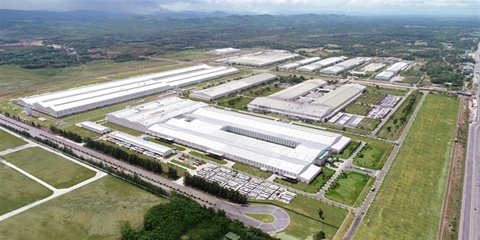
The central city has approved an investment proposal by Thailand’s WHA Group to develop infrastructure for the 400ha WHA Đà Nẵng Industrial Park project on two communes of Thăng Bình and Đồng Dương, with an investment of more than VNĐ2.7 trillion (US$105 million). The city said it approved WHA Industrial Development International's status as an investor in the project, which is expected to take place between 2027 and 2034.
VIETNAM ECONOMY INVESTMENT
MOBILE PHONE EXPORTS RISE 20% TO $51.8 BILLION IN FIRST NINE MONTHS
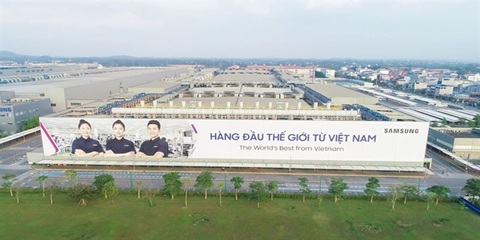
Exports of mobile phones and components rose 20 per cent year-on-year to nearly US$51.8 billion in the first nine months of 2026, with China, the US and Republic of Korea accounting for more than half of the total. Shipments to the three markets reached a combined $26.18 billion, or 50.6 per cent of total exports of the product group during the period, according to data from the Vietnam Department of Customs under the Ministry of Finance.

INFRASTRUCTURE / CONSTRUCTION / LOGISTIC / PORT
VIỆT NAM-CAMBODIA TRADE GATHERS PACE TOWARDS $20 BILLION TARGET
Trade between Việt Nam and Cambodia continues to grow, remaining a bright spot and a key pillar of bilateral cooperation as the two countries aim to raise two-way trade to US$20 billion in the coming years. After setting a record of more than $11.3 billion last year, bilateral trade reached about $8.7 billion in the first eight months of this year, up 8.3 per cent year on year.
VIETNAM ECONOMY INVESTMENT
FRUIT AND VEGETABLE EXPORTS POISED TO HIT $10 BILLION IN 2026
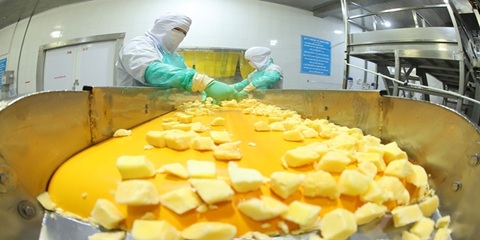
Fruit and vegetable exports are on track to reach nearly US$10 billion in 2026, after rising 19.9 per cent year on year to nearly US$7.4 billion in the first nine months, driven by strong seasonal demand and abundant tropical fruit supplies. The Ministry of Agriculture and Environment said the growth reflected stronger international demand for fresh produce and processed agricultural products.
Events Sponsors






















