Want to be in the loop?
subscribe to
our notification
Business News
VIETNAM POSTS SECOND-HIGHEST AI ADOPTION IN SOUTHEAST ASIA
Vietnam has the second-highest AI adoption rate in Southeast Asia at 26.5 per cent, according to a recent Microsoft report.

Photo: Shutterstock
The Global AI Diffusion Report, published on June 15, also found that global AI usage among the working-age population rose from 16.3 per cent to 17.8 per cent in the first quarter of 2026
Microsoft noted that AI adoption in Vietnam has increased stably from 21.2 per cent in the first half of 2025 to 26.5 per cent in the first quarter of 2026. In Southeast Asia, Vietnam trails behind Singapore at 63.4 per cent. Meanwhile, Vietnam outperformed most Southeast Asian peers in AI adoption, including Malaysia (21.8 per cent), the Philippines (20.1 per cent), and Thailand (12.4 per cent).
During the first quarter, Vietnam’s AI adoption increased by three percentage points, marking the highest in the region. With the ongoing acceleration of AI adoption nationwide, Vietnam has been positioned as one of the fastest-growing economies since June 2025.
“Vietnam is entering an important phase in the AI era. We see a strong momentum among businesses, the developer community, the education sector, and the public sector in exploring how AI can drive productivity, innovation, and competitiveness,” said Dhanawat Suthumpun, managing director for Microsoft's Emerging Markets.
“The latest Global AI Diffusion Report shows the global adoption of AI is rising quickly. Against the backdrop, Vietnam is well-positioned to turn this momentum into long-term growth. As AI becomes the defining technology of the next decade, I believe Vietnam has the potential to become one of the most dynamic AI-driven economies in Southeast Asia,” added Suthumpun.
According to the report, intensity of use among economies with the highest rates of AI diffusion has increased, with 26 economies now exceeding 30 per cent of the working age population using AI. The UAE continued to lead global AI diffusion at 70.1 per cent. The US finally started to move up the national rankings, albeit only from 24th to 21st, based on a 31.3 per cent usage rate by the working age population.
Asia is experiencing a broader growth wave. 12 of the 15 fastest-growing economies since June 2025 are in Asia, and each has at least 25 per cent more AI users than in June last year. Growth has been led by South Korea (up 43 per cent), Thailand (up 36 per cent), and Japan (up 34 per cent), with Fastest growing economies since June 2025 similarly strong gains in Mongolia, Iran, Laos, and Turkey (all 30 per cent). The pattern spans both advanced and emerging economies, including Kazakhstan, Kyrgyzstan, Uzbekistan, Vietnam, and Cambodia.
To track all these trends, Microsoft continues to measure AI diffusion as the share of people worldwide between the ages of 15 and 64 who have used a generative AI product during the reported period. This measure is derived from aggregated and anonymised Microsoft telemetry and adjusted to reflect differences in OS and device-market share, internet penetration, and country population.
Source: VIR
Related News

CHARITY / EXHIBITION / OTHER EVENTS
INVESTMENT OPPORTUNITIES IN CA MAU PROVINCE: 96 PROJECTS AND 20 STRATEGIC PROJECTS
We are pleased to share with you information on investment projects currently seeking investors in Ca Mau Province. Should your esteemed company or association be interested, we kindly invite you to review the project information and complete the registration form via the links provided. The Ho Chi Minh City Investment and Trade Promotion Centre (ITPC) will consolidate the expressions of interest and facilitate connections with the leadership of Ca Mau Province at a meeting tentatively scheduled for 13 November 2026 in Ho Chi Minh City.

MEMBER CORNER / PROMOTIONS
BẰNG KIỀU LIVESHOW - A SYMPHONY OF LOVE UNDER THE GOLDEN GLOW
A masterclass in live music that takes the audience on a soulful journey through immortal love songs, guided by the peerless artistry and emotive storytelling of renowned singer Bằng Kiều. The highlight of the night is his seamless musical chemistry with special guest Triệu Hồng Ngọc, promising passionate and deeply resonant duets inside the magnificent Grand Ballroom.
INFRASTRUCTURE / CONSTRUCTION / LOGISTIC / PORT
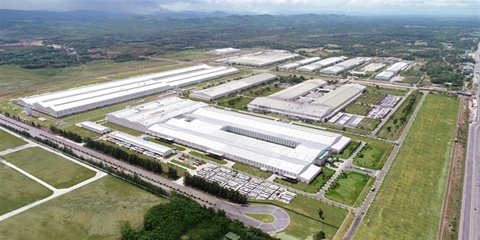
ĐÀ NẴNG GREEN-LIGHTS US$105 MILLION THAI DEVELOPMENT DEAL
The central city has approved an investment proposal by Thailand’s WHA Group to develop infrastructure for the 400ha WHA Đà Nẵng Industrial Park project on two communes of Thăng Bình and Đồng Dương, with an investment of more than VNĐ2.7 trillion (US$105 million). The city said it approved WHA Industrial Development International's status as an investor in the project, which is expected to take place between 2027 and 2034.
VIETNAM ECONOMY INVESTMENT
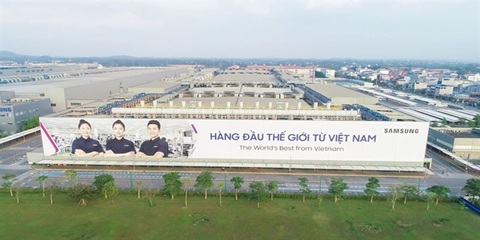
MOBILE PHONE EXPORTS RISE 20% TO $51.8 BILLION IN FIRST NINE MONTHS
Exports of mobile phones and components rose 20 per cent year-on-year to nearly US$51.8 billion in the first nine months of 2026, with China, the US and Republic of Korea accounting for more than half of the total. Shipments to the three markets reached a combined $26.18 billion, or 50.6 per cent of total exports of the product group during the period, according to data from the Vietnam Department of Customs under the Ministry of Finance.
INFRASTRUCTURE / CONSTRUCTION / LOGISTIC / PORT
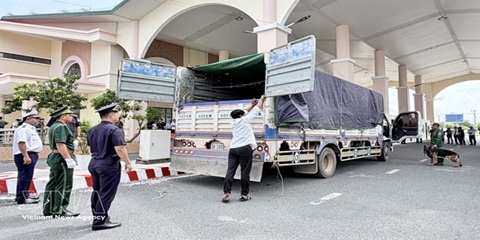
VIỆT NAM-CAMBODIA TRADE GATHERS PACE TOWARDS $20 BILLION TARGET
Trade between Việt Nam and Cambodia continues to grow, remaining a bright spot and a key pillar of bilateral cooperation as the two countries aim to raise two-way trade to US$20 billion in the coming years. After setting a record of more than $11.3 billion last year, bilateral trade reached about $8.7 billion in the first eight months of this year, up 8.3 per cent year on year.
VIETNAM ECONOMY INVESTMENT
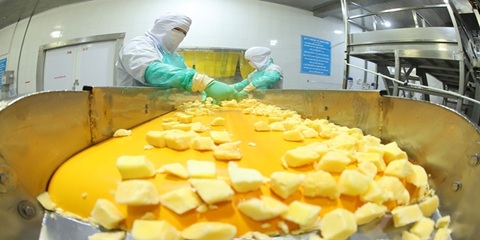
FRUIT AND VEGETABLE EXPORTS POISED TO HIT $10 BILLION IN 2026
Fruit and vegetable exports are on track to reach nearly US$10 billion in 2026, after rising 19.9 per cent year on year to nearly US$7.4 billion in the first nine months, driven by strong seasonal demand and abundant tropical fruit supplies. The Ministry of Agriculture and Environment said the growth reflected stronger international demand for fresh produce and processed agricultural products.
Events Sponsors






















