Want to be in the loop?
subscribe to
our notification
Business News
VIETNAM NEEDS SKILLED WORKFORCE TO BECOME UPPER-MIDDLE-INCOME ECONOMY BY 2035: WB
Vietnam will need a skilled workforce to transform itself into an upper-middle-income economy by 2035, the World Bank has suggested in its recently-released report named “Taking Stock: Educate to Grow”.
In its bi-annual report, the lender said: “Vietnam needs a workforce with 21st century skills to grow. As the economy moves from being driven by low skill and low wage jobs in manufacturing and services towards a more innovation driven growth model built on higher value-added industries and services, Vietnam’s workforce will need to attain higher level and more relevant skills.”
The Vietnamese Government’s Socio-economic Development Strategy for 2021-2030 says as much, aiming to use scientific, technological, innovative, and digitally transformative knowledge and build quality human resources as key drivers of higher productivity and future economic growth. To achieve these goals, Vietnam needs to reform its education system to improve quality and access, and thus provide the necessary skills to the population, it affirmed.
This edition also underlines transforming the higher education system as the key to boosting the country’s productivity and achieving its development goals, in the context where the country re-emerges from the pandemic and into a challenging global environment.
The report’s co-author Dorsati Madani said that while Vietnam’s economic recovery had been relatively stable, not all sectors witnessed the same situation.
The impact on workers and households during the crisis was serious and lasting, with about 45 percent claiming lower incomes in December 2021 than the previous year.
The impact of the pandemic is still present with businesses reporting broad-based labour shortages as of March 2022, which were felt more acutely in services and manufacturing, and in the Ho Chi Minh City area.
This, in addition to growth slowdown or stagflation in main export markets, further commodity price shocks, continued disruption of global supply chains, or the emergence of new COVID-19 variants, are hindering Vietnam’s full recovery.
Statistics revealed that Vietnam’s population has an average 10.2 years of schooling, second only to Singapore among the Association of Southeast Asian Nations (ASEAN) countries.
Vietnam’s human capital index is 0.69 out of a maximum of 1, the highest among the lower middle-income economies.
However, low skills relevance of the university graduates put the country in the bottom third of the 140 countries listed in the 2018 Competitiveness Index on skills relevance of university graduates.
A WB skills and enterprise survey published in 2019 also said that 73 percent of sampled Vietnamese firms report difficulties in recruiting employees with leadership and managerial skills, 54 percent with socio-emotional skills, and 68% with job-specific technical skills.
Focusing on tertiary and higher education, the WB’s report recommends reforming the education system to improve quality and access, and thus provide the necessary skills to the population.
Reforms to Vietnam’s higher education system could help support development objectives, the report says.
The increasing financial costs of pursuing higher education and the perception of diminishing economic returns from pursuing higher education have weakened demand.
While efforts to enhance the business environment are crucial to enabling job creation, policymakers should also take steps to reduce skill-mismatches and improve the quality of Vietnam’s labour force.
Carolyn Turk, WB Country Director for Vietnam, said: “To sustain economic growth at the desired rate, Vietnam needs to increase productivity by 2-3 percent every year.
“International experiences have shown that higher worker productivity can be achieved by investing in the education system, as an important part of a basket of investments and reforms. A competitive workforce will generate much-needed efficiency for Vietnam in the long term.”
In its report, the World Bank forecast Vietnam’s GDP growth to expand 7.5 percent in 2022 and 6.7 percent in 2023, with resilient manufacturing and a robust rebound in services serving as the driving forces for economic recovery.
Source: VIR
Related News

BANKING / FINANCE / INSURANCE / TAX
REMITTANCES TO HCM CITY RISE NEARLY 40% IN Q3
Remittances to HCM City reached more than US$2.83 billion in the third quarter of this year, up 39.5 per cent from the previous quarter and 3.6 per cent year-on-year. This was the first quarter showing positive annual growth this year, helping narrow the decline in remittance inflows over the first nine months. According to the State Bank of Vietnam (SBV)’s Regional Branch 2, remittances transferred to HCM City through credit institutions and economic organisations totalled $2.835 billion in Q3, an increase of more than $802 million from the previous quarter.
TECHNOLOGY
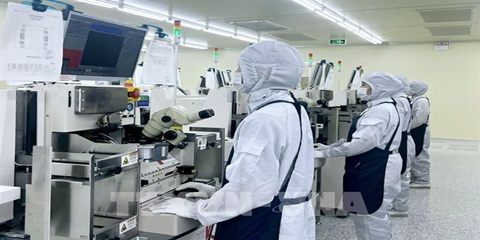
TECH SECTOR GROWTH OPENS UP OPPORTUNITIES FOR VIỆT NAM TO GO GLOBAL
The growth of the electronics, semiconductor and high-tech sectors worldwide is opening up a variety of opportunities for Vietnamese enterprises to integrate more deeply into the global supply chain. However, to become suppliers for these corporations, domestic enterprises must meet rigorous standards regarding quality, technology, productivity and order fulfilment capabilities.
VIETNAM ECONOMY INVESTMENT
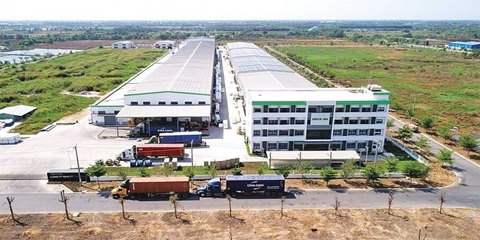
FOREIGN INVESTORS SEEKING A SYNCHRONISED MANUFACTURING ECOSYSTEM
Instead of focusing only on land costs and incentives as usual, foreign investors are seeking a synchronised manufacturing ecosystem, from stable power supply and logistics to shared infrastructure and the convenience of completing residence procedures for experts to serve their long-term investment in the country.

MEMBER CORNER / PROMOTIONS
SENTRYSAFE FHW40200 – PROTECT YOUR VALUABLES, ENJOY PEACE OF MIND!
Looking for a reliable solution to protect your important documents, cash, and valuables from fire and water damage? Genuine SENTRYSAFE - Reliable protection for your valuables and peace of mind! Contact Sen Wai Vietnam for more information and personalized product recommendations.
PROPERTY / INDUSTRIAL ZONE
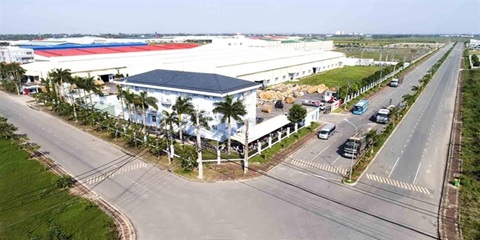
HCM CITY ATTRACTS US$5.7 BILLION INTO EXPORT PROCESSING AND INDUSTRIAL ZONES
HCM City attracted US$5.7 billion in domestic and foreign investment into its export processing and industrial zones during the first nine months of 2026. The figure exceeded the city's full-year target by 31 per cent, highlighting strong momentum in high-quality industrial investment under Resolution No.10-NQ/TW. Total investment reached 131 per cent of the 2026 target of $4.25 billion and represented a 29 per cent increase compared with the same period in 2025, according to the city's Export Processing and Industrial Zones Authority (HEPZA).
INFRASTRUCTURE / CONSTRUCTION / LOGISTIC / PORT
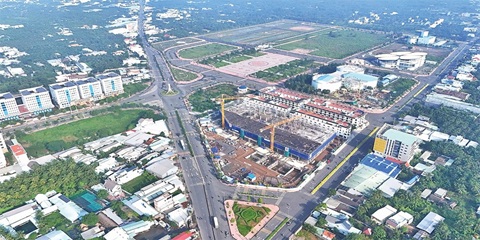
DONG THAP PROVINCE STEPS UP INDUSTRIAL EXPANSION AND INFRASTRUCTURE CONNECTIVITY
Accelerating public investment, strengthening inter-regional connectivity, and expanding industrial land are helping Dong Thap efficiently bolster competitiveness and drive economic growth. Following the 2025 merger of the former Dong Thap and Tien Giang provinces, the expanded Dong Thap province in the Mekong Delta faces mounting pressure to accelerate infrastructure development and strengthen connectivity among local economic zones, urban areas, industrial parks (IPs), and production centres.
Events Sponsors






















