Want to be in the loop?
subscribe to
our notification
Business News
VIETNAM MAKES REMARKABLE STRIDE ON GLOBAL AI INDEX
Vietnam has recently made a strong impression on the global artificial intelligence (AI) landscape, ranking 6th out of 40 countries, according to the 2025 Global AI Index released by the Worldwide Independent Network of Market Research (WIN).

With a score of 59.2 out of 100, the Southeast Asian country outperformed many developed nations, affirming its emerging position as a country standing ready to embrace the AI era.
The WIN Global AI Index measures public awareness, usage, trust, and concerns regarding AI, based on surveys conducted across 40 countries spanning five continents.
In Viet Nam, the survey was carried out by Indochina Research, with a sample size of 900 respondents from four major cities, conducted between December 2024 and January 2025.
Accordingly, the nation stands out thanks to its dynamic and open-minded urban population that feels confident with emerging technologies.
Notably, Viet Nam ranks 3rd globally in AI trust (65.6 points) and 5th in AI acceptance (71.6 points). It also scores above the global average in indicators such as interest in AI, comfort in using AI, and perceived usefulness of AI.
These figures reflect the rapid growth of digital trust in Vietnamese society, a key factor in maintaining the country's position in the global top 10 for AI.
While this openness toward AI is a strong point, actual usage remains modest, with a score of just 37.6 points, placing Viet Nam 17th out of 40 countries.
Data shows that around 60 percent of people in the four major cities have used AI technologies, but only 3 percent use them daily.
According to analysis by Indochina Research, the 18–34 age group, especially in Ha Noi and Ho Chi Minh City, is the most active user segment of AI. In these two major urban centers, 89 percent of respondents aged 18–24 in Ha Noi and 87 percent in Ho Chi Minh City reported having proactively used AI technology.
In contrast, residents of Da Nang and Can Tho show significantly lower usage rates, highlighting a digital access gap between major urban centers and secondary cities—particularly among older age groups. For instance, only one among 10 people aged 55–64 in Da Nang have ever interacted with AI technology.
A report released by the National Innovation Centre (NIC) showed that AI could add US$120–130 billion to Viet Nam's economy by 2040.
By 2040, AI will become a core factor of Viet Nam's economic growth. The two main growth drivers that will help AI make a major contribution to the economy by 2040 are consumption revenue (US$45–55 billion) through the consumption of AI-powered products and services and the US$60–70 billion in costs saved due to increased productivity thanks to technology application.
Source: VCCI
Related News

CHARITY / EXHIBITION / OTHER EVENTS
INVESTMENT OPPORTUNITIES IN CA MAU PROVINCE: 96 PROJECTS AND 20 STRATEGIC PROJECTS
We are pleased to share with you information on investment projects currently seeking investors in Ca Mau Province. Should your esteemed company or association be interested, we kindly invite you to review the project information and complete the registration form via the links provided. The Ho Chi Minh City Investment and Trade Promotion Centre (ITPC) will consolidate the expressions of interest and facilitate connections with the leadership of Ca Mau Province at a meeting tentatively scheduled for 13 November 2026 in Ho Chi Minh City.

MEMBER CORNER / PROMOTIONS
BẰNG KIỀU LIVESHOW - A SYMPHONY OF LOVE UNDER THE GOLDEN GLOW
A masterclass in live music that takes the audience on a soulful journey through immortal love songs, guided by the peerless artistry and emotive storytelling of renowned singer Bằng Kiều. The highlight of the night is his seamless musical chemistry with special guest Triệu Hồng Ngọc, promising passionate and deeply resonant duets inside the magnificent Grand Ballroom.
INFRASTRUCTURE / CONSTRUCTION / LOGISTIC / PORT
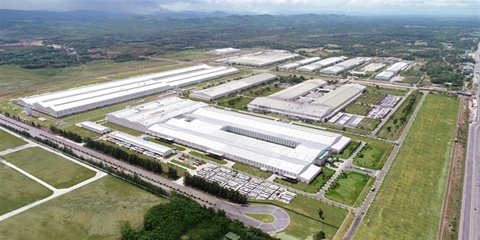
ĐÀ NẴNG GREEN-LIGHTS US$105 MILLION THAI DEVELOPMENT DEAL
The central city has approved an investment proposal by Thailand’s WHA Group to develop infrastructure for the 400ha WHA Đà Nẵng Industrial Park project on two communes of Thăng Bình and Đồng Dương, with an investment of more than VNĐ2.7 trillion (US$105 million). The city said it approved WHA Industrial Development International's status as an investor in the project, which is expected to take place between 2027 and 2034.
VIETNAM ECONOMY INVESTMENT
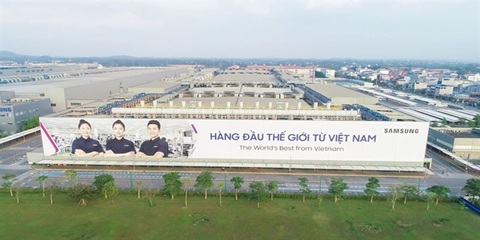
MOBILE PHONE EXPORTS RISE 20% TO $51.8 BILLION IN FIRST NINE MONTHS
Exports of mobile phones and components rose 20 per cent year-on-year to nearly US$51.8 billion in the first nine months of 2026, with China, the US and Republic of Korea accounting for more than half of the total. Shipments to the three markets reached a combined $26.18 billion, or 50.6 per cent of total exports of the product group during the period, according to data from the Vietnam Department of Customs under the Ministry of Finance.

INFRASTRUCTURE / CONSTRUCTION / LOGISTIC / PORT
VIỆT NAM-CAMBODIA TRADE GATHERS PACE TOWARDS $20 BILLION TARGET
Trade between Việt Nam and Cambodia continues to grow, remaining a bright spot and a key pillar of bilateral cooperation as the two countries aim to raise two-way trade to US$20 billion in the coming years. After setting a record of more than $11.3 billion last year, bilateral trade reached about $8.7 billion in the first eight months of this year, up 8.3 per cent year on year.
VIETNAM ECONOMY INVESTMENT
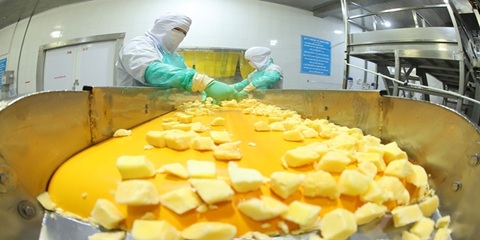
FRUIT AND VEGETABLE EXPORTS POISED TO HIT $10 BILLION IN 2026
Fruit and vegetable exports are on track to reach nearly US$10 billion in 2026, after rising 19.9 per cent year on year to nearly US$7.4 billion in the first nine months, driven by strong seasonal demand and abundant tropical fruit supplies. The Ministry of Agriculture and Environment said the growth reflected stronger international demand for fresh produce and processed agricultural products.
Events Sponsors






















