Want to be in the loop?
subscribe to
our notification
Business News
VIETNAM FIRMLY REBOUNDS AMID CHALLENGES
HSBC Global Research expects Vietnam to be among the region's top growing nations, as it was one of the world's few countries to record growth in two consecutive years since the pandemic.
Vietnam's economy has started 2022 on a firm footing. Sticking with a policy to "co-live with the virus," the country has accelerated its vaccination drive and gradually removed local restrictions, fuelling consumer sentiment, leading to an ongoing rebound in local consumption, according to analysts of Markets and Securities Services, HSBC Vietnam.
Ngo Dang Khoa, Country Head of Markets and Securities Services, HSBC Vietnam, said the country's total goods retail sales and consumer service revenues grew 11.7 per cent year-on-year in Q1 this year, or 7.9 per cent if inflation was excluded (1.9 per cent in 2021).
The re-opening from mid-March this year has been especially crucial for Vietnam's services recovery.
In the first half of this year, around 602,000 foreign tourists flocked to Vietnam, a clear sign of recovery of around 6.8 times 2021's level.
However, HSBC's analysts expect to see a slow rebound in tourism this year due to COVID-19, which has a psychological impact on foreigners who fear going abroad and a dwindling desire among consumers around the globe to open their wallets because of soaring inflation.
Another driving force behind this slow recovery is the tension in Russia and China's "zero COVID" policy, which holds Vietnam's tourism back from a quick bounce back, given these two are its two main sources of visitors.
Meanwhile, manufacturing continues to roar, growing at 8.48 per cent year-on-year, and mobile phone component production expanded by 22.2 per cent.
In addition, the PMI rose from 51.7 in April to 54.7 in May, recording a 12-month-high before decreasing slightly to 54 in June.
Thanks to multi-year consistent FDI inflows in tech manufacturing, the country has successfully transformed into a rising global base.
While the pandemic partially disrupted the process, interest remain high. For example, Samsung recently started building a US$220 million R&D centre in Ha Noi, its largest in Southeast Asia, and is set to expand its plants in Bac Ninh and Thai Nguyen.
According to analysts, Apple has had 11 factories of its Taiwanese manufacturers in its supply chain moved to Vietnam.
Most importantly, Vietnam's key growth engine is set to recover strongly as the labour shortage continues to ease. After the Tết holidays, over 90 per cent of workers have returned to HCM City.
The country's export grew 17.3 per cent year-on-year in the first six months of 2022. Its second quarter's GDP rose to 7.72 per cent year on year thanks to broad-based growth, leading to a 6.42 per cent year-on-year growth in the first half of this year.
All of these point to a steady recovery in the country. Thus, HSBC now expects the economy to grow 6.9 per cent (up from our previous forecast of 6.2 per cent and 6.6 per cent) in 2022, likely topping the region.
Despite the optimism, headwinds prevail. In particular, Vietnam is facing multiple challenges given elevated global energy prices. This will increase its energy bills, deteriorating its terms of trade.
Higher oil prices will raise residents' cost of living, dampening the pace of recovery for private consumption, especially when the labour market has shown signs of recovery.
Global energy inflation continues to pace, pushing domestic petrol prices to new highs. Given elevated global oil prices, they expected the trend to persist, putting upward pressure on inflation. Despite high energy costs, moderate food inflation – given relatively stable local production – has helped curtail headline inflation.
Wary of risks
A surge in global energy prices remains the biggest risk to the country's growth. The most evident impact is Vietnam's increasing energy bills.
Despite strong exports, the trade balance has narrowed to a marginal surplus of only US$0.6 billion in the first five months of 2022.
This will erode the country's current account advantage, putting downward pressure on the Vietnamese đồng. Analysts expect Vietnam to run a current account deficit for the second consecutive year, although the magnitude should be smaller than that of 2021.
In addition, stiffening trade headwinds need to be watched closely. A rotation of global demand from goods to services and lingering supply chain disruptions in mainland China will determine how long Vietnam's strong export growth can be sustained.
For one, global consumption is shifting from goods to services. In addition, mainland China's supply chain disruptions make it increasingly difficult for Vietnamese manufacturers to source the materials and inputs used for future exports. This will answer how long Vietnam's exports can be sustained at such a strong pace.
Even though the Government has issued support packages to help those most affected by the COVID-19 pandemic to ensure social security, rising inflation poses an additional challenge to an inclusive recovery. Low-income households are disproportionately affected, worsening inequality in the near term.
Vietnam to shine in second half of 2022
Vietnam has become the regional top-performing economy thanks to its resilient huge economic potential and quick return post-Covid. HSBC Global Research expects Vietnam to be among the region's top growing nations.
However, China's supply chain disruptions will make its import-intensive manufacturing base increasingly challenging. In the first half of 2022, 94 per cent of its imports came from materials, with China remaining Vietnam's largest import market.
Approximately 30 per cent of Vietnam's imports came from China, mainly electronics (30 per cent) and machines (22 per cent). Therefore, China's supply chain bottlenecks will likely stiffen the headwinds against Vietnam's export growth.
FDI continues to drive Vietnam's economic success story. The country is among the top two ASEAN FDI receivers relative to GDP, highlighting its increasing attractiveness. In recent years, the country has become a rising star in global supply chains, gaining substantial global market share in sectors, including textiles, footwear and consumer electronics.
The country has climbed up the value chain over the years, becoming a key electronics product manufacturing hub, attracting stable FDI inflows with its sound macro fundamentals, preferential tax incentives and an abundance of relatively cheap and productive labour.
FDI attraction is equally important as sustainability for the country. Now that Vietnam has made its ambitious commitment at COP26, sustainability has gained more attention. For example, Vietnam Association Of Supporting Industries (VASI) has suggested refining the quality of FDI, which means non-renewable energy-consuming or environment-unfriendly technologies are not allowed to enter Vietnam. "Green FDI" will be a key trend that Vietnam should look out for in the future.
To attract "green FDI", Vietnam has been driving the economy towards green growth, sustainability and lower greenhouse gas emissions through National Green Growth Strategy 2021-2030.
The Government has worked out the National Action Plan for 2021-2030 to carry out this Strategy, with specific missions and targets for each sector.
Source: VCCI
Related News
BANKING / FINANCE / INSURANCE / TAX
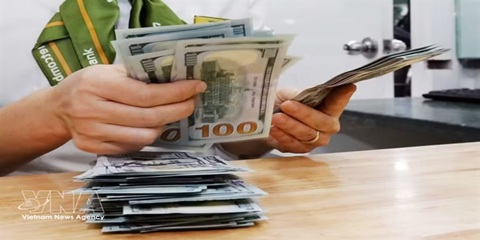
REMITTANCES TO HCM CITY RISE NEARLY 40% IN Q3
Remittances to HCM City reached more than US$2.83 billion in the third quarter of this year, up 39.5 per cent from the previous quarter and 3.6 per cent year-on-year. This was the first quarter showing positive annual growth this year, helping narrow the decline in remittance inflows over the first nine months. According to the State Bank of Vietnam (SBV)’s Regional Branch 2, remittances transferred to HCM City through credit institutions and economic organisations totalled $2.835 billion in Q3, an increase of more than $802 million from the previous quarter.
TECHNOLOGY
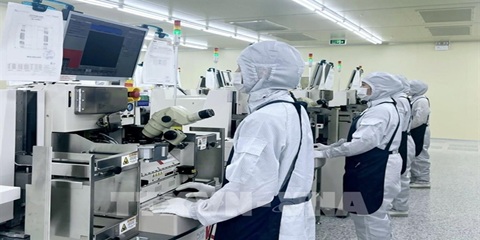
TECH SECTOR GROWTH OPENS UP OPPORTUNITIES FOR VIỆT NAM TO GO GLOBAL
The growth of the electronics, semiconductor and high-tech sectors worldwide is opening up a variety of opportunities for Vietnamese enterprises to integrate more deeply into the global supply chain. However, to become suppliers for these corporations, domestic enterprises must meet rigorous standards regarding quality, technology, productivity and order fulfilment capabilities.
VIETNAM ECONOMY INVESTMENT
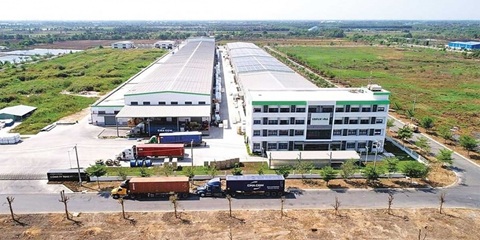
FOREIGN INVESTORS SEEKING A SYNCHRONISED MANUFACTURING ECOSYSTEM
Instead of focusing only on land costs and incentives as usual, foreign investors are seeking a synchronised manufacturing ecosystem, from stable power supply and logistics to shared infrastructure and the convenience of completing residence procedures for experts to serve their long-term investment in the country.
MEMBER CORNER / PROMOTIONS
SENTRYSAFE FHW40200 – PROTECT YOUR VALUABLES, ENJOY PEACE OF MIND!
Looking for a reliable solution to protect your important documents, cash, and valuables from fire and water damage? Genuine SENTRYSAFE - Reliable protection for your valuables and peace of mind! Contact Sen Wai Vietnam for more information and personalized product recommendations.
PROPERTY / INDUSTRIAL ZONE
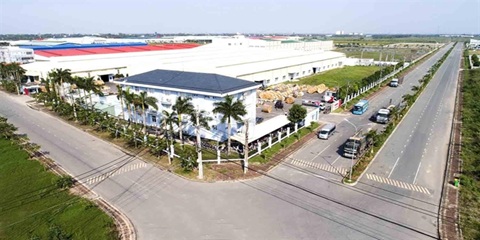
HCM CITY ATTRACTS US$5.7 BILLION INTO EXPORT PROCESSING AND INDUSTRIAL ZONES
HCM City attracted US$5.7 billion in domestic and foreign investment into its export processing and industrial zones during the first nine months of 2026. The figure exceeded the city's full-year target by 31 per cent, highlighting strong momentum in high-quality industrial investment under Resolution No.10-NQ/TW. Total investment reached 131 per cent of the 2026 target of $4.25 billion and represented a 29 per cent increase compared with the same period in 2025, according to the city's Export Processing and Industrial Zones Authority (HEPZA).
INFRASTRUCTURE / CONSTRUCTION / LOGISTIC / PORT
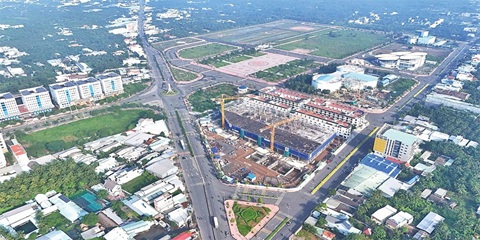
DONG THAP PROVINCE STEPS UP INDUSTRIAL EXPANSION AND INFRASTRUCTURE CONNECTIVITY
Accelerating public investment, strengthening inter-regional connectivity, and expanding industrial land are helping Dong Thap efficiently bolster competitiveness and drive economic growth. Following the 2025 merger of the former Dong Thap and Tien Giang provinces, the expanded Dong Thap province in the Mekong Delta faces mounting pressure to accelerate infrastructure development and strengthen connectivity among local economic zones, urban areas, industrial parks (IPs), and production centres.
Events Sponsors