Want to be in the loop?
subscribe to
our notification
Business News
VIETNAM CONTINUES TO SHINE IN GLOBAL APPAREL TRADE
By leveraging last year's robust recovery, Vietnam's garment and textiles sector is poised for significant growth in 2025, driven by shifting global demand, green production practices, and technological advancements.
Cao Huu Hieu, general director of Vietnam National Textile and Garment Group (Vinatex), acknowledged the challenges the industry faced from the outset of last year, including weak market demand and declining export prices. Nevertheless, a recovery in the latter half of the year enabled the sector to achieve its 11 per cent growth target.

Photo: baodautu.vn
"In the first half of 2024, our company struggled to meet targets due to sluggish market conditions," said Hieu. "However, a notable shift occurred in the second half of the year as political instability in markets such as Bangladesh redirected orders towards Vietnam, resulting in a substantial influx of new orders from July onwards."
Thanks to this recovery, Vinatex achieved significant improvements in business performance. The company’s consolidated revenue exceeded $754 million in 2024, reflecting a 2.8 per cent increase, while its consolidated profit surged to an estimated $30.8 million, up 37.5 per cent compared to 2023.
Pham Quang Anh, director of Dony Garment Co., Ltd. based in Ho Chi Minh City’s Binh Chanh district, believes that while market dynamics played a role, the company's impressive growth was primarily driven by its proactive market expansion strategies.
"Last year was significant for us, as we achieved a growth rate of over 70 per cent compared to 2023, far exceeding our initial target of 15 per cent set at the end of 2023," said Anh.
Dony’s success was driven by robust growth in markets such as the US and the Middle East, as well as the domestic market, which accounted for over 20 per cent of its growth last year. Success was also found in new markets, including Cambodia, Thailand, Malaysia, Singapore, and Russia. The company began exploring the African market mid-year and secured orders by year-end.
Experts anticipate sustained momentum for Vietnam’s apparel exports in 2025, underpinned by the sector’s ability to deliver high-quality products at competitive prices, bolstered by continued investments in advanced machinery and technology.
As a champion of integrated AI within the garment and textiles industry, Viet Thang Jean, a large southern-based fashion producer serving export markets, has made significant strides in digital transformation.
"The application of AI in areas such as production management and pattern-making has reduced data management workload by half, operational costs by 70 per cent, and improved data accuracy to 99 per cent," according to Pham Van Viet, chairman of Viet Thang Jean.
Amidst emerging trends and stringent standards for green production and raw material self-sufficiency, Tran Van Quy, general director of southern-based Trung Quy Textile Co., Ltd., emphasised the company’s focus on sustainable practices.
"Trung Quy is investing in green production, generating carbon credits, and remains on track to achieve net-zero emissions by the end of this year. We have allocated over $11.25 million to establish a 10,000 square-metre facility in the southern province of Long An, as part of its accelerated transition to green manufacturing," said Quy.
Advanced dyeing and weaving processes implemented at the facility enable water savings of 60-70 per cent compared to conventional methods.
These technologies ensure a closed production cycle and provide high-quality, internationally certified fabric to domestic garment manufacturers, with an annual capacity of 2 million metres of fabrics.
Trung Quy plans to expand its export footprint to major international markets, including the EU, the US, Japan, and Australia, later this year.
Source: VIR
Related News
VIETNAM ECONOMY INVESTMENT
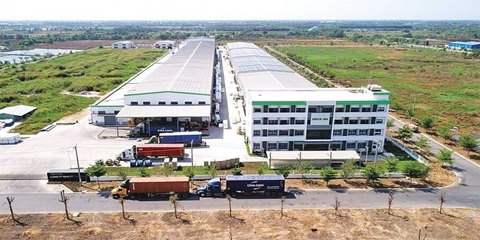
FOREIGN INVESTORS SEEKING A SYNCHRONISED MANUFACTURING ECOSYSTEM
Instead of focusing only on land costs and incentives as usual, foreign investors are seeking a synchronised manufacturing ecosystem, from stable power supply and logistics to shared infrastructure and the convenience of completing residence procedures for experts to serve their long-term investment in the country.
INFRASTRUCTURE / CONSTRUCTION / LOGISTIC / PORT
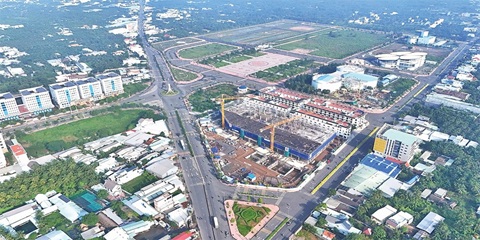
DONG THAP PROVINCE STEPS UP INDUSTRIAL EXPANSION AND INFRASTRUCTURE CONNECTIVITY
Accelerating public investment, strengthening inter-regional connectivity, and expanding industrial land are helping Dong Thap efficiently bolster competitiveness and drive economic growth. Following the 2025 merger of the former Dong Thap and Tien Giang provinces, the expanded Dong Thap province in the Mekong Delta faces mounting pressure to accelerate infrastructure development and strengthen connectivity among local economic zones, urban areas, industrial parks (IPs), and production centres.
PROPERTY / INDUSTRIAL ZONE
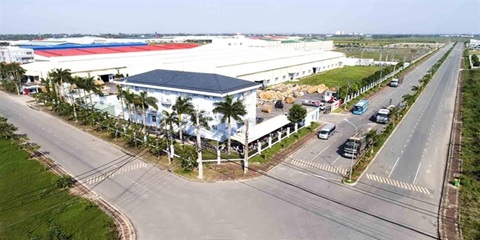
HCM CITY ATTRACTS US$5.7 BILLION INTO EXPORT PROCESSING AND INDUSTRIAL ZONES
HCM City attracted US$5.7 billion in domestic and foreign investment into its export processing and industrial zones during the first nine months of 2026. The figure exceeded the city's full-year target by 31 per cent, highlighting strong momentum in high-quality industrial investment under Resolution No.10-NQ/TW. Total investment reached 131 per cent of the 2026 target of $4.25 billion and represented a 29 per cent increase compared with the same period in 2025, according to the city's Export Processing and Industrial Zones Authority (HEPZA).

BANKING / FINANCE / INSURANCE / TAX
REMITTANCES TO HCM CITY RISE NEARLY 40% IN Q3
Remittances to HCM City reached more than US$2.83 billion in the third quarter of this year, up 39.5 per cent from the previous quarter and 3.6 per cent year-on-year. This was the first quarter showing positive annual growth this year, helping narrow the decline in remittance inflows over the first nine months. According to the State Bank of Vietnam (SBV)’s Regional Branch 2, remittances transferred to HCM City through credit institutions and economic organisations totalled $2.835 billion in Q3, an increase of more than $802 million from the previous quarter.
VIETNAM ECONOMY INVESTMENT
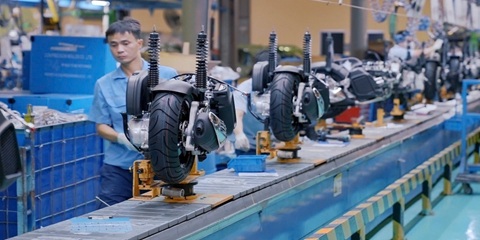
LOCALITIES REPORT BREAKTHROUGH RESULTS IN FDI IN FIRST NINE MONTHS
In Ho Chi Minh City, total registered capital reached $17.2 billion in the first nine months, up 4.2 times from the same period last year. The figure included more than $9.35 billion in newly registered capital and over $4.9 billion in additional capital for existing projects. Foreign investors also registered more than $2.9 billion through capital contributions and share purchases.

TECHNOLOGY
TECH SECTOR GROWTH OPENS UP OPPORTUNITIES FOR VIỆT NAM TO GO GLOBAL
The growth of the electronics, semiconductor and high-tech sectors worldwide is opening up a variety of opportunities for Vietnamese enterprises to integrate more deeply into the global supply chain. However, to become suppliers for these corporations, domestic enterprises must meet rigorous standards regarding quality, technology, productivity and order fulfilment capabilities.
Events Sponsors






















