Want to be in the loop?
subscribe to
our notification
Business News
VIETNAM CONTINUES TO BE ONE OF THE TOP FDI RECEIVERS IN ASEAN
Vietnam continues to be a magnet to foreign direct investment (FDI) in ASEAN as it is transforming into a production base for tech giants.
According to the latest report by HSBC, total FDI to ASEAN-6 (Singapore, Malaysia, Indonesia, Thailand, Vietnam, and the Philippines) has averaged nearly $127 billion per year since 2010, approximately three times more than the average over the previous decade – the average for 2000-09 was $41 billion.
Similarly, net FDI – inbound minus outbound direct investment – has averaged nearly $54 billion a year since 2010, almost four times the average from the previous decade.
Thinking of FDI-driven economic success stories, Vietnam naturally stands out. The country has turned itself into a rising star in global supply chains, gaining a substantial global market share in many sectors including textiles, footwear, and consumer electronics.
Since Vietnam’s Doi Moi reforms in 1986, industrial parks have been set up across the country, attracting investors with preferential tax incentives and an abundance of relatively cheap and productive labour. New FDI has been flowing into the country since the 2010s, with the lion’s share concentrated in the manufacturing sector, which consistently accounts for 4-6 per cent of GDP.

Much of the investment initially entered the low-value textile and footwear space, however, Vietnam has climbed up the value chain over the years, growing into a key manufacturing hub for electronics products in the last two decades.
Electronics exports reached a record high of $100 billion in 2021, accounting for over 30 per cent of Vietnam’s total exports – just 20 years ago, the share was only 5 per cent.
Much of the success in tech is thanks to Samsung’s multi-year FDI in Vietnam, which started in the late 2000s. With an investment of around $18 billion over the years, Samsung now has eight factories and one research and development centre in Vietnam, including two smartphone factories that produce half of the company’s smartphones and tablets.
The success of Samsung has led other tech giants, such as Google and LG, to shift their supply chains to Vietnam.
The trend intensified during the US-China trade tensions, which not only lifted Vietnam’s exports but also accelerated FDI inflows. Even though the process was partially disrupted by the pandemic, FDI inflows have remained remarkably resilient, in particular related to Apple-connected production.
For example, two Taiwanese Apple suppliers – Pegatron and Foxconn – and two mainland Chinese assemblers – Luxshare and Goertek – have all announced substantial investment plans to ramp up production capacity in Vietnam.
HSBC believes that Vietnam’s competitive FDI regime and sound macro fundamentals should continue to attract quality FDI, which is key in helping the economy move up the value chain.
Its tech ambition is far from just being a low-end manufacturing hub. However, this means that more reforms, including upskilling the workforce and improving infrastructure quality, are needed to grasp the opportunities.
According to another report by the Hinrich Foundation, Vietnam's increasing openness saw a higher increase in FDI stock as a percentage of GDP. Compared to its regional peers, the country changed from one of the most restricted to FDI to one of the most open.
One useful change was the revision of the Law on Investment policy, which restricted the ability of the central and subnational governments to issue regulations on investment. This change removed uncertainty and overlapping or contradictory legislation.
The latest data by the Ministry of Planning and Investment reveals that Vietnam lured over $14 billion in FDI in the first six months of 2022.
Among 84 countries and territories investing in Vietnam during this time, Singapore took the lead with a total investment capital of more than $4.1 billion, followed by South Korea with over $2.6 billion.
Source: VIR
Related News

BANKING / FINANCE / INSURANCE / TAX
REMITTANCES TO HCM CITY RISE NEARLY 40% IN Q3
Remittances to HCM City reached more than US$2.83 billion in the third quarter of this year, up 39.5 per cent from the previous quarter and 3.6 per cent year-on-year. This was the first quarter showing positive annual growth this year, helping narrow the decline in remittance inflows over the first nine months. According to the State Bank of Vietnam (SBV)’s Regional Branch 2, remittances transferred to HCM City through credit institutions and economic organisations totalled $2.835 billion in Q3, an increase of more than $802 million from the previous quarter.
TECHNOLOGY
TECH SECTOR GROWTH OPENS UP OPPORTUNITIES FOR VIỆT NAM TO GO GLOBAL
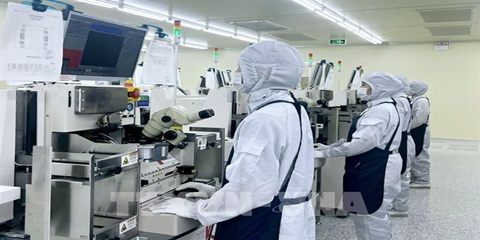
The growth of the electronics, semiconductor and high-tech sectors worldwide is opening up a variety of opportunities for Vietnamese enterprises to integrate more deeply into the global supply chain. However, to become suppliers for these corporations, domestic enterprises must meet rigorous standards regarding quality, technology, productivity and order fulfilment capabilities.
VIETNAM ECONOMY INVESTMENT
FOREIGN INVESTORS SEEKING A SYNCHRONISED MANUFACTURING ECOSYSTEM
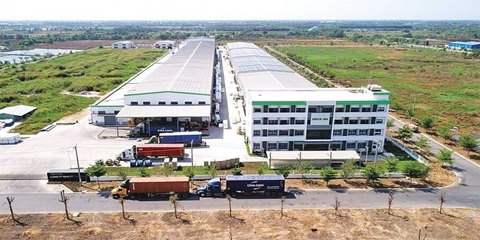
Instead of focusing only on land costs and incentives as usual, foreign investors are seeking a synchronised manufacturing ecosystem, from stable power supply and logistics to shared infrastructure and the convenience of completing residence procedures for experts to serve their long-term investment in the country.
MEMBER CORNER / PROMOTIONS
SENTRYSAFE FHW40200 – PROTECT YOUR VALUABLES, ENJOY PEACE OF MIND!
Looking for a reliable solution to protect your important documents, cash, and valuables from fire and water damage? Genuine SENTRYSAFE - Reliable protection for your valuables and peace of mind! Contact Sen Wai Vietnam for more information and personalized product recommendations.
PROPERTY / INDUSTRIAL ZONE
HCM CITY ATTRACTS US$5.7 BILLION INTO EXPORT PROCESSING AND INDUSTRIAL ZONES
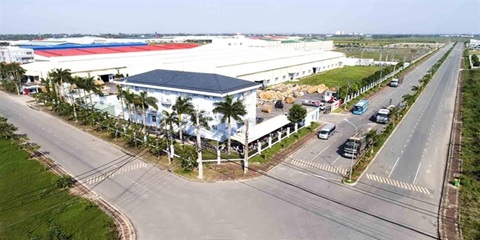
HCM City attracted US$5.7 billion in domestic and foreign investment into its export processing and industrial zones during the first nine months of 2026. The figure exceeded the city's full-year target by 31 per cent, highlighting strong momentum in high-quality industrial investment under Resolution No.10-NQ/TW. Total investment reached 131 per cent of the 2026 target of $4.25 billion and represented a 29 per cent increase compared with the same period in 2025, according to the city's Export Processing and Industrial Zones Authority (HEPZA).
INFRASTRUCTURE / CONSTRUCTION / LOGISTIC / PORT
DONG THAP PROVINCE STEPS UP INDUSTRIAL EXPANSION AND INFRASTRUCTURE CONNECTIVITY
Accelerating public investment, strengthening inter-regional connectivity, and expanding industrial land are helping Dong Thap efficiently bolster competitiveness and drive economic growth. Following the 2025 merger of the former Dong Thap and Tien Giang provinces, the expanded Dong Thap province in the Mekong Delta faces mounting pressure to accelerate infrastructure development and strengthen connectivity among local economic zones, urban areas, industrial parks (IPs), and production centres.
Events Sponsors






















