Want to be in the loop?
subscribe to
our notification
Business News
VIỆT NAM TARGETS US$2.4 BILLION IN GAMING INDUSTRY REVENUE BY 2029
Việt Nam’s gaming industry is projected to reach US$2.42 billion in revenue by 2029.

The sector is expected to generate US$1.66 billion by the end of 2025, with a compound annual growth rate of 9.77 per cent in the following years. Photo nguoiquansat.vn
HÀ NỘI — Việt Nam’s gaming industry is projected to reach US$2.42 billion in revenue by 2029, according to a recently released strategy on managing and developing online games in the country from 2025 to 2030.
The sector is expected to generate $1.66 billion by 2025, with a compound annual growth rate of 9.77 per cent in the following years. These figures reflect strong momentum in Việt Nam’s digital economy, where online entertainment is becoming a key component of economic and technological development.
Industry experts attribute this growth to Việt Nam’s favourable demographics. With a young, digitally literate population that quickly adapts to new technologies, the country has become a thriving market for both domestic and international game developers. The number of online games licensed and released each year continues to rise, illustrating the increasing demand for interactive digital content.
In recent years, Việt Nam has not only become a major consumer of online games but also an important development and outsourcing hub. Several games developed by 100 per cent Vietnamese teams, such as Free Fire, Caravan War, Metal Squad and Arena of Survivors, have achieved international recognition. This highlights the growing expertise of local developers in both content creation and game production.
Online games are officially recognised as a sub-sector of the digital content industry in Việt Nam. With high intellectual property value, the industry contributes significantly to the economy by generating revenue, creating employment for IT professionals and boosting exports of digital products.
A report by the Ministry of Information and Communications underscores Việt Nam’s strong position in the global mobile gaming sector. From 2022 to 2025, Việt Nam and Southeast Asia are projected to record the highest mobile game growth rate in the world at 7.4 per cent annually.
A separate report from Statista in 2024 estimates that mobile game revenue in Việt Nam will reach $712 million by 2029. In terms of global competitiveness, Việt Nam was ranked among the top five mobile game-producing countries in the world by Bloomberg in 2023, with 4.2 billion global downloads – 2.5 times higher than the global average.
In addition to organic growth, the rise of digital platforms, particularly TikTok, has played a transformative role in how games are marketed and discovered by Vietnamese users.
Data from the TikTok Marketing Science Global Gaming LiveOps Survey (2024) shows that 59 per cent of users discovered new games via creative content on the platform. Another 64 per cent reported engaging with game content integrated with music, lifestyle and entertainment themes.
TikTok’s tools and algorithms have helped game publishers in Việt Nam achieve outstanding performance metrics. Some game titles saw installations increase by over 313 per cent, while others achieved return on advertising spend (ROAS) 58 times higher than industry averages. Additionally, cost-per-install (CPI) for certain campaigns dropped by between 35 and 72 per cent. These figures illustrate how digital platforms are shaping the dynamics of the game market in the country.
Speaking at the Gaming on TikTok Hà Nội Summit 2025, Maayan Kolter, Global Development Director of Gaming at TikTok, said: “Việt Nam is currently emerging as one of the leading creative centres of the gaming industry in Southeast Asia. With the strong development of a passionate game-building community and Government support, Vietnamese game publishers not only create successful games domestically but also reach international audiences."
Đỗ Việt Hùng, vice president of the Asian Electronic Sports Federation (AESF) and president of the Việt Nam Entertainment Electronic Sports Association (VIRESA), said Việt Nam’s gaming industry is experiencing a “strong transformation,” in terms of both production capability and how it connects with users.
“Taking advantage of digital platforms like TikTok to promote creative content and build community is a strategic step forward for the industry. It enables local publishers to compete globally by adapting quickly to market trends,” he added.
The Hà Nội summit also introduced new marketing tools and strategic solutions designed to help game publishers optimise performance throughout the entire life cycle of a game – from pre-launch promotion to community engagement and long-term player retention.
TikTok representatives highlighted their ongoing commitment to supporting Việt Nam’s gaming industry by offering customised solutions for content localisation, trend forecasting and cross-platform promotion. These tools aim to support the long-term sustainable development of the sector.
As Việt Nam continues to strengthen its position in the global gaming market, industry leaders say collaboration between Government agencies, technology platforms and private developers will be key to maintaining competitiveness and driving innovation.
The Vietnamese gaming industry is not only generating impressive revenue, but also playing a vital role in the digital economy. With ongoing support from policymakers and growing engagement from global platforms, Việt Nam is well positioned to become a major player in the global gaming landscape. — VNS
Source: VNS
Related News

BANKING / FINANCE / INSURANCE / TAX
REMITTANCES TO HCM CITY RISE NEARLY 40% IN Q3
Remittances to HCM City reached more than US$2.83 billion in the third quarter of this year, up 39.5 per cent from the previous quarter and 3.6 per cent year-on-year. This was the first quarter showing positive annual growth this year, helping narrow the decline in remittance inflows over the first nine months. According to the State Bank of Vietnam (SBV)’s Regional Branch 2, remittances transferred to HCM City through credit institutions and economic organisations totalled $2.835 billion in Q3, an increase of more than $802 million from the previous quarter.

TECHNOLOGY
TECH SECTOR GROWTH OPENS UP OPPORTUNITIES FOR VIỆT NAM TO GO GLOBAL
The growth of the electronics, semiconductor and high-tech sectors worldwide is opening up a variety of opportunities for Vietnamese enterprises to integrate more deeply into the global supply chain. However, to become suppliers for these corporations, domestic enterprises must meet rigorous standards regarding quality, technology, productivity and order fulfilment capabilities.
VIETNAM ECONOMY INVESTMENT
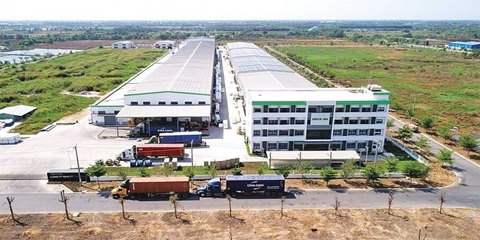
FOREIGN INVESTORS SEEKING A SYNCHRONISED MANUFACTURING ECOSYSTEM
Instead of focusing only on land costs and incentives as usual, foreign investors are seeking a synchronised manufacturing ecosystem, from stable power supply and logistics to shared infrastructure and the convenience of completing residence procedures for experts to serve their long-term investment in the country.

MEMBER CORNER / PROMOTIONS
SENTRYSAFE FHW40200 – PROTECT YOUR VALUABLES, ENJOY PEACE OF MIND!
Looking for a reliable solution to protect your important documents, cash, and valuables from fire and water damage? Genuine SENTRYSAFE - Reliable protection for your valuables and peace of mind! Contact Sen Wai Vietnam for more information and personalized product recommendations.
PROPERTY / INDUSTRIAL ZONE
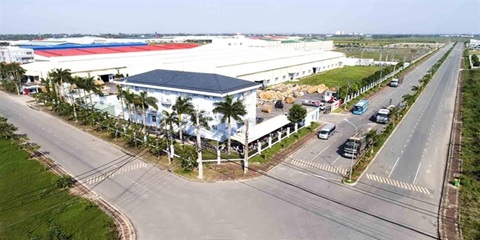
HCM CITY ATTRACTS US$5.7 BILLION INTO EXPORT PROCESSING AND INDUSTRIAL ZONES
HCM City attracted US$5.7 billion in domestic and foreign investment into its export processing and industrial zones during the first nine months of 2026. The figure exceeded the city's full-year target by 31 per cent, highlighting strong momentum in high-quality industrial investment under Resolution No.10-NQ/TW. Total investment reached 131 per cent of the 2026 target of $4.25 billion and represented a 29 per cent increase compared with the same period in 2025, according to the city's Export Processing and Industrial Zones Authority (HEPZA).
INFRASTRUCTURE / CONSTRUCTION / LOGISTIC / PORT
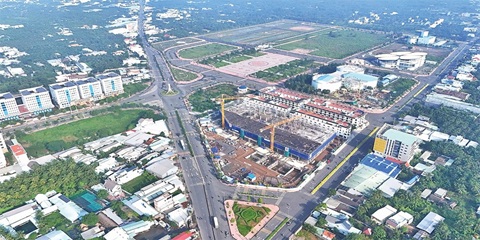
DONG THAP PROVINCE STEPS UP INDUSTRIAL EXPANSION AND INFRASTRUCTURE CONNECTIVITY
Accelerating public investment, strengthening inter-regional connectivity, and expanding industrial land are helping Dong Thap efficiently bolster competitiveness and drive economic growth. Following the 2025 merger of the former Dong Thap and Tien Giang provinces, the expanded Dong Thap province in the Mekong Delta faces mounting pressure to accelerate infrastructure development and strengthen connectivity among local economic zones, urban areas, industrial parks (IPs), and production centres.
Events Sponsors






















