Want to be in the loop?
subscribe to
our notification
Business News
VIỆT NAM'S WAREHOUSES DELIVER STEADY GROWTH AMID GLOBAL SLOWDOWN
In HCM City, prime warehouse rents average around US$5.3 per square metre per month, while in Hà Nội, rates are slightly higher at $5.5. Supported by a steady supply of new facilities and cost-conscious tenants, Việt Nam avoids the steep price spikes seen elsewhere.
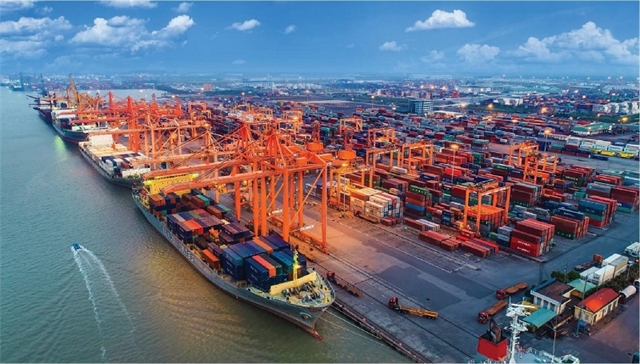
A view of Hải Phòng seaport which is one of important part at Việt Nam logistics system. Photo chinhphu.vn
HÀ NỘI — While major logistics hubs like London, Sydney and Dubai face soaring costs and slowing rental growth, Việt Nam is emerging as a standout market for warehouse investment. Offering reasonable rental rates and strong long-term potential, the country is carving out a crucial role in regional supply chains.
A recent global report from real estate consultancy Savills reveals that prime warehouse rents worldwide rose by only 1.1 per cent in the first half of 2025 - the slowest growth in three years. This follows a surge between 2020 and 2022, driven by the pandemic-fuelled e-commerce boom.
Economic uncertainty, rising interest rates and geopolitical tensions have cooled momentum globally, pushing tenants to reconsider costs and supply chain strategies amid an oversupply of warehouses. Yet Việt Nam bucks this trend, maintaining moderate and sustainable rental increases.
In HCM City, prime warehouse rents average around US$5.3 per square metre per month, while in Hà Nội, rates are slightly higher at $5.5. Supported by a steady supply of new facilities and cost-conscious tenants, Việt Nam avoids the steep price spikes seen elsewhere.
John Campbell, Head of Industrial Services at Savills Viet Nam, comments, “Việt Nam reflects the regional trend of stability seen across Asia-Pacific. With consistent supply and tenants who manage costs strategically, the market has maintained reasonable rent levels and avoided the dramatic surges experienced in other global hotspots.”
Beyond affordability, Việt Nam benefits from low land and construction costs compared with established logistics markets such as Japan and Singapore. Government efforts to boost investment in logistics infrastructure also help keep operational expenses manageable.
Strategically located in Southeast Asia, with a growing consumer market and political stability, Việt Nam attracts international logistics providers and manufacturers aiming to diversify supply chains. Infrastructure projects - including expressway expansions, port modernisations, and aviation logistics hubs - are further strengthening its logistics network.
Many global players now prefer Build-to-Suit warehouses in Việt Nam, offering tailored solutions that enhance flexibility and long-term savings.
Campbell notes, “We are seeing a clear trend toward long-term supply chain control. Tenants are prioritising scalability, ESG compliance, and operational control, which is why long-term land leases and custom-built warehouses are becoming more common.”
Locations near residential areas, seaports, or major transport nodes are receiving heightened interest from international investors. These strategic moves not only help reduce logistics costs but also provide businesses with greater flexibility to navigate market volatility.
To cement its status as a regional logistics hub, Việt Nam must advance multimodal transport integration, streamline customs, develop digital platforms, and invest in green logistics and skilled labour, especially in automation and technology.
With continued investment and policy support, Việt Nam is poised to evolve from a low-cost warehouse market into a fully integrated and sustainable logistics powerhouse in Asia-Pacific. — VNS
Source: VNS
Related News

MEMBER CORNER / PROMOTIONS
AN ELECTRIFYING NIGHT WITH THE "QUEEN OF DANCE" THU MINH AT THE GRAND HO TRAM!
The stage at The Grand Ballroom is set to catch fire as Vietnam’s undisputed "Queen of Dance," Thu Minh, takes the spotlight. Renowned for her powerhouse vocals, magnetic stage presence, and sultry, high-energy performances, Thu Minh promises an evening of pure musical euphoria. The energy escalates with an exclusive appearance by special guest and The Voice champion, Vu Thao My.

HR / LABOUR/ EMPLOYMENT
HIGH-QUALITY HUMAN RESOURCES NEEDED TO ATTRACT NEW TECH INVESTMENT CAPITAL
Besides infrastructure, Việt Nam must also rapidly develop a highly skilled workforce to attract investment in AI, semiconductors and advanced manufacturing, experts have said. Don Lam, CEO and co-founder of investment management company VinaCapital, said that global technology investors were increasingly looking at the readiness of the entire ecosystem, with high-quality human resources a decisive factor.

HR / LABOUR/ EMPLOYMENT
HIRING OUTLOOK STRENGTHENS IN Q4 AS SKILLS SHORTAGES PERSIST
Hiring intentions among employers in Việt Nam strengthened in the fourth quarter, with 52 per cent of surveyed companies planning to increase headcount between October and December, according to a ManpowerGroup survey released this week. Việt Nam's hiring outlook was stronger than the Asia Pacific and Middle East (APME) regional average of 33 per cent and the global average of 29 per cent, ranking third in the region and 11th globally among 42 markets surveyed.

BANKING / FINANCE / INSURANCE / TAX
LARGE BANKS FORECAST TO GAIN HIGHER PROFITABILITY IN H2 2026
The return on average assets (ROAA) of the banking sector will likely remain stable at around 1.5 per cent in the second half of 2026, but profitability divergence among banks will increase, with large banks outperforming peers on stronger margins and diversified earnings, analysts forecast. In a recent report on the banking sector, analysts from the Vietnam Investors Service Rating said the sector’s ROAA rose by 10 basis points quarter-on-quarter to 1.51 per cent in the first half of this year, driven by net interest margin (NIM) improvements at some State-owned banks and large private banks.
GARMENT / TEXTILE
VIỆT NAM'S FOOTWEAR, BAG EXPORTS TO US TOP $8 BILLION IN EIGHT MONTHS
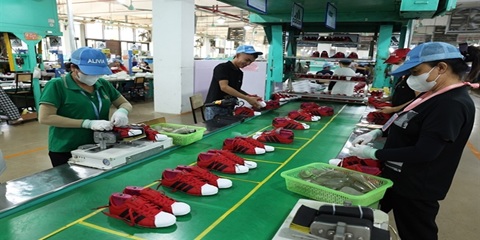
Việt Nam's exports of footwear and handbags to the US exceeded US$8 billion in the first eight months of 2026, as the US and EU remained the country's biggest markets despite sluggish growth in footwear shipments. Exports from Việt Nam's leather and footwear sector reached more than $2.45 billion in August, down 9 per cent from July but up 3 per cent from a year earlier, according to preliminary statistics.
VIETNAM ECONOMY INVESTMENT
LÂM ĐỒNG TARGETS DIGITAL ECONOMY TO ACCOUNT FOR 30 PER CENT OF GRDP BY 2030
Lâm Đồng Province aims to raise the digital economy’s contribution to around 30 per cent of its gross regional domestic product (GRDP) by 2030, as part of a five-year plan to develop digital economy and society issued recently. Under Plan No. 15358/KH-UBND, the province targets more than 60 per cent of small- and medium-sized enterprises (SMEs) to adopt digital technologies by 2030 while increasing the value of cashless payments to 30 times its GRDP.
Events Sponsors






















