Want to be in the loop?
subscribe to
our notification
Business News
VIÊT NAM’S TEXTILE SECTOR THREADS THROUGH RECORD EXPORT MOMENTUM
According to the Vietnam Textile and Apparel Association (VITAS), the industry has expanded its export reach to 132 countries and territories this year, up from 104 in 2024.
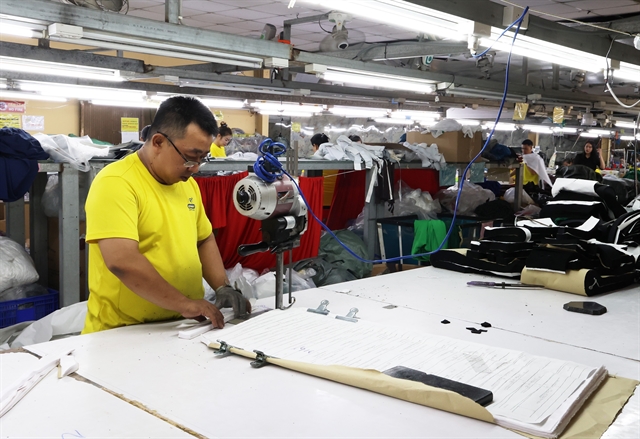
Sample designs for export production underway at DONY Garment Co in HCM City.— VNA/VNS Photos
HÀ NỘI — Việt Nam’s textile and garment industry is charging into the final months of 2025 with robust momentum, aiming to meet an ambitious export target of US$47–48 billion, buoyed by strong order flows and growing global reach.
Since the start of the year, the industry has received encouraging signals. Export turnover in the first seven months of 2025 reached more than $26.33 billion, up $5.3 billion, or 9 per cent, compared with the same period in 2024. Many enterprises have already secured orders through the end of the year, sustaining growth through to the year’s close.
To reach the annual target, exports must average over $4 billion per month for the remainder of the year. While this presents a challenge, industry experts believe the goal is achievable given the current growth trajectory.
According to the Vietnam Textile and Apparel Association (VITAS), the industry has expanded its export reach to 132 countries and territories this year, up from 104 in 2024. Notably, Việt Nam is now exporting high-quality garment products to China, as well as strengthening its market presence in Russia, the Commonwealth of Independent States (CIS), and ASEAN nations.
In addition, Vietnamese enterprises are pursuing overseas investment projects in Mexico and Myanmar, with further expansion planned in India and Egypt. This broader footprint demonstrates Việt Nam’s strengthened position on the global textile and garment map.
Chairman of VITAS Vũ Đức Giang said that with growth exceeding 10 per cent, the sector had a solid foundation to meet its ambitious targets.
However, he stressed that continued success depended on enterprises making effective use of 17 new-generation free trade agreements (FTAs), while adapting to shifting trade dynamics and differing economic policies across major markets.
Simultaneously, the industry needed adaptive solutions to cope with evolving global conditions and regulatory frameworks, as some major economies remained divided over trade and economic policies.
Each enterprise must reinforce its supply chain linkages. Drawing lessons from tariff disputes and Europe’s stringent green-product standards, businesses were encouraged to proactively develop more sustainable and resilient value chains, Giang said.
Chairman of the Vietnam National Textile and Garment Group (Vinatex) Lê Tiến Trường emphasised the importance of wisely adjusting production plans in the coming months to safeguard jobs and ensure stable incomes for workers.
He also said that enterprises must adopt flexible financial management strategies to stay competitive, absorb rising input costs and adapt pricing mechanisms to retain orders in an increasingly challenging global market.
Shifting toward green and high-value production
To meet increasingly strict requirements in demanding markets, many garment enterprises are accelerating their transition towards green production and sustainable development.
Companies are investing in modern machinery, upgrading workers’ skills, and shifting from traditional cut‑make‑trim (CMT) models to higher‑value methods such as FOB (free on board), ODM (original design manufacturing), and OBM (original brand manufacturing).
These efforts not only raise product value but also strengthen Việt Nam’s competitiveness in global supply chains.
Trường said that his group’s member companies were striving to maximise existing production capacity in order to meet their export targets.
Key measures included optimising machinery and equipment efficiency, boosting productivity and tightening cost control to reduce resource consumption.
At the same time, enterprises were developing niche products to create unique value, strengthening the link between research and development and actual market orders and promoting digital transformation to enhance governance.
Vinatex had set a consolidated revenue target of more than VNĐ18.31 trillion for 2025—equivalent to last year’s level—alongside a pre‑tax profit goal of VNĐ910 billion, a year‑on‑year increase of 9 per cent, Trường told daidoanket.vn.
To achieve these targets, his group would focus on stabilising its export markets—particularly in the US, Japan, and the EU—while also exploring new and emerging markets.
VITAS chairman Vũ Đức Giang said despite challenges from increasingly strict US tariff policies and global trade uncertainties, Việt Nam’s textile and garment exports still had significant room for growth. He affirmed that the industry was fully capable of reaching the $48 billion export milestone this year. — VNS
Source: VNS
Related News

VIETNAM ECONOMY INVESTMENT
FOREIGN INVESTORS SEEKING A SYNCHRONISED MANUFACTURING ECOSYSTEM
Instead of focusing only on land costs and incentives as usual, foreign investors are seeking a synchronised manufacturing ecosystem, from stable power supply and logistics to shared infrastructure and the convenience of completing residence procedures for experts to serve their long-term investment in the country.

INFRASTRUCTURE / CONSTRUCTION / LOGISTIC / PORT
DONG THAP PROVINCE STEPS UP INDUSTRIAL EXPANSION AND INFRASTRUCTURE CONNECTIVITY
Accelerating public investment, strengthening inter-regional connectivity, and expanding industrial land are helping Dong Thap efficiently bolster competitiveness and drive economic growth. Following the 2025 merger of the former Dong Thap and Tien Giang provinces, the expanded Dong Thap province in the Mekong Delta faces mounting pressure to accelerate infrastructure development and strengthen connectivity among local economic zones, urban areas, industrial parks (IPs), and production centres.

PROPERTY / INDUSTRIAL ZONE
HCM CITY ATTRACTS US$5.7 BILLION INTO EXPORT PROCESSING AND INDUSTRIAL ZONES
HCM City attracted US$5.7 billion in domestic and foreign investment into its export processing and industrial zones during the first nine months of 2026. The figure exceeded the city's full-year target by 31 per cent, highlighting strong momentum in high-quality industrial investment under Resolution No.10-NQ/TW. Total investment reached 131 per cent of the 2026 target of $4.25 billion and represented a 29 per cent increase compared with the same period in 2025, according to the city's Export Processing and Industrial Zones Authority (HEPZA).

BANKING / FINANCE / INSURANCE / TAX
REMITTANCES TO HCM CITY RISE NEARLY 40% IN Q3
Remittances to HCM City reached more than US$2.83 billion in the third quarter of this year, up 39.5 per cent from the previous quarter and 3.6 per cent year-on-year. This was the first quarter showing positive annual growth this year, helping narrow the decline in remittance inflows over the first nine months. According to the State Bank of Vietnam (SBV)’s Regional Branch 2, remittances transferred to HCM City through credit institutions and economic organisations totalled $2.835 billion in Q3, an increase of more than $802 million from the previous quarter.
VIETNAM ECONOMY INVESTMENT
LOCALITIES REPORT BREAKTHROUGH RESULTS IN FDI IN FIRST NINE MONTHS
In Ho Chi Minh City, total registered capital reached $17.2 billion in the first nine months, up 4.2 times from the same period last year. The figure included more than $9.35 billion in newly registered capital and over $4.9 billion in additional capital for existing projects. Foreign investors also registered more than $2.9 billion through capital contributions and share purchases.

TECHNOLOGY
TECH SECTOR GROWTH OPENS UP OPPORTUNITIES FOR VIỆT NAM TO GO GLOBAL
The growth of the electronics, semiconductor and high-tech sectors worldwide is opening up a variety of opportunities for Vietnamese enterprises to integrate more deeply into the global supply chain. However, to become suppliers for these corporations, domestic enterprises must meet rigorous standards regarding quality, technology, productivity and order fulfilment capabilities.
Events Sponsors






















