Want to be in the loop?
subscribe to
our notification
Business News
VIỆT NAM'S RURAL MARKET OFFERS MAJOR GROWTH OPPORTUNITY FOR RETAILERS
Việt Nam's rural areas are emerging as a major growth opportunity for the retail sector, with about 65 per cent of the population, or more than 60 million people, still relying largely on traditional markets and small grocery shops.
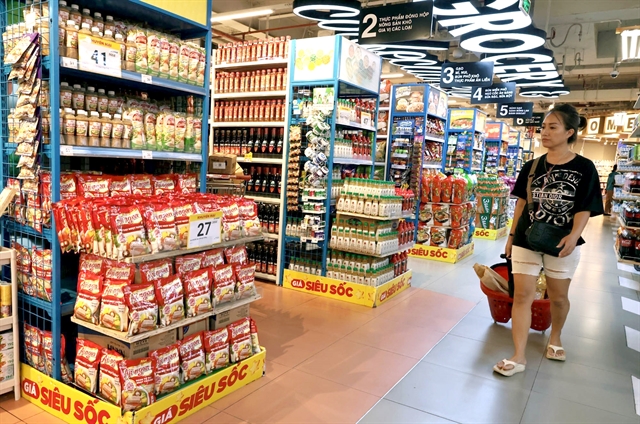
WinCommerce opened around 800 new stores in 2025, with nearly 70 per cent located in rural areas. VNA/VNS Photo
HÀ NỘI — Việt Nam's rural areas are emerging as a major growth opportunity for the retail sector, with more than 60 million people, or about 65 per cent of the population, still relying largely on traditional markets and small grocery shops.
Citing data from the Statistics Department under the Ministry of Finance, economists estimate that total retail sales of goods and consumer services could reach US$305 billion in 2026. The rural retail market alone is estimated to be worth around $50 billion.
Meanwhile, average annual income in rural Việt Nam reached about VNĐ58 million ($2,200) per person by 2025, about 1.4 times the level recorded in 2020.
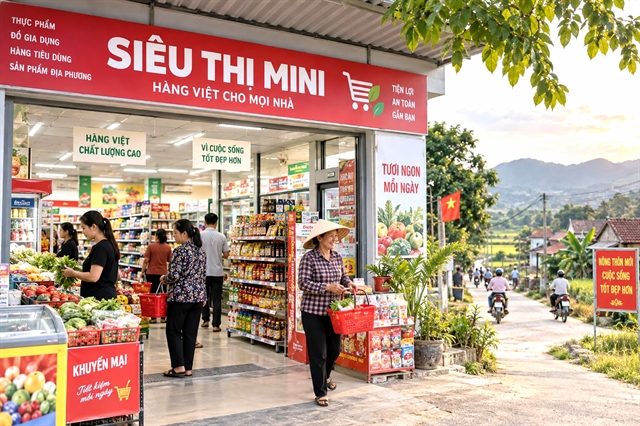
RURAL: A minimart near Hà Nội. Photo thuongtruong. com.vn
Although living standards in rural areas have improved, the market remains largely dependent on traditional wet markets and small independent retailers. Despite its potential, many businesses have yet to fully tap into it.
Vũ Kim Anh, deputy director of the Centre for Business Research and Enterprise Support, said rural consumers were increasingly seeking more modern and convenient shopping options and buying products such as washing machines, water heaters and air conditioners similar to those purchased by urban households.
"This is a highly promising market that retail businesses need to focus their investment on," she said.
Đặng Thuý Hà, customer behaviour director at Nielsen Việt Nam, said Vietnamese supermarket chains had made numerous mobile sales trips to rural areas in recent years, but such campaigns were generally unprofitable because companies had to bear the high financial and labour costs themselves.
That might explain why relatively few retailers have invested heavily in the rural market, she said.
Growth frontier
The Association of High-Quality Vietnamese Goods Enterprises said Việt Nam's retail market was entering a period of intense competition, with domestic and foreign retailers accelerating the expansion of their distribution networks nationwide.
It said rural areas represented a major source of growth for the retail sector over the next decade and urged retailers to shift some of their focus away from major cities towards rural markets.
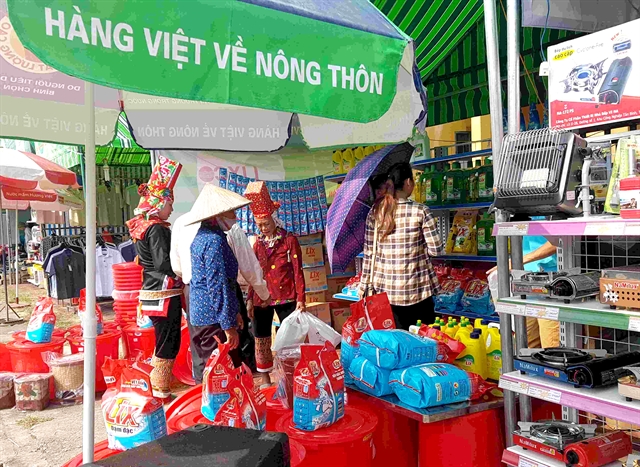
GOODS: A shop of consumer staples in Sơn La Province. Rural areas remain largely dependent on traditional wet markets and small, independent shops. Photo tapchikinhtetaichinh.vn
Several major retailers and retail groups have recently begun opening small- and medium-sized supermarkets and convenience store chains across provinces and cities.
Central Retail, which has operated in Việt Nam since 2012, currently has about 330 supermarkets and stores under the Go!, Big C and Tops Market brands nationwide, serving around 500,000 customers a day. Meanwhile, AEON Việt Nam had opened hundreds of outlets, including shopping centres, small- and medium-sized supermarkets and convenience stores across several provinces and cities by 2025.
WinCommerce has been particularly aggressive in expanding its footprint. It opened around 800 new stores in 2025, with nearly 70 per cent located in rural areas. By mid-2026, the company had opened its 5,000th store nationwide, doubling the size of its network in less than seven years.
Beyond cities
Alongside growing demand, retailers are under pressure to find new sources of growth. In major cities, store density is rising, rents are increasing and competition among retail chains is intensifying. This has made opening new stores in central urban areas less attractive than in the past.
Rural areas, by contrast, offer several advantages. Lower rents, easier access to land and less competition can help retailers shorten the time needed to recoup their investments. Improvements in transport infrastructure, logistics and industrial zones in recent years have also made it increasingly feasible to distribute goods to districts and towns at reasonable cost.
According to a WinCommerce representative, rural areas remain a market with significant potential, as around 65 per cent of Việt Nam's population lives there while the penetration of modern retail remains low. As major cities approach saturation, many districts and towns still offer limited modern shopping options despite rising purchasing power.
To develop rural retail markets, the chairwoman of the Việt Nam Association of Retailers, Trần Thị Phương Lan, said businesses needed to understand local customs, shopping habits and consumer behaviour.
She said retailers could initially enter rural markets with essential food products at affordable prices before gradually expanding into higher-value goods.
Understanding consumers' shopping behaviour would be critical, allowing retailers to maintain existing fixed outlets while developing new distribution networks to reach consumers directly, she said.
Economists say that while retailers have begun investing in rural markets, the Government needs to introduce policies and incentives to attract more investment in retail infrastructure.
Lâm Tuấn Hưng, a researcher at the Institute for Industry and Trade Strategy and Policy under the Ministry of Industry and Trade, said rural areas had substantial potential and would require coordination between the Government, businesses and industry associations.
The Government should take the lead in improving the business environment, strengthening the competitiveness of retailers and developing modern infrastructure and logistics, he said.
According to Vũ Kim Hạnh, chairwoman of the Association of High-Quality Vietnamese Goods Enterprises, incomes and living standards are improving significantly in many localities. Consumers outside urban areas are no longer focused solely on low prices, but are paying increasing attention to quality, brands and product origins.
That shift is creating opportunities for modern retail chains to expand into markets that have previously depended on traditional markets and small shops.
The gap in living standards and consumer behaviour between urban and rural areas is also narrowing. In rural areas, demand is now rising for packaged food, fast-moving consumer goods, healthcare products and branded goods.
Economists forecast that Việt Nam's retail sector will maintain annual growth of 10-12 per cent over the longer term. By 2030, total retail sales of goods and consumer services could reach around $450 billion. VNS
Source: VNS
Related News

BANKING / FINANCE / INSURANCE / TAX
REMITTANCES TO HCM CITY RISE NEARLY 40% IN Q3
Remittances to HCM City reached more than US$2.83 billion in the third quarter of this year, up 39.5 per cent from the previous quarter and 3.6 per cent year-on-year. This was the first quarter showing positive annual growth this year, helping narrow the decline in remittance inflows over the first nine months. According to the State Bank of Vietnam (SBV)’s Regional Branch 2, remittances transferred to HCM City through credit institutions and economic organisations totalled $2.835 billion in Q3, an increase of more than $802 million from the previous quarter.

TECHNOLOGY
TECH SECTOR GROWTH OPENS UP OPPORTUNITIES FOR VIỆT NAM TO GO GLOBAL
The growth of the electronics, semiconductor and high-tech sectors worldwide is opening up a variety of opportunities for Vietnamese enterprises to integrate more deeply into the global supply chain. However, to become suppliers for these corporations, domestic enterprises must meet rigorous standards regarding quality, technology, productivity and order fulfilment capabilities.
VIETNAM ECONOMY INVESTMENT
FOREIGN INVESTORS SEEKING A SYNCHRONISED MANUFACTURING ECOSYSTEM
Instead of focusing only on land costs and incentives as usual, foreign investors are seeking a synchronised manufacturing ecosystem, from stable power supply and logistics to shared infrastructure and the convenience of completing residence procedures for experts to serve their long-term investment in the country.
MEMBER CORNER / PROMOTIONS
SENTRYSAFE FHW40200 – PROTECT YOUR VALUABLES, ENJOY PEACE OF MIND!
Looking for a reliable solution to protect your important documents, cash, and valuables from fire and water damage? Genuine SENTRYSAFE - Reliable protection for your valuables and peace of mind! Contact Sen Wai Vietnam for more information and personalized product recommendations.
PROPERTY / INDUSTRIAL ZONE
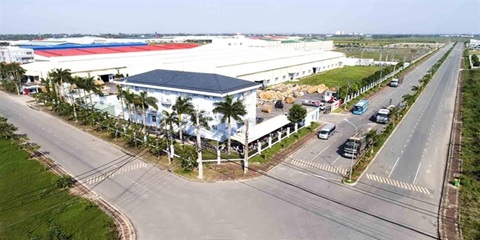
HCM CITY ATTRACTS US$5.7 BILLION INTO EXPORT PROCESSING AND INDUSTRIAL ZONES
HCM City attracted US$5.7 billion in domestic and foreign investment into its export processing and industrial zones during the first nine months of 2026. The figure exceeded the city's full-year target by 31 per cent, highlighting strong momentum in high-quality industrial investment under Resolution No.10-NQ/TW. Total investment reached 131 per cent of the 2026 target of $4.25 billion and represented a 29 per cent increase compared with the same period in 2025, according to the city's Export Processing and Industrial Zones Authority (HEPZA).
INFRASTRUCTURE / CONSTRUCTION / LOGISTIC / PORT
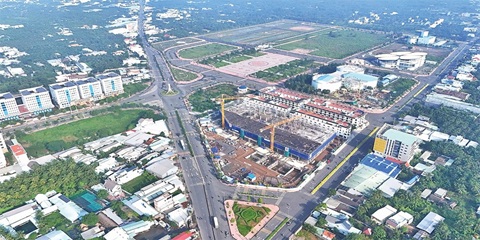
DONG THAP PROVINCE STEPS UP INDUSTRIAL EXPANSION AND INFRASTRUCTURE CONNECTIVITY
Accelerating public investment, strengthening inter-regional connectivity, and expanding industrial land are helping Dong Thap efficiently bolster competitiveness and drive economic growth. Following the 2025 merger of the former Dong Thap and Tien Giang provinces, the expanded Dong Thap province in the Mekong Delta faces mounting pressure to accelerate infrastructure development and strengthen connectivity among local economic zones, urban areas, industrial parks (IPs), and production centres.
Events Sponsors






















