Want to be in the loop?
subscribe to
our notification
Business News
VIỆT NAM’S GARMENT INDUSTRY REBOUNDS, BUT CHALLENGES LOOM
Businesses in the sector are facing mounting challenges - from high capital and logistics costs to growing pressure to green their operations and navigate shifting trade policies.
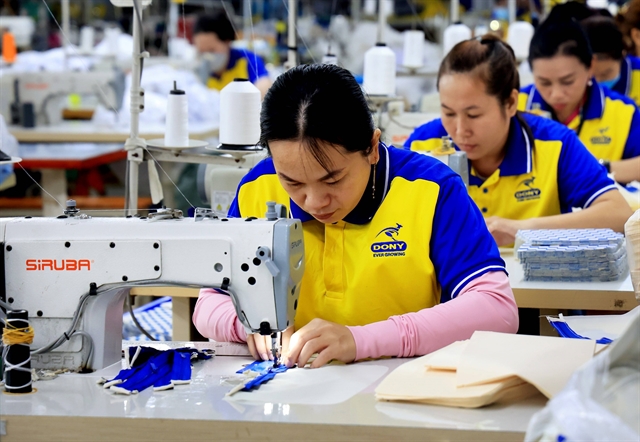
The textile and garment industry’s export turnover reached US$34.75 billion in the first nine months of 2025. VNA/VNS Photos
The textile and garment industry has shown clear signs of recovery in 2025, bouncing back after a difficult period of stagnation.
However, businesses in the sector continue to face mounting challenges, from high capital and logistics costs to growing pressure to green their operations and navigate shifting trade policies.
According to Vũ Đức Giang, chairman of the Việt Nam Textile and Apparel Association (VITAS), the industry’s export turnover reached US$34.75 billion in the first nine months of 2025, an increase of 7.7 per cent year-on-year. This marks a robust comeback and highlights the resilience of Việt Nam’s textile exports in the global market.
Despite the gains, the industry remains heavily reliant on imported raw materials, with import turnover totalling $16 billion, including $11 billion for fabric alone. This dependency poses significant risks, particularly as global trade dynamics shift.
Việt Nam has now climbed to third place globally in textile and garment exports, a major leap from its earlier role as a low-cost processing hub.
Giang said high-value-added products were becoming a larger share of exports, signalling the industry’s move beyond contract manufacturing to brand-building and innovation.
Vietnamese textile and garment products are now exported to 138 countries, boosted by 16 free trade agreements (FTAs), with that number expected to grow to 22 by 2027.
Emerging markets like the Middle East and Africa offer new growth opportunities, according to Giang. Once overlooked, these regions have become more prominent.
In 2024, exports to Islamic countries alone reached $1 billion, and by July 2025, revenue from the Middle East had already hit $700 million.
Vietnamese firms are also targeting premium segments, offering products with higher design and technological content – a move that supports long-term competitiveness.
Rising costs
One of the biggest hurdles is production costs, which are about 40-45 per cent higher in Việt Nam compared to Indonesia, Malaysia and Myanmar – despite Vietnamese labour being around 40 per cent more productive.
On the upside, the industry is rapidly embracing automation and green technologies, becoming second only to China in regional supply chain modernisation.
However, logistics remain a bottleneck.
According to Đặng Thị Minh Phương, chairwoman of the HCM City Logistics Association, shipping and warehousing costs have surged. Despite salaries of VNĐ35-40 million ($1,300-1,500) per month, businesses are struggling to recruit container drivers.
She urged firms to restructure supply chains and invest in logistics technology to improve competitiveness.
Besides that, the shift from traditional processing models to FOB (Free on Board) and DDP (Delivered Duty Paid) purchasing methods has changed the financial landscape.
Giang stressed the need for stronger cooperation between banks and exporters, urging banks to offer tailored credit packages aligned with modern contract terms.
“Banks must understand the nature of today’s export contracts and build trust with businesses through transparency,” Giang said.
“Only then can we ensure a stable flow of capital to support growth.”
Trade policy is also a pressing concern. The US imposed a 20 per cent reciprocal tax on Vietnamese textile and garment products (down from an initially proposed 40 per cent), significantly impacting export dynamics.
While the first nine months of 2025 saw steady demand as customers rushed to place orders ahead of the tax implementation, new orders from the US have since dropped sharply.
With buyers now demanding that Vietnamese producers absorb part of the tariff cost, profit margins are shrinking.
Furthermore, US authorities have signalled potential tax hikes on products lacking clear origin documentation, in a bid to prevent transit-based origin evasion – a warning to Vietnamese firms re-exporting goods from China.
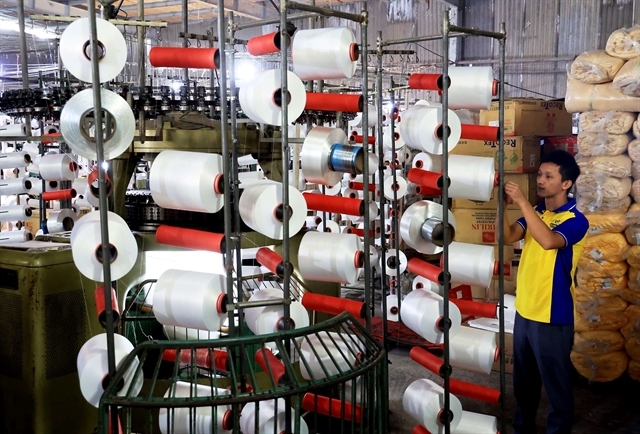
Việt Nam currently imports 100 per cent of its cotton and up to 95 per cent of its synthetic fibres.
Local input gaps
Additionally, Việt Nam currently imports 100 per cent of its cotton and up to 95 per cent of its synthetic fibres. Chemicals and dyes are also almost entirely imported. This lack of domestic input production remains a major weakness, especially under tightening origin rules and shifting trade policies.
To mitigate risks, industry leaders are calling for increased localisation of raw materials, ensuring traceability and reducing exposure to foreign supply shocks.
Despite the industry's export success, brand development remains a longstanding weakness.
“Vietnamese fashion brands are still small and in the early stages,” said Vinatex general director Cao Hữu Hiếu. “Meanwhile, international brands dominate even in our domestic market.”
Major global brands invest heavily in design talent, which is currently lacking in Việt Nam, according to Hiếu. Building a strong brand identity, especially in fashion, requires a long-term commitment to training, design, and product differentiation.
While Việt Nam has made strides in automation, its overall productivity remains moderate compared to other leading textile producers in Asia and Europe. Investments in modern machinery, smart factories, and automation are seen as essential to maintaining competitiveness.
Hiếu noted that Vinatex’s strategic goal was to become a complete solutions provider for green fashion – from yarn and fabric to finished garments. The company planned to focus on sustainable, circular, and recycled products, aligning with global trends in eco-conscious consumption. VNS
Source: VNS
Related News
VIETNAM ECONOMY INVESTMENT
FOREIGN INVESTORS SEEKING A SYNCHRONISED MANUFACTURING ECOSYSTEM
Instead of focusing only on land costs and incentives as usual, foreign investors are seeking a synchronised manufacturing ecosystem, from stable power supply and logistics to shared infrastructure and the convenience of completing residence procedures for experts to serve their long-term investment in the country.
INFRASTRUCTURE / CONSTRUCTION / LOGISTIC / PORT
DONG THAP PROVINCE STEPS UP INDUSTRIAL EXPANSION AND INFRASTRUCTURE CONNECTIVITY
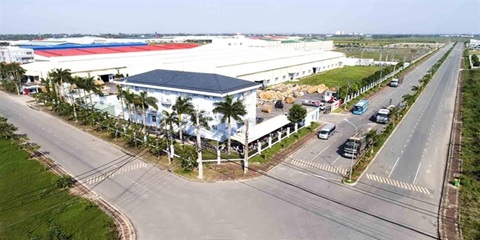
Accelerating public investment, strengthening inter-regional connectivity, and expanding industrial land are helping Dong Thap efficiently bolster competitiveness and drive economic growth. Following the 2025 merger of the former Dong Thap and Tien Giang provinces, the expanded Dong Thap province in the Mekong Delta faces mounting pressure to accelerate infrastructure development and strengthen connectivity among local economic zones, urban areas, industrial parks (IPs), and production centres.
PROPERTY / INDUSTRIAL ZONE
HCM CITY ATTRACTS US$5.7 BILLION INTO EXPORT PROCESSING AND INDUSTRIAL ZONES
HCM City attracted US$5.7 billion in domestic and foreign investment into its export processing and industrial zones during the first nine months of 2026. The figure exceeded the city's full-year target by 31 per cent, highlighting strong momentum in high-quality industrial investment under Resolution No.10-NQ/TW. Total investment reached 131 per cent of the 2026 target of $4.25 billion and represented a 29 per cent increase compared with the same period in 2025, according to the city's Export Processing and Industrial Zones Authority (HEPZA).

BANKING / FINANCE / INSURANCE / TAX
REMITTANCES TO HCM CITY RISE NEARLY 40% IN Q3
Remittances to HCM City reached more than US$2.83 billion in the third quarter of this year, up 39.5 per cent from the previous quarter and 3.6 per cent year-on-year. This was the first quarter showing positive annual growth this year, helping narrow the decline in remittance inflows over the first nine months. According to the State Bank of Vietnam (SBV)’s Regional Branch 2, remittances transferred to HCM City through credit institutions and economic organisations totalled $2.835 billion in Q3, an increase of more than $802 million from the previous quarter.
VIETNAM ECONOMY INVESTMENT
LOCALITIES REPORT BREAKTHROUGH RESULTS IN FDI IN FIRST NINE MONTHS
In Ho Chi Minh City, total registered capital reached $17.2 billion in the first nine months, up 4.2 times from the same period last year. The figure included more than $9.35 billion in newly registered capital and over $4.9 billion in additional capital for existing projects. Foreign investors also registered more than $2.9 billion through capital contributions and share purchases.

TECHNOLOGY
TECH SECTOR GROWTH OPENS UP OPPORTUNITIES FOR VIỆT NAM TO GO GLOBAL
The growth of the electronics, semiconductor and high-tech sectors worldwide is opening up a variety of opportunities for Vietnamese enterprises to integrate more deeply into the global supply chain. However, to become suppliers for these corporations, domestic enterprises must meet rigorous standards regarding quality, technology, productivity and order fulfilment capabilities.
Events Sponsors






















