Want to be in the loop?
subscribe to
our notification
Business News
VIỆT NAM’S CREDIT CONDITIONS TO REMAIN STABLE IN H2 2025
Despite external pressure, the stable outlook is attributed to the strong domestic operating conditions and supportive policies, which have served as a crucial shock absorber.

The most direct beneficiaries are sectors tied to the government's domestic stimulus, including the infrastructure and construction sectors. Photo cafef.vn
HÀ NỘI — Việt Nam’s credit conditions will remain stable in the second half of 2025, supported by proactive fiscal measures and ongoing institutional reforms, according to analysts of the Vietnam Investors Service (VIS) Rating, an affiliate of Moody’s.
Nguyễn Lý Thanh Lương, Lead Analyst of VIS Rating, notes that despite external pressure, the stable outlook was attributed to the strong domestic operating conditions and supportive policies, which served as a crucial shock absorber.
Lương said: “The government's decisive focus on domestic stimulus and structural reforms is expected to contain the broader impact and soften the blow to the overall economy. Some sectors even earned positive benefits from such strong policy measures and an active domestic market, as opposed to sectors that rely more on the external market. This interplay between external pressure and domestic support is what creates a clear divergence across the market.”
The most direct beneficiaries are sectors tied to the government's domestic stimulus. With accelerated public investment, the infrastructure and construction sectors are clear winners, benefiting from increased government spending on key projects, according to the analyst.
Next, the push to streamline bureaucracy — the 30 per cent cut in administrative procedures and the consolidation of provincial governments — is a huge boost for sectors that have been plagued by legal delays.
Lương said: "We see residential real estate and power projects as key winners here, as they are already gaining business momentum from faster approvals and the resolution of administrative bottlenecks. The decision to fund infrastructure spending and legal mechanisms, such as land approval, will be more centralised and streamlined."
And most strategically, the new Politburo Resolutions signal a major pivot to empower the private sector for long-term growth. They specifically target technology, green industries, and innovative firms with incentives and a stronger legal foundation. These are the designated future growth engines. For instance, Resolution 68 aims for the private sector to contribute up to 58 per cent of GDP by 2030, which will be supported by more favourable laws and regulations.
Regarding the sectors that are facing the most pressure in this environment, Lương said: “In the short term, it's the export-dependent sectors we discussed earlier: manufacturing, seaports, and industrial parks. While the domestic economy gets a powerful boost from these reforms, these industries must bear the full brunt of the external headwinds like tariff risks and weakening global demand. They don't benefit as directly from this domestic policy push, and as a result, are likely to see slower growth and face more pressure on their financial performance.”
The policy directives are creating a powerful tailwind for domestic sectors, while the global uncertainties create a significant headwind for exporters. This divergence is what will fundamentally drive the financial performance across these different groups. It directly translates into who will see strengthening cash flows and who will face pressure on their ability to service debt.
According to Nguyễn Hà My, VIS Rating’s Associate Analyst, as for sector credit profiles outlook, banks will continue to lead, driven by stronger credit fundamentals and unique government support.
Meanwhile, securities firms remain resilient from their low leverage and improving core profits from margin lending and fixed-income operations.
In contrast, finance companies will lag behind from persistent liquidity and funding challenges and elevated asset risks.
For non-financial corporates, resilient cash flows and competitive positioning will be the key determinants of rating resilience, with power companies and infrastructure operators best positioned. For real estate and construction sectors, it will take more time for the balance sheet and cashflow to significantly strengthen. — VNS/BIZHUB
Source: VNS
Related News

MEMBER CORNER / PROMOTIONS
AN ELECTRIFYING NIGHT WITH THE "QUEEN OF DANCE" THU MINH AT THE GRAND HO TRAM!
The stage at The Grand Ballroom is set to catch fire as Vietnam’s undisputed "Queen of Dance," Thu Minh, takes the spotlight. Renowned for her powerhouse vocals, magnetic stage presence, and sultry, high-energy performances, Thu Minh promises an evening of pure musical euphoria. The energy escalates with an exclusive appearance by special guest and The Voice champion, Vu Thao My.
HR / LABOUR/ EMPLOYMENT
HIGH-QUALITY HUMAN RESOURCES NEEDED TO ATTRACT NEW TECH INVESTMENT CAPITAL
Besides infrastructure, Việt Nam must also rapidly develop a highly skilled workforce to attract investment in AI, semiconductors and advanced manufacturing, experts have said. Don Lam, CEO and co-founder of investment management company VinaCapital, said that global technology investors were increasingly looking at the readiness of the entire ecosystem, with high-quality human resources a decisive factor.

HR / LABOUR/ EMPLOYMENT
HIRING OUTLOOK STRENGTHENS IN Q4 AS SKILLS SHORTAGES PERSIST
Hiring intentions among employers in Việt Nam strengthened in the fourth quarter, with 52 per cent of surveyed companies planning to increase headcount between October and December, according to a ManpowerGroup survey released this week. Việt Nam's hiring outlook was stronger than the Asia Pacific and Middle East (APME) regional average of 33 per cent and the global average of 29 per cent, ranking third in the region and 11th globally among 42 markets surveyed.

BANKING / FINANCE / INSURANCE / TAX
LARGE BANKS FORECAST TO GAIN HIGHER PROFITABILITY IN H2 2026
The return on average assets (ROAA) of the banking sector will likely remain stable at around 1.5 per cent in the second half of 2026, but profitability divergence among banks will increase, with large banks outperforming peers on stronger margins and diversified earnings, analysts forecast. In a recent report on the banking sector, analysts from the Vietnam Investors Service Rating said the sector’s ROAA rose by 10 basis points quarter-on-quarter to 1.51 per cent in the first half of this year, driven by net interest margin (NIM) improvements at some State-owned banks and large private banks.
GARMENT / TEXTILE
VIỆT NAM'S FOOTWEAR, BAG EXPORTS TO US TOP $8 BILLION IN EIGHT MONTHS
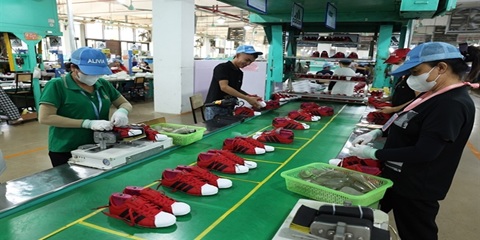
Việt Nam's exports of footwear and handbags to the US exceeded US$8 billion in the first eight months of 2026, as the US and EU remained the country's biggest markets despite sluggish growth in footwear shipments. Exports from Việt Nam's leather and footwear sector reached more than $2.45 billion in August, down 9 per cent from July but up 3 per cent from a year earlier, according to preliminary statistics.
VIETNAM ECONOMY INVESTMENT
LÂM ĐỒNG TARGETS DIGITAL ECONOMY TO ACCOUNT FOR 30 PER CENT OF GRDP BY 2030
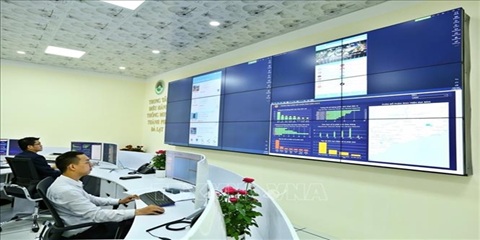
Lâm Đồng Province aims to raise the digital economy’s contribution to around 30 per cent of its gross regional domestic product (GRDP) by 2030, as part of a five-year plan to develop digital economy and society issued recently. Under Plan No. 15358/KH-UBND, the province targets more than 60 per cent of small- and medium-sized enterprises (SMEs) to adopt digital technologies by 2030 while increasing the value of cashless payments to 30 times its GRDP.
Events Sponsors






















