Want to be in the loop?
subscribe to
our notification
Business News
VIỆT NAM'S COFFEE EXPORTS AIM FOR $6 BILLION MILESTONE
February was a notable period when Việt Nam exported over 193,000 tonnes of coffee, bringing in US$1.08 billion.
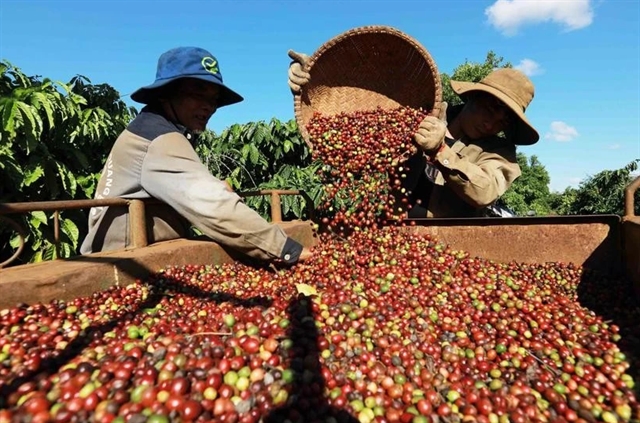
Coffee harvested in Buôn Ma Thuột City, the Central Highlands province of Đắk Lắk. — VNA/VNS Photo
HÀ NỘI — The Vietnamese coffee industry made a distinct impression in the first two months of this year, with export turnover rising by 26.2 per cent year-on-year to US$1.58 billion while volume falling by 28.4 per cent to 284,000 tonnes, according to the Ministry of Agriculture and Environment.
This achievement not only affirmed Việt Nam's position in the global coffee market but also opened bright prospects for exceeding the $6 billion target this year.
The rise of “brown gold”
Last month was a notable period when Việt Nam exported over 193,000 tonnes of coffee, bringing in $1.08 billion – a record figure within a single month. Of this, green coffee beans accounted for the majority with over 178,000 tonnes while processed one contributed nearly 15,000 tonnes.
One of the key factors helping the coffee industry achieve remarkable results was the surge in export prices. The ministry’s report showed that the average coffee price in the January-February period reached $5,574.5 per tonne, up 76.3 per cent compared to the same period in 2024. In February alone, this figure rose to $5,596 per tonne, an all-time record high.
Chairman of the Vietnam Coffee-Cocoa Association (VICOFA) Nguyễn Nam Hải said that high prices helped the coffee industry bring in $1.08 billion in February alone, exceeding all expectations.
The sector’s value growth came not only from green coffee which brought home $956.58 million, up 107 per cent from the same month last year, but also from contributions by deeply processed coffee. In the month, roasted, instant, and blended coffee were sold abroad at over $123 million, making up 11.4 per cent of the total value, indicating a trend towards value-added products that helps elevate the position of Vietnamese “brown gold” internationally.
Germany, Italy, and Japan remained the largest consumer markets, accounting for 16.6 per cent, 9.4 per cent, and 8.2 per cent of market share, respectively. Compared to the same period last year, export value in January 2025 to Germany increased by 53 per cent, to Italy by 5.6 per cent, and to Japan by 10.4 per cent, demonstrating the stable appeal of Vietnamese coffee in traditional markets.
Hải noted that coffee had become a “hot” commodity on world trading floors, attracting significant investor interest. He elaborated that the price difference between Robusta and Arabica coffee was currently about $3,000 per tonne. When Arabica prices rise high, roasters would switch to Robusta – the variety in which Việt Nam is the global leader.
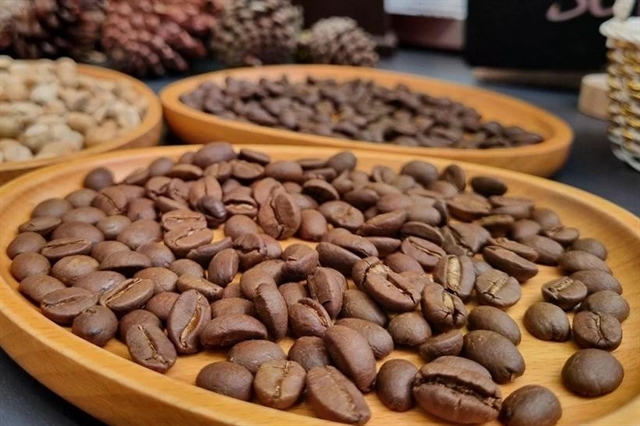
Việt Nam is the world's leading robusta coffee grower. — VNA/VNS Photo
Challenges and opportunities from global market
The Ministry of Industry and Trade’s Agency of Foreign Trade said La Niña might replace El Niño this year, affecting coffee-growing regions in Brazil – the world's largest exporting country. The risk of frost in Brazil could reduce production for the 2025-2026 crop year to its lowest level in three years, creating opportunities for Việt Nam to strengthen its position.
However, Hải believes that although Brazil's coffee production will decrease from July onwards, it will not have great impacts, and the market still needs to be closely monitored.
To deliver on the export target of over $6 billion, the domestic coffee sector needed to maintain its stable cultivation areas and improve quality according to international standards, Hải said, adding businesses need to link purchasing with deep processing while diversifying markets to avoid dependence on a few major partners. Additionally, capitalising on the leading position in Robusta coffee, which accounts for 95 per cent of Việt Nam's production, will be key to maintaining growth momentum.
Deputy Minister of Agriculture and Environment Phùng Đức Tiến held that with the current growth rate, the industry would be able to complete its set target this year.
"The strong growth in export value in the first two months of the year is evidence of the industry's potential," he said, underscoring the need to continue investing in processing technology, expanding markets, and responding flexibly to global fluctuations.
The ministry was working with VICOFA and enterprises to develop a long-term strategy aimed at sustainable development and improvement in the value of the Vietnamese coffee brand, he added. — VNS
Source: VNS
Related News
BANKING / FINANCE / INSURANCE / TAX
REMITTANCES TO HCM CITY RISE NEARLY 40% IN Q3
Remittances to HCM City reached more than US$2.83 billion in the third quarter of this year, up 39.5 per cent from the previous quarter and 3.6 per cent year-on-year. This was the first quarter showing positive annual growth this year, helping narrow the decline in remittance inflows over the first nine months. According to the State Bank of Vietnam (SBV)’s Regional Branch 2, remittances transferred to HCM City through credit institutions and economic organisations totalled $2.835 billion in Q3, an increase of more than $802 million from the previous quarter.

TECHNOLOGY
TECH SECTOR GROWTH OPENS UP OPPORTUNITIES FOR VIỆT NAM TO GO GLOBAL
The growth of the electronics, semiconductor and high-tech sectors worldwide is opening up a variety of opportunities for Vietnamese enterprises to integrate more deeply into the global supply chain. However, to become suppliers for these corporations, domestic enterprises must meet rigorous standards regarding quality, technology, productivity and order fulfilment capabilities.
VIETNAM ECONOMY INVESTMENT
FOREIGN INVESTORS SEEKING A SYNCHRONISED MANUFACTURING ECOSYSTEM
Instead of focusing only on land costs and incentives as usual, foreign investors are seeking a synchronised manufacturing ecosystem, from stable power supply and logistics to shared infrastructure and the convenience of completing residence procedures for experts to serve their long-term investment in the country.
MEMBER CORNER / PROMOTIONS
SENTRYSAFE FHW40200 – PROTECT YOUR VALUABLES, ENJOY PEACE OF MIND!
Looking for a reliable solution to protect your important documents, cash, and valuables from fire and water damage? Genuine SENTRYSAFE - Reliable protection for your valuables and peace of mind! Contact Sen Wai Vietnam for more information and personalized product recommendations.
PROPERTY / INDUSTRIAL ZONE
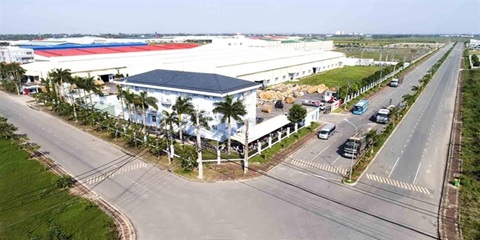
HCM CITY ATTRACTS US$5.7 BILLION INTO EXPORT PROCESSING AND INDUSTRIAL ZONES
HCM City attracted US$5.7 billion in domestic and foreign investment into its export processing and industrial zones during the first nine months of 2026. The figure exceeded the city's full-year target by 31 per cent, highlighting strong momentum in high-quality industrial investment under Resolution No.10-NQ/TW. Total investment reached 131 per cent of the 2026 target of $4.25 billion and represented a 29 per cent increase compared with the same period in 2025, according to the city's Export Processing and Industrial Zones Authority (HEPZA).
INFRASTRUCTURE / CONSTRUCTION / LOGISTIC / PORT
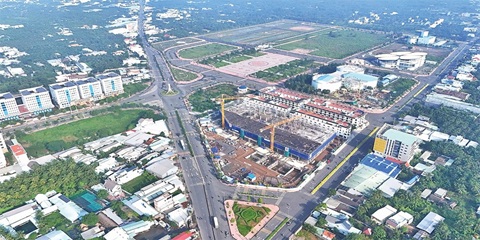
DONG THAP PROVINCE STEPS UP INDUSTRIAL EXPANSION AND INFRASTRUCTURE CONNECTIVITY
Accelerating public investment, strengthening inter-regional connectivity, and expanding industrial land are helping Dong Thap efficiently bolster competitiveness and drive economic growth. Following the 2025 merger of the former Dong Thap and Tien Giang provinces, the expanded Dong Thap province in the Mekong Delta faces mounting pressure to accelerate infrastructure development and strengthen connectivity among local economic zones, urban areas, industrial parks (IPs), and production centres.
Events Sponsors






















